+44 (0)1905 794875
 Wholesale Prices

How To Make A Grass Driveway
Grass driveways and parking areas are an attractive and sustainable addition to homes and workplaces, and are also useful for public spaces and temporary events. But are they easy to create?
In this article, we’ll explain the benefits of grass surfaces and show you how to make a grass driveway using two different methods.
Why would you choose a grass driveway?
Grass driveways are visually appealing, with a more natural appearance than concrete or tarmac. This improves the aesthetics of the wider area by providing a contrast to the built environment, and can even help to reduce stress.
On non-porous surfaces, rainwater runs straight off the sides of the drive and into the drains - taking with it the pollutants found on driveways, such as oil and brake dust. This contributes to flooding in urban areas and the pollution of waterways.
But on grass surfaces, the water soaks naturally into the soil beneath. And the grass acts as a filter for the contaminants. Grassed areas also increase biodiversity by providing a home for wildlife.
For all these reasons, the UK government is encouraging property owners to avoid hard paving in their front gardens. In most cases, you won’t need planning permission to install a grass driveway.
FYI: Gravel drives have similar benefits. If you’re considering a gravel surface, check out our guide to installing a gravel driveway.
Are there any downsides?
The problem with grass drives or parking areas is that they can quickly become muddy under heavy rainfall and heavy usage. Vehicles then churn up the surface and ruin the grass. Unless. . . you reinforce the ground with a grid system or protective mesh. More on those shortly!
How to make a grass driveway
Time to dive into the main topic: how to make a driveway on grass. There are two key methods of doing this, using either grass grids or grass mesh.
Making a driveway with grass mesh
First of all, let’s find out what grass mesh has to offer.

What is grass mesh?
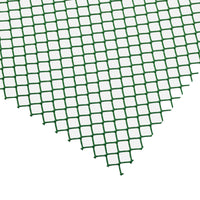
Grass mesh refers to sheets of plastic mesh that help to reinforce and protect a grassed area like a driveway. Supplied on a roll or in large sheets, it stabilises the ground and allows grass to grow through the structure.
Pros and cons of grass mesh
This solution is very easy to install, as there’s no need to dig out a foundation. You simply roll or lay out the mesh on top of your existing grass, cut it to size if needed, and secure it in place with U-pins.
Grass mesh gives you flexibility, as you can roll it up and store it after use. If you want to leave it in place for longer periods, the grass will grow through it and you can then mow it as normal.
It’s perfect for infrequent use or for temporary driveways and parking areas, but grass grids are a better option for regular use from heavy vehicles.
Making a driveway with grass grids
The second method involves laying a grass grid under the surface.
What is a grass grid?
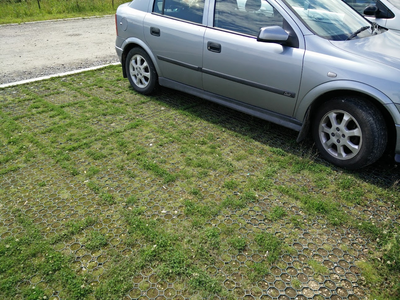
Grass grids, also known as permeable pavers, are interlocking plastic tiles that make up a cellular paving system. In this instance the grids are filled with soil and grass seed, but you can also use them for gravel areas. They support the surface and enable sustainable drainage.

Pros and cons of grass grids
Grass driveway grids are durable enough to withstand heavier loads and more frequent traffic, while still avoiding soil compaction. They offer a more permanent solution than grass mesh, making them ideal for driveways or access roads to overflow parking.
Installation does require more effort and cost, as you’ll need to dig a foundation and fill it with a sub-base and potentially a permeable membrane before laying the grid and adding the soil and grass seed. (Grid systems can also be installed without foundations for temporary use.)
You will also have to wait longer before driving over or mowing the area, as it takes around six weeks for new grass to establish itself. For a faster option, it's possible to buy pre-grown turf and roll it into an empty grid.
Alternative methods
Ground protection matting is a simple and cost-effective option, allowing you to take vehicles and foot traffic across a grass area. But it’s not a permanent solution, as it’s really only suitable for light usage in good weather.
What about an artificial grass driveway? These are permeable, but they need a foundation and sub-base just like a grass grid. They are not considered eco-friendly because they don’t provide food or habitats for wildlife.
Tips for success
Here are a few pointers to help you create and maintain a grass driveway.
-
Before starting to create your driveway, measure out the area you want to convert and work out how many grid sheets or rolls of mesh you’ll need. This avoids delays or unexpected costs.
-
It’s essential to use the right grass seed for your driveway. Our friends at Boston Seeds recommend their economy perennial ryegrass, which can handle wear and tear from vehicles and recovers quickly.
-
Grass grids and grass mesh are available in various grades to support different loads. Consider the type of traffic that will use your driveway, and choose a product with the right load-bearing capacity.
-
If you’re using a grass grid (or a gravel grid) make sure you lay the interlocking tiles section by section - starting from one corner or a flat edge and working outwards. When you fill the grid with topsoil, leave it shy of the surrounding surface so that it doesn’t become compacted.
-
Don’t leave vehicles (or other large objects) in the same place on the grass for long periods of time, as this will block the sunlight and kill the grass in that area.
Final thoughts
Grass driveways are eco-friendly and visually appealing - and if you use the right reinforcement method, they can be durable as well.
We offer a range of grass driveway pavers and grass mesh to help you keep grassed areas in great condition. Chat to our friendly sales team about the right choice for you.
- Author


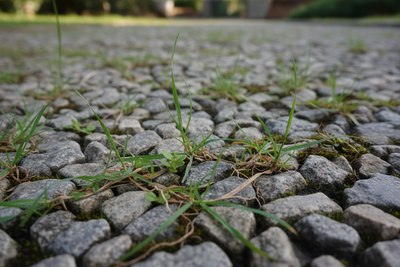
You might like:
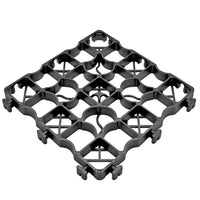
EcoGrid E30 Pedestrian Ground Reinforcement Grid System - 330mm x 330mm x 30mm (4.4mm thickness)
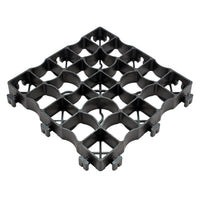
EcoGrid E40 Medium Duty Ground Reinforcement Grid System - 330mm x 330mm x 40mm (5mm thick)
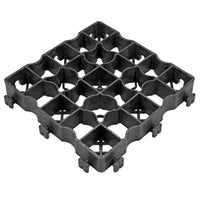
EcoGrid E50 Heavy Duty Ground Reinforcement Grid System - 330mm x 330mm x 50mm (7mmm Wall Thickness)

100gsm GeoTextile Fleece Non-Woven White Drainage Membrane
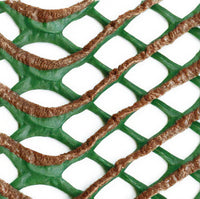
GP Flex 1000 Grass Protection Mesh Roll
GP Flex 1400 Grass Protection Mesh Roll