+44 (0)1905 794875
 Wholesale Prices

Do You Need Planning Permission For A Gravel Driveway?
Whether you’re creating a new driveway or updating an existing one, a gravel surface is an attractive, durable, and eco-friendly option. But do you need planning permission for a gravel driveway?
In this article, we’ll dive into the world of driveway planning permission and give you the lowdown on when you need it and when you don’t.
Why is planning permission important?
Planning permission ensures that building work complies with design and safety standards and local planning policies, and that it doesn’t have a negative impact on the surrounding environment.
If you complete the work without seeking permission and then find out you did need it, you may have to complete a retrospective application. The local authority can still deny this and order you to reverse the work.
Plus, a property becomes unmortgageable if you’ve carried out illegal work and refused to reverse it. This will make it very difficult to sell in the future.
In short, it’s always best to check before starting work!
Planning permission vs permitted development
Planning permission or consent is formal approval for certain building projects or alterations. It involves applying to the local planning authority, who will decide whether or not to allow the work. You’ll need to submit a form, a scale plan, and a fee of £150.
Permitted development allows you to make some changes to buildings or land without applying for full planning permission. Generally, you’ll be able to use permitted development rights (PDR) for driveways.
Why do we have specific rules for driveways?
Covering your front garden with a hard surface increases the risk of flooding and pollution of watercourses. That’s because rainwater runs off traditional, impermeable surfaces and straight into the drains.
The UK’s urban drainage system is old, and struggles to cope with the effects of increased development and heavier, more frequent rainfall. This problem contributed to serious flooding in 2007, and our changing climate means it’s likely to happen again.
Hard surfaces also collect pollution such as oil, petrol, and brake dust. When it rains, these particles get washed into the drains and then into our streams and rivers, harming wildlife and the environment.
You might not think one driveway makes much of a difference, but if lots of people install hardstanding, the problems increase. The government introduced restrictions on paving front gardens in 2008, encouraging people to use permeable alternatives.
Permeable surfaces allow water to pass through them into the soil below, or store the water temporarily in heavy rainfall.

Do I need planning permission for a gravel driveway?
Now we know why there are rules about driveways, let’s find out when you might need planning permission.
When is planning permission not required?
If your driveway is less than five meters square, you shouldn’t need planning permission at all. This rule even covers impermeable surfaces, as long as you’re enabling rainwater to drain away naturally via a lawn or border.
What if your drive is bigger than that? In most cases, you don’t need planning permission for a driveway of any size - whether it’s new or a replacement - if you use permeable or porous surfacing.
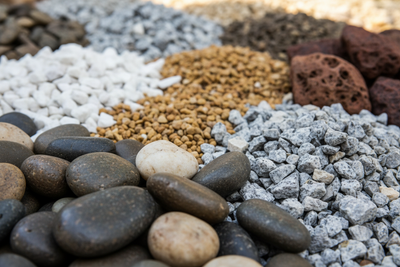
Permeable or porous surfacing includes gravel (loose gravel surfaces and reinforcement systems such as gravel grids) as well as permeable concrete block paving and porous asphalt.
A condition of planning permission is that the permeable surface must have a fully permeable bedding layer. This includes the foundation, bedding mortar, and any grout used.
You’ll also need to use open-graded materials such as 4/20 and Type 3 sub-base. These only contain larger pieces of stone with spaces between them so that water can pass through or be stored.
When do I need planning permission?
If you want to cover more than five square metres with a traditional, impermeable surface, and you’re not including a way for water to run off into a permeable area, you will require planning permission.
But are there any circumstances in which you’d need to seek permission for a gravel drive or another type of permeable driveway?
-
Conservation areas: Different rules may apply here.
-
Tree protection orders: These may also affect permission, or you may just need to be mindful of their roots.
-
Loose gravel: If your driveway will cause large amounts of gravel to migrate onto a public highway, you might need permission.
-
Access and visibility: Again, you might need permission if vehicles on your driveway could affect visibility for road users or access for other properties.
-
Special conditions: Listed properties or those with covenants on them may have special planning conditions.
-
Property type: You’re not covered by permitted development rights if you own a flat or maisonette, nor if you’ve created, converted, or changed the use of your property under PDR.
-
Additional work: If you’re converting your front garden into a driveway, and access involves driving across a pavement, you’ll need permission from the local council to drop the kerb. (If the drive is part of a new build project, you won’t need to fill out a separate application).
-
Other outdoor areas: There are different rules for driveways and patios that are not part of a front garden.

What’s the best way to create a gravel driveway?
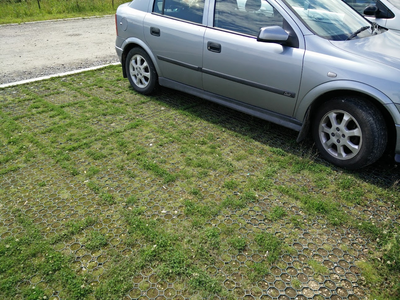
Loose gravel is one option, but a ground reinforcement system such as a gravel grid brings more benefits. Gravel grids provide structural support for the surface and help to keep the stones contained within your driveway.
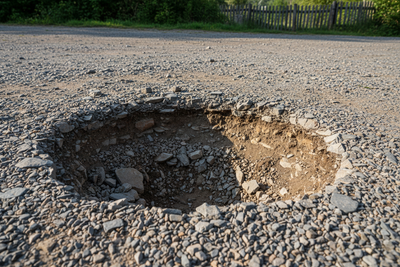
As well as strengthening your drive, gravel grids allow rainwater to drain quickly through the stones into the ground. This minimises erosion that leads to ruts and potholes, and reduces standing water, mould, and moss.
These systems are environmentally friendly, especially since they’re usually made from sustainable plastic. Installation and maintenance is easy, and a smart gravel driveway can make your property more attractive.
Final thoughts
As we’ve outlined in this article, most people don’t need planning permission for a gravel driveway. Your best bet is to use a gravel grid as a foundation, which makes the drive almost as easy to look after as non-porous surfaces.
Need more advice about driveways or gravel grids? Our friendly team is ready to help.
FAQs
Are you sure I don’t need planning permission?
We’ve based our guidance on current government rules, but these may change over time. Always check with your local authority for additional regulations or special conditions.
What if my driveway is on a steep slope?
If the slope is greater than 1 in 20, a permeable surface might not be suitable. In this case, you could use an impermeable surface and divert water into a soakaway.
Can I build a gravel drive on contaminated land?
If your land was contaminated by previous uses (such as industrial), you may find that the garden was deliberately created with shallow soils to stop water soaking into the ground. You can still use a permeable surface, but you’ll need to make sure that water from the sub-base can flow into the drains.
What if I prefer a non-gravel surface?
If gravel isn’t for you, there are several other ways to create a driveway that doesn’t need planning permission.
-
Grass grids: These work in the same way as a gravel grid, but with grass!
-
Permeable concrete blocks: Individual blocks sit in a cellular frame that allows natural drainage.
-
Soakaways: Divert rainwater from impermeable surfaces into a container such as a gravel-filled trench, where it soaks into the ground.
-
Rain gardens: Plant lower areas of vegetation along the edge of a non-permeable drive to collect and soak up rainwater.
-
Compromise: You could just pave two tracks for your vehicle’s wheels (with a paved area of less than five metres square) and leave the rest of the driveway as grass or dirt.
- Author


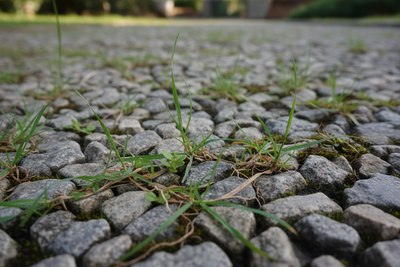
You might like:
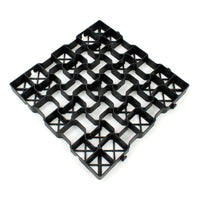
GeoGrid Standard Honeycomb Plastic Pavers Gravel Grids - 495mm x 495mm x 40mm
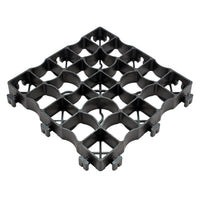
EcoGrid E40 Medium Duty Ground Reinforcement Grid System - 330mm x 330mm x 40mm (5mm thick)
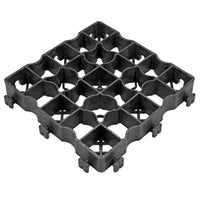
EcoGrid E50 Heavy Duty Ground Reinforcement Grid System - 330mm x 330mm x 50mm (7mmm Wall Thickness)
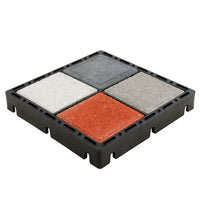
EcoGrid Bloxx Paving System | Concrete Inserts
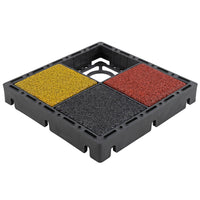
EcoGrid Bloxx Paving System | Rubber Inserts