+44 (0)1905 794875
 Wholesale Prices

Buying A Safety Harness: What You Need To Know
If you choose a harness that fits you properly, it will keep you safe in the event of a fall from height. As part of a wider fall arrest system, it can even stop you from having a fall in the first place.
But how do safety harnesses work, and how do you choose the right one? In this article, we’ll tell you everything you need to know.
What is a safety harness?
A safety harness is a piece of personal protective equipment (PPE) that prevents falls when working at height, minimising the risk of serious injury or death.
It is made up of adjustable straps and buckles that fit around the body. By attaching the harness to a stable anchor point and connecting shock-absorbing lanyards or retractable lifelines, you reduce the distance and impact of a fall.
There are several different types of safety harness:
Fall arrest harness
This full body harness has straps around the thighs, hips, chest, and shoulders. It forms an interface between you and the rest of your fall protection equipment, spreading the force of the fall across the body in a controlled manner.
Work positioning harness
These harnesses hold you in place while you’re working at height, but still give you enough freedom of movement to perform awkward tasks.
Suspension harness
If you need to be suspended for any length of time, a harness with extra padding and added support points helps to reduce pressure on your legs and back.

Who uses HSE safety harnesses?
Anyone working above ground level or at the edge of an excavation (or anything else you could fall down or into) should consider a safety harness. This broad scope of use cases makes fall safety equipment one of the most widely-used pieces of PPE, almost as popular as safety helmets and RPE.
Here are some common examples of where you will frequently see height safety equipment in use:
Renewable energy
You will see fall restraint systems in use when workers are installing anything from wind turbines in a field to solar panels on rooftops.
Civil engineering
During large engineering projects, workers often need to operate in cherry pickers, scissor lifts, or other areas where falls are a risk factor.
Construction & maintenance
Safety harnesses are worn by construction workers including scaffolders and roofers, when working on individual projects or large building sites.
Utilities
In the gas and wastewater sectors, full-body harnesses designed for confined access are often used to lower workers in and out of manholes and access shafts.
How many anchor points do I need on my harness?
The anchor points on a harness dictate the positions you’re able to work in, so the number will depend on the type of work you do. Some configurations are better suited to certain applications. A harness risk assessment will help you identify the harness you need, plus the accompanying fall restraint lanyards and fall arrest lanyards required for the job.

One-point harness
This type features a connection on the back of the harness, between the shoulder blades. It’s suitable for:
-
Fall arrest
-
Fall restraint
Two-point harness
These harnesses have one anchor point at the chest and one on the upper back. The additional anchor point means you can use a shorter lanyard if you’re facing a fixed anchor point on a building.
-
Fall arrest
-
Fall restraint
Three-point harness
Here you have a third set of connections at waist level. These are used alongside a work positioning lanyard to take the weight off your arms, allowing you to work hands-free at height.
-
Fall arrest
-
Fall restraint
-
Work positioning
Five-point harness
A five-point safety harness features a further two connection points at waist level, allowing you to work in suspension from ropes.
-
Fall arrest
-
Fall restraint
-
Work positioning
-
Working in suspension
Other features to consider when buying a fall restraint harness
Within our range of harnesses, you will see terms such as quick-release buckles, colour-coded straps, sub-pelvic straps, and more. This jargon can be challenging to understand if you are new to the world of height safety equipment. Here’s a quick guide:
Sub-pelvic strap
Present on most harnesses, this strap offers extra support when leaning into the harness.

Anchor points
These are the harness parts that you can safely use for restraint or arrest applications.
Tool & lanyard keepers
These are loops on the harness where you can hang tools or park lanyards when not in use. They are especially useful when working with a twin-tail lanyard.
Parachute buckles
These straightforward buckles are present on many harnesses. They feature two interlocking metal loops.
Quick-release buckles
Quick-release buckles are featured on many of our premium harnesses. They have two toggles that release when depressed, speeding up the process of taking the harness on and off.
Adjustment points
The more adjustment points, the better! As a minimum, a budget harness will feature leg and chest strap adjusters. Higher-end harnesses often include shoulder loop adjusters, which allow you to get a more comfortable fit.
Colour-coded straps
Some of our harnesses include colour-coded leg and shoulder loops. This helps to differentiate the two, ensuring you don't accidentally try and put your harness on upside down.
Strap retainers
These simple plastic clips keep the tails of your harness straps tidy and out of the way, ensuring that you don't get them caught or snag them.
Padded straps
These offer improved comfort by ensuring that straps do not rub and cause irritation while you’re working.
Fall indicators
These indicators make it obvious if someone has had a fall (as shown above), confirming that you should take it out of use.
Document containers
These simple slips hold details about how to wear and inspect the harness, keeping information right where you need it.
How to inspect your safety harness
It is important to know that your fall protection equipment requires two key types of inspection.
Daily harness inspection
This is what you should be doing each and every time you go to wear your harness. Start by looking for the obvious things, such as the triggered fall indicators. Then look for other signs of wear, including damaged stitching, frayed straps, and anything else not functioning as designed.

Service inspection
EN 365 stipulates that you must conduct a service inspection every twelve months, which a competent person must complete. Please contact us if you need help finding someone to carry out this inspection.
Ultimately your harness is only as good as the condition you keep it in. If you wear it out or don't take care of it, it could fail, causing significant injury to you or someone else.
Final thoughts
Wearing a safety harness is always best practice if there’s a risk of falling from height, whether that’s falling from an above-ground structure or falling into a hole below ground. Conduct a risk assessment for each job, and provide safety harness training so that all users know how to wear a safety harness correctly.
Need help choosing a safety harness? Give our friendly team a call.
FAQs
How long does a safety harness last?
The lifespan of a safety harness depends on the make and model, and on the amount of use. The key thing to remember is that if you do have a fall, you cannot use that harness again.
How can I tell if my harness is safe?
Good quality harnesses come with CE markings and safety documentation, including EN conformity information (which must be supplied for the harness to be deemed compliant and usable). You also need to carry out regular inspections and check for any failures.
At what height is a safety harness required?
There’s no legal definition of the minimum height for wearing a safety harness - but if the job carries a risk of falling, you need to wear one. The Health and Safety Executive (HSE) stipulates that you should carry out a full risk assessment to determine the right equipment and protocols for any job.
Should I buy a kit or just a harness?
This choice is up to you. Purchasing a harness height safety kit is a great place to start - this will include a harness, lanyard, and often a storage bag to keep everything safe. Each kit is usually set up for specific working-at-height tasks and price points.
- Author
Related articles


You might like:
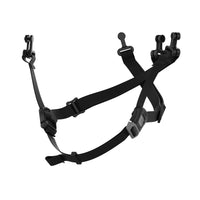
JSP EVO Baseworker 4 Point Harness | AHV220-000-000
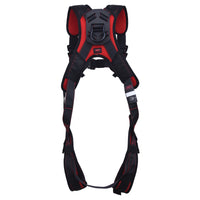
JSP K2 2-point Premium Harness | FAR0401
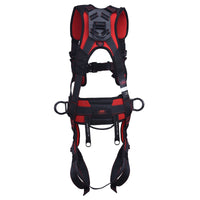
JSP K2 3-point Premium Harness | FAR0402
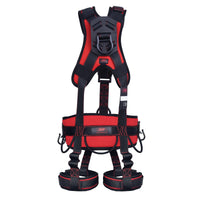
JSP K2 5-point Premium Harness | FAR0403
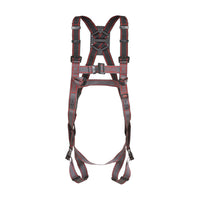
JSP Pioneer 2-point Harness | Quick Release Buckles | FAR0209
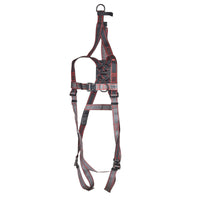
JSP Pioneer 2-point Rescue Harness | FAR0205
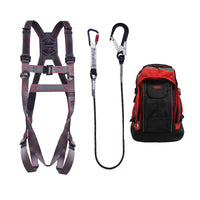
JSP Pioneer Single Fall Arrest Kit - 2 Point Harness Inc Rucksack | FAR1104