+44 (0)1905 794875
 Wholesale Prices

Eye Protection: Understanding Your PPE
Many industries and work environments contain hazards that could potentially damage your eyes. It’s vital that you wear suitable eye protection when needed - but which type is best for you?
In this article we’ll help you understand more about the world of eye protection, from the different types of eye PPE to the markings and ratings on your safety eyewear.
Use the links below to skip to the different sections.
Why is eye protection important?
What types of hazards require eye protection?
Why is eye protection important?
It’s incredibly important to protect your eyes from various hazards in the workplace. Workers who fail to wear adequate protection are at risk of:
-
Eye irritation caused by dust or gases
-
Eye damage such as scratches caused by particles entering the eye
-
Eye conditions such as conjunctivitis or cataracts
-
Immediate or gradualsight loss.
Safety eyewear helps to minimise these risks, while delivering the optical clarity you need to do your job. Choosing the right type of eye protection for your industry or for specific tasks is equally important.

What types of hazards require eye protection?
In most industries and environments, there are various tools, materials, and processes which could potentially harm the eyes. Here are some of the most common hazards:
Chemical
This hazard category includes liquid splashes, droplets, fumes, and gases. You will find these hazards in almost every industry sector, from manufacturing to food production.
Mechanical
These physical hazards include flying objects and molten metal from power tools, machinery, and manufacturing processes. Once again, this hazard is relatively universal and is present in many industries.
Radiation
This category includes light glare, infrared heat, and ultraviolet radiation from the sun. Some of these hazards are unique to specific industries, but UV radiation can impact anyone who works outside.
Laser light
Laser light can be generated by CNC laser cutters, measuring equipment, and any other equipment that uses lasers of various wavelengths.
Types of eye protection
Let’s take a look at the different forms of eye PPE and their pros and cons.
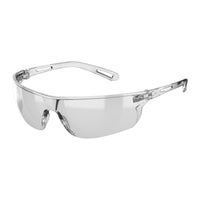
Safety glasses
Most people are familiar with this type of eye protection. Safety glasses look and feel similar to regular prescription eyewear, making them comfortable to wear all day long. They are available with many features, from lightweight designs to versions that look like sunglasses and everything in between.

Pros and cons of safety glasses
✅ You can comfortably wear them all day
✅ Available in a range of styles
❌ Not suitable for chemical hazards, dust, or gases.
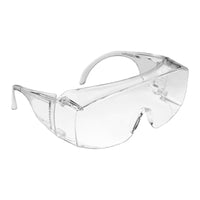
Safety overspecs
This format may be the right choice if you wear prescription glasses but also need to use safety specs. Safety overglasses fit over the top of your everyday eyewear, allowing you to see in focus while offering improved impact protection for your eyes. Please note: contrary to common misconceptions, your prescription glasses are no substitute for proper eye protection.

Pros and cons of safety overspecs
✅ Suitable for wearers of prescription eyewear
✅ You can comfortably wear them all day.
✅ Available in a range of styles.
❌ Not suitable for chemical hazards, dust, or gases.
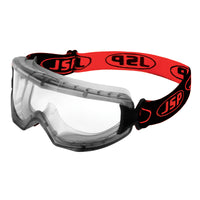
Safety goggles
Safety goggles are the next step up from safety glasses and overspecs, as they offer protection to the areas around the eyes as well as the eyes themselves. They can usually be worn over prescription eyewear.
The goggles have a seal around the outside (on some models this is airtight), keeping hazardous gases away from the eyes’ sensitive tissues. This greater contact area with the face means that safety goggles are often rated for more significant impacts.

Pros and cons of safety goggles
✅ You can usually wear them over prescription spectacles
✅ Suitable for all hazard categories (dependent on the model)
❌ Can become uncomfortable if worn for long periods.
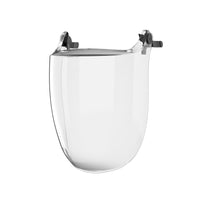
Face shields
Face shields are not exclusively for eye protection, but as the name suggests, they protect the whole face including the eyes. This type of PPE provides a primary layer of defence from larger flying debris, such as debris caused when cutting disks fail. You can wear a face shield over safety spectacles for enhanced protection.

Pros and cons of face shields
✅ Protects the whole face
✅ Great for splashes and impacts
✅ Comfortable enough to wear all day
❌ Not suitable for use with gases and ultra-fine dust.
Understanding EN markings
Before purchasing your protective eyewear, it’s important to understand the various markings you’ll find on the lens or frame of your glasses or goggles. These are applied by the manufacturer to indicate the performance of the eyewear, in terms of its resistance to hazards and other elements.
EN certification
The EN marking shows that the safety eyewear meets the relevant European safety standard for personal eye protection, and validates the other markings on the eyewear.
A marking of EN166 indicates that the item was tested to comply with this safety standard, which has been in use since 2001. EN166 is currently being phased out, with the new EN ISO 16321-1 coming into force in November 2025. You will see this marking on newer safety eyewear from now on.
However, existing products that conform to EN 166 are still available to buy, as manufacturers can continue to sell them until the certification expires (up to a maximum of five years from the date of issue).
Lens marking: 5
This marking indicates that the lens is suitable for use while working with acetylene torches with a flow of 70-200 litres/hr.
The below diagram shows the other numbers and letters you'll see on your eyewear:

Lens marking: optical clarity
This is displayed as a rating of 1, 2, or 3.
1 - High clarity: you can wear these continuously all day long
2 - Medium clarity: suitable for occasional use only
3 - Low clarity: suitable for infrequent use or use for short periods only.
Lens marking prefix: 2-_._ or 2C-_._
A 2 or 2C prefix tells you that the lens offers UV protection, and the 2C prefix indicates that the lens provides good colour recognition. The suffix digits that follow this indicate the shade of the lens (see image below).
Lens marking prefix: 5-_._
This prefix indicates that the lens has a sun glare filter performance and includes UV protection. The suffix digits again indicate the lens's colour as per the 2 or 2C- markings. Please note that 5- followed by a suffix differs from a stand-alone 5.
Mechanical strength markings
The mechanical or impact strength of the eyewear is shown by various letters:
S - Indicates enhanced robustness (offering greater performance than basic prescription eyewear)
F - Suitable for low energy impacts at up to 45 m/s (suitable for use when working with hand tools)
B - Suitable for medium energy impacts at up to 120 m/s (suitable for use when working with power tools)
T - Suitable for protection at extreme temperatures from -5°C to +55°C.
Indications of suitable hazard usage
This numerical rating tells you which hazards the eyewear protects against:
3 - Resistance to liquids and droplets. Suitable for use with chemicals, acids and other hazardous liquids.
4 - Resistance to large dust particles (up to 5 μm). Suitable for use around larger dust particles such as those created by coal.
5 - Resistance to gas and fine particles (below 5 μm). Non-vented for use around fumes and fine dust such as brick dust.
8 - Resistance to short circuits and electric arcs. Suitable for use around hazardous electronics.
9 - Resistance to molten metals and hot solids, such as those found when welding and grinding.
Manufacturer’s trademark symbol
This marking tells you who manufactured the item of PPE. On a frame, this may be the first symbol shown.
Optional markings
You may also see additional markings, such as:
K - Resistance to scratches and surface damage caused by fine particles. This keeps your glasses haze- and scratch-free for longer.
N - Anti-mist properties. This is ideal for anyone working in environments where changes in temperature can fog up the lenses.
H - Frames suitable for wearers with smaller heads.
Lens shade suffixes
You can choose the colour of the lenses in your safety eyewear according to the task or environment.

Final thoughts
Wearing eye protection can mean the difference between keeping your sight and losing it. With various different types of safety eyewear available, and a whole array of markings and ratings to consider, choosing the right protection can be daunting. If you need extra guidance, just get in touch with our friendly sales team.
FAQs
What type of eye protection is best?
Certain types of eye protection work best for certain types of job or environment, so you need to think carefully about your requirements - which may vary from task to task. The HSE has useful information about choosing the right PPE.
Is workplace eye protection a legal requirement?
Yes. The Personal Protective Equipment (PPE) at Work Regulations 1992 and the Health and Safety at Work Act 1974 state that UK employers have a legal obligation to provide suitable protective eyewear if there’s a risk to eye health from workplace hazards. Employers can determine whether hazards are present by carrying out a thorough risk assessment.
How can I protect my eyes at work?
Always wear the protective eyewear provided by your employer. Make sure you know when to use it, and how to use it correctly. If you’re not sure, ask! It’s up to employees to follow the rules and to raise any concerns about hazards or eye health with a manager.
- Author
Related articles

You might like:
Hellberg Geminus Anti-Fog & Anti-Scratch Safety Glasses | Choice of Lens Type (by Snickers)
JSP EVOspec Helmet Mounted Safety Spectacle
JSP M9300 Overspec Safety Spectacles - Clear | ASD028-261-300
JSP Stealth Lightweight Safety Specs | 16g
JSP EVO Gas Safety Goggles | Single Lens | Anti-Mist & Scratch Resist | AGM030-623-000
JSP EVOGuard® C5-MAX Industrial Visor | Short Circuit Electric Arc Visor | K&N Rated | ADA280-070-000

JSP Stealth Coverlite Lightweight Overspecs | Smoke Lens | ASA940-063-000
JSP EVOGuard Visor | C2 Industrial Visor Kit K&N Rated | ADA250-060-000
Attention Eye Protection Must Be Worn Floor Sign - Self Adhesive