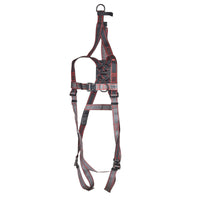
+44 (0)1905 794875
 Wholesale Prices

When Is Fall Protection Equipment Required?
Falls from height remain one of the leading causes of serious workplace injuries and fatalities in the UK. Under the Work at Height Regulations 2005, employers have a legal duty to prevent falls wherever reasonably practicable - and where risks remain, to minimise the distance and consequences of a fall.
But in practical terms, businesses often ask:
-
When must you use fall protection equipment?
-
When is a safety harness required?
-
When are personal fall arrest systems to be used?
-
When is a personal fall arrest system not required?
The good news is that this guide breaks down the legal requirements, common workplace scenarios, and the types of equipment needed to remain compliant and keep your workers safe and secure when working at height.

UK legal requirements: the Work at Height Regulations 2005
The starting point for understanding when to use fall protection equipment is the hierarchy of control set out in UK law. Employers must:
-
Avoid working at height where possible.
-
Prevent falls using collective protection (e.g. guardrails, barriers, edge protection).
-
Minimise consequences using personal protective systems (e.g. safety harnesses, lanyards, fall arrest systems).
Unlike some international regulations that specify a fixed height (for example 6 feet), UK law does not define a minimum height. Instead, fall protection is required whenever a person could be injured falling from a height – no matter what that height may be.
This means fall protection may be required even at relatively low levels, depending on the risk assessment that has been carried out prior to work starting.
When must you use fall protection equipment?
In the UK, fall protection equipment must be used when:
-
There is a risk of a fall liable to cause injury.
-
Collective protection (guardrails, edge protection, scaffolding) is not reasonably practicable.
-
Workers are operating near unprotected edges, fragile surfaces, or roof openings.
-
Accessing elevated platforms, mobile elevating work platforms (MEWPs), towers, or structural steelwork.
-
Working on roofs without permanent edge protection.
In these scenarios, personal systems such as harnesses, lanyards, anchor points, and lifelines are absolutely essential.
For example:
Roofing contractors may require temporary lifeline systems and restraint lanyards.
Facilities maintenance teams may need fixed anchor points and personal fall arrest systems.
Telecoms engineers working on masts may require full fall restraint kits.
It’s also worth mentioning that fall protection is not always needed when working at height. For instance, if someone is working at the side of an empty swimming pool, fall protection equipment should be used to keep them safe and secure.

When is a safety harness required?
A safety harness is required when a worker needs to be attached to a fall protection system to prevent or arrest a fall.
Typically, you need a safety harness when:
-
Using a fall arrest system.
-
Working in a MEWP where manufacturer guidance requires attachment.
-
Working on scaffolding without full edge protection.
-
Operating on sloped or fragile roofs.
-
Climbing fixed ladders with vertical lifeline systems.
Knowing when to use a safety harness comes down to whether a worker must be secured to an anchor system to eliminate or reduce risk.
How to choose the right harness
Different tasks require different harness types:
-
2-point harnesses for basic fall protection.
-
3-point or 5-point harnesses for added positioning and support.
-
Confined space harnesses with rescue attachment points.
Selecting the correct harness ensures compliance with EN standards (such as EN 361) and maximises user safety and comfort.
You can learn more about safety harnesses in our dedicated guide.
When are personal fall arrest systems to be used?
Personal fall arrest systems (PFAS) are used when it is not possible to fully prevent a fall using collective methods.
A PFAS typically includes:
-
Full body safety harness
-
Shock-absorbing lanyard or self-retracting lifeline (SRL)
-
Certified anchor point
-
Connectors (carabiners, hooks).
These systems are designed to safely arrest a fall in progress and reduce impact forces on the body.
They are commonly used:
-
During steel erection
-
On construction sites without full edge protection
-
For industrial maintenance at height
-
On wind turbines or telecom towers
-
During temporary access work.
Because fall arrest involves stopping a fall mid-air, a rescue plan is legally required. Employers must plan for prompt rescue in the event of a fall as suspension trauma can occur.
Suspension trauma (also known as harness hang syndrome) is a life-threatening condition that occurs when an individual is suspended in a harness, without the ability to move for a prolonged period of time. This is usually over 10 or 20 minutes.
Suspension trauma causes reduced oxygen levels to the brain and heart.

When is a personal fall arrest system not required?
There are scenarios where a personal fall arrest system is not required, including:
-
When full collective edge protection is in place (guardrails meeting BS EN standards).
-
When working at ground level.
-
When using properly installed scaffolding with compliant guardrails.
-
When operating within fully enclosed platforms.
However, even if fall arrest is not required, fall restraint systems may still be necessary in these types of scenarios. These restraint systems prevent a worker from reaching a fall hazard in the first place.
This distinction is important, and a key takeaway from this guide:
-
Fall restraint: Prevents reaching the edge.
-
Fall arrest: Stops a fall once it occurs.
It’s important to note that where possible, UK guidance favours restraint over arrest.
Fall protection equipment you may need
Depending on your site risk assessment, you may require:
Harnesses
Certified full body harnesses suitable for fall arrest, restraint, or positioning.
Shock-absorbing lanyards
Lanyards are designed to reduce arrest forces below 6kN in the event of a fall.
Self-retracting lifelines (SRLs)
Retractable fall arrestors provide greater mobility and shorter fall distances.
Tool lanyards and tethers
Tool lanyards are designed to keep your tools where you need them and are particularly important if you have people working at height and at ground level.
Fall restraint systems
Pre-configured harness and lanyard restraint systems and height safety kits are ideal for maintenance teams.
Choosing compliant, CE/UKCA marked equipment that meets EN standards is essential for legal compliance. All our fall protection products are fully compliant with British standards – so be sure to check out our range.
Risk assessment: the key to compliance
Understanding when to use fall protection equipment starts with a suitable and sufficient risk assessment.
This should consider:
-
Fall distance
-
Surface type (fragile roof materials, steel, concrete)
-
Weather conditions
-
Duration of work
-
Frequency of access
-
Rescue procedures.
A professional assessment ensures you implement the correct system - whether that’s collective protection, fall restraint, or full personal fall arrest systems. It’s always best to be thorough with your risk assessment as this will provide you with all the information you need to ensure the safety of your staff.

Training and inspection requirements
Under UK regulations:
-
Harnesses and lanyards must be inspected before each use.
-
Formal recorded inspections must occur at least every 6 months (3 months in harsh environments).
-
Users must be trained in correct fitting and usage.
-
Rescue plans must be documented and communicated.
Without proper training and inspection, even the best equipment cannot ensure safety.
For other types of protective equipment – we have a dedicated inspection guide on that too!
The takeaway
Fall protection is required whenever there is a foreseeable risk of injury from falling at height. If collective safeguards cannot fully eliminate the risk, personal protective systems - including harnesses and fall arrest equipment - become essential.
If you're unsure, our key takeaways would be:
-
Conduct a detailed risk assessment.
-
Consult safety regulations.
-
Speak with a fall protection specialist.
-
Ensure your equipment meets UK standards.
Investing in the correct fall protection equipment not only ensures compliance with the Work at Height Regulations 2005 - it protects your workforce and your business. If you’d like to chat to our experts about what you may need, get in touch with the Start Safety team today!
- Author
Related articles


You might like:
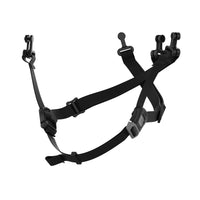
JSP EVO Baseworker 4 Point Harness | AHV220-000-000
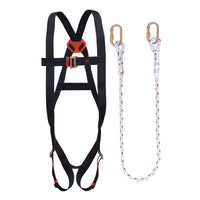
JSP Spartan Restraint Kit With Lanyard - 1 Point Harness | FAR1101
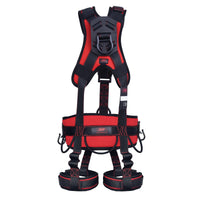
JSP K2 5-point Premium Harness | FAR0403
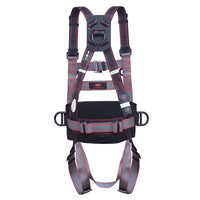
JSP Pioneer 3-point Harness | FAR0204
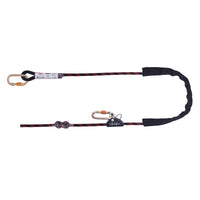
JSP 2m Adjustable Work Positioning Lanyard - Fixed Rope Grab + 2 Karabiners | FAR0420
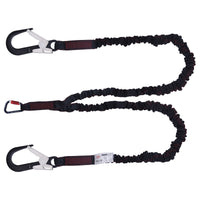
JSP K2™ 2m Twin Fall Arrest Lanyard - Internal Energy Absorber | FAR0405
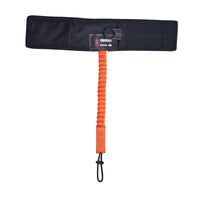
JSP Wrist Tool Lanyard | FAR0501 | Scaffolders Tool Lanyard
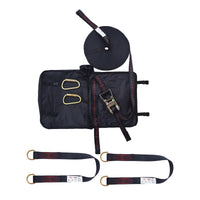
JSP Aerialine 20m Horizontal Life Line | FAR0804
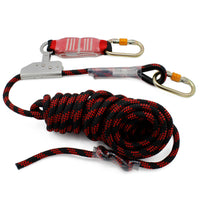
JSP 10m Rope Guided Fall Arrester | FAR0810
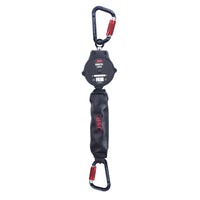
JSP 2m Webbing Self Retractable Lifeline - Vertical + Horizontal + FF2 | FAR0701
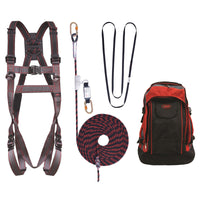
JSP Pioneer 10m Rope & Grab Kit | FAR1105