+44 (0)1905 794875
 Wholesale Prices

Do Bollards Stop Cars?
Bollards and markers are often used for security, as well as for guidance and decoration. But do bollards stop cars? The short answer is yes - but only if you use the right type for your purposes.
In this article, we’ll explain how bollards can stop vehicles from entering pedestrian areas and ram-raiding businesses - and explain which bollards are best for the job.
How do bollards stop cars?
Bollards can stop cars and other vehicles in two key ways - preventing intentional ramming, and preventing unauthorised access.
Preventing intentional ramming
Would-be thieves sometimes use cars to ram-raid shops or businesses such as off-licences and premises with cash points on the outer wall. Installing the right type of bollards can prevent them from succeeding.
These specialist “anti-ram” bollards have a tough steel core, and are designed to halt any vehicle that attempts a ramming attack - usually causing enough damage to render it undriveable.
Anti-ram bollards are usually cast into a secure concrete foundation so they can’t be lifted out of position. The advantage is that bollards still allow pedestrians to enter the premises easily.

However, there are a couple of limitations. Firstly, it’s harder to remove them for legitimate purposes if the need arises. Secondly, they are designed for preventing fairly low-speed ram raids, rather than high-speed collisions.
To deter high-speed ramming, you’ll need hostile vehicle mitigation bollards (also known as anti-terrorist bollards). These are used to protect critical infrastructure and crowded public spaces.
Their larger and heavier construction can stop heavy-duty vehicles and those travelling at speed. They conform to ISO 22343, the international standard for hostile vehicle mitigation (HVM) devices (or its predecessor, PAS68).
Aside from preventing intentional ramming, anti-ram bollards are also useful for halting a car if the driver loses control at slow speed.
Preventing unauthorised access
Bollards can also stop cars by acting as a visual deterrent. While the mere sight of bollards may not stop a determined ram-raider, a bollarded area does make it clear to most drivers that access is restricted.
Even drivers who might otherwise be tempted to access an unauthorised area will be put off by the presence of bollards, which could scratch their vehicle.

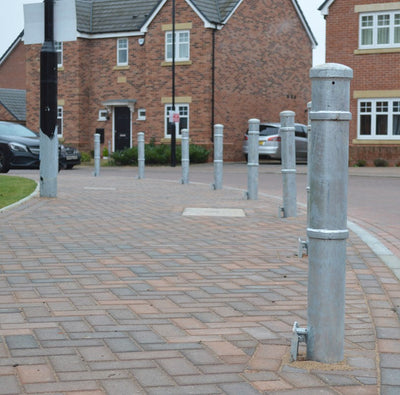
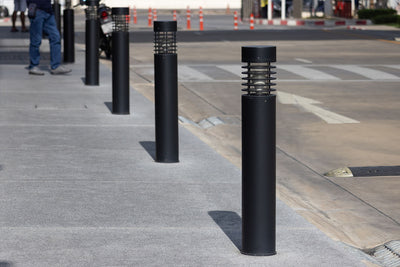
Bollards are ideal for cordoning off pedestrian-only areas, protecting grass verges, or blocking private driveways and entrances. Almost any bollard can do this job, but there are different options for different circumstances.
For instance, if you want to install bollards at the end of your drive, or to reserve a car parking space, you won’t want them to be fixed permanently in place. You can choose:
-
Drop-down/folding bollards that lie in a flat position when not upright
-
Retractable bollards that slide down into a cavity below ground
-
Removable bollards that you can lift out and reposition as needed.
Alternatives to bollards
Other types of street furniture can provide an alternative to anti-ram bollards. These include heavy-duty blocks and planters, which are designed to stop vehicles while providing seating or greenery to enhance the landscape.
You might also use verge markers to prevent drivers from parking on soft verges, and traffic cylinders as a visual deterrent to stop traffic from accessing certain areas.
Final thoughts
Bollards can prevent cars and other vehicles from going where they shouldn’t. There are various types available depending on your needs, and you can find many of these at Start Safety. We also have a whole blog article devoted to buying bollards.
If you need more advice on which type to choose, give us a call!
- Author
- Tags
You might like:

Manchester Bollard ST-CITY Series - Anti-Ram
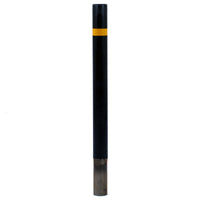
StreetWise Steel Cored Polyurethane Bollard With Anti Ram Fixing

Munro Bollard ST-CITY Series - Multiple Options
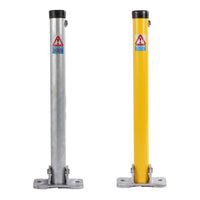
Autopa Galvanised Integral Lock Parking Post Folding / Hinged 730mm x 60mm
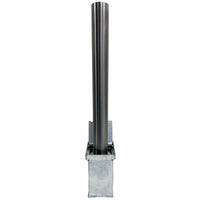
Autopa Removable Stainless Steel Bollard 1000mm
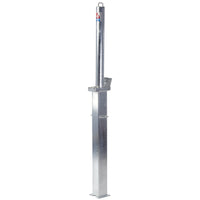
Autopa RetractaPost Galvanised Retractable Bollard External Lock 745mm
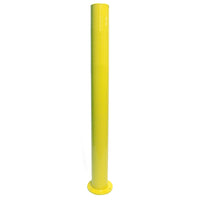
Autopa Fixed Galvanised Yellow Steel Bollard 1000mm (No Fixings)
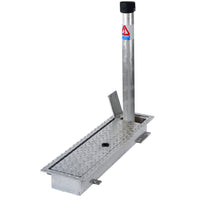
Autopa Galvanised Stealth Flush Fold Parking Post 660mm x 60mm