
 +44 (0)1905 794875
 Wholesale Prices


Private Car Park Signage Rules
In private car parks, good signage plays a key role in fairness and transparency by making the terms and conditions clear to drivers - and it helps reputable operators to show that they can be trusted. But who governs private car park signage, and what are the rules? Let’s find out.
What counts as a private car park?
A private car park is any parking facility that’s entirely on privately-owned land. These car parks are controlled by either the landowner or a private parking operator, unlike public car parks which are usually managed by local authorities.
Common examples include:
- Commercial car parks
- Shopping centres and retail parks
- Industrial estates and business parks
- Hospitality and leisure venues
- Residential estates and housing associations
- Universities and educational institutions
- Private healthcare facilities
- Motorway service stations

Who governs private parking?
There is no statutory regulator for private parking operators, but the 2019 government created the Parking (Code of Practice) Act in response to concerns about “inconsistent practices and unfair treatment” of motorists.
They published the associated statutory code of practice in February 2022 - only to withdraw it a few months later, pending further review, after several parking firms launched legal challenges against it.
In October 2026, the current government brought a new statutory code of practice before Parliament, following a public consultation. At the time of writing, it’s unknown when this might take effect - but the rules will be enforceable if and when the code is enacted.
The Private Parking Sector Single Code of Practice
There are also two official Accredited Trade Associations (ATAs) for private car park operators in England, Scotland, and Wales: the British Parking Association (BPA) and the International Parking Community (IPC).
These bodies already had their own code of practice for members, but in 2024 they joined forces to introduce a new version based on the withdrawn government code. Members must follow the rules, but it’s an industry-led standard rather than official legislation.
Civil contract law
This law applies because parking firms and drivers effectively enter into a “contract” together. The car park signage constitutes the offer of terms, and the driver’s decision to park there constitutes their acceptance.
The Consumer Rights Act
The 2015 Act states that terms and notices in any business-to-consumer contract (which includes private parking contracts) must be transparent and prominent. If not, they may be deemed to be unfair and therefore non-binding.

Who has to comply?
All businesses and individuals who manage and enforce parking on private land are bound by civil contract law and the Consumer Rights Act. Members of the BPA or IPC must adhere to the industry code of practice or face losing their accreditation.
These rules don’t apply to car parks operated by local authorities, which come under the Road Traffic Regulation Act 1984 and related regulations. However, local authorities can choose to follow industry guidance voluntarily.
What are the rules for private car park signs?
As we’ve explained, there aren’t any hard-and-fast rules governing the type or design of signage required in private car parks. In the absence of statutory legislation, we can take our cues from the industry code. Best practice guidance is worth following, whether or not you’re a member of an accredited association.
Types of sign
It’s important to install a sign at the entrance, telling drivers key information such as the terms and conditions for parking there and any payment instructions. Display the operator’s name and contact details (and ATA logo if relevant), and inform motorists if there are ANPR or CCTV cameras on the site.
In larger private car parks, install repeater signs to reiterate the key terms (and to tell drivers where they can find more comprehensive information). It’s best practice to include enough repeaters so that every parking bay has a clear line of sight to at least one sign.

Clarity of signs
All signs (and surface markings) need to be visible, legible, and unambiguous, making it easy for drivers to understand the terms and conditions.
Clear signage helps to reduce confusion, avoid disputes, and ensure parking spaces are used correctly - and it also means that Parking Charge Notices (PCNs) are enforceable if drivers breach the rules.
The industry code offers sensible guidance on the appearance of signs, such as using readable typefaces and plain English wording. Although there’s no “official” design, you can find suggested templates for signs within the document.
The positioning of signage is also relevant, as drivers must have the opportunity to read the signs as they drive into the car park or when they leave their vehicle. And it’s important to maintain the signs so that the wording isn’t faded or obscured by vegetation.
Accessibility
At least one of the signs containing the terms and conditions should be positioned so that a disabled driver can read it without needing to get out of their vehicle. If the car park recognises the Blue Badge scheme, include relevant signage and bay markings. More generally, car park operators should meet accessibility obligations under the Equality Act 2010.

Delineation
If the car park adjoins a separate parking area, a public highway, or even an empty piece of land, you need to delineate your boundaries clearly to avoid confusion. You can do this using signs and/or surface markings, as well as physical barriers.
Rule changes
If the car park’s terms and conditions change at any point, make this clear by displaying temporary notices at the site entrance. The industry code specifies a period of not less than four months from the date of the change.
What signs should I buy for a private car park?
Apart from signage stating the car park’s specific terms and conditions, it’s also useful to display general entrance and exit signs for guidance, plus directional arrows for traffic flow.
You can use signage to denote restrictions such as spaces for permit holders or electric vehicles only. In a large car park, you might want speed limit signs or warnings of speed bumps - and temporary signs to warn of hazards like icy surfaces.
Private car park signage doesn’t have to be standardised to meet the strict regulations that govern signs on public highways. But it makes sense to use standard designs for generic signs so that they’re easily recognisable by drivers.

You should also use signs made from high-quality materials, including road-grade reflectives. Again, even though it’s not mandatory, it’s still a wise move as it proves that you’ve done your best to provide clear and safe signage.
Make sure the signs are installed correctly, reducing the risk of them collapsing and damaging people or vehicles. Select the right posts and fixings for the sign face, and add post caps to prevent water ingress and prolong the life of the posts.
Other considerations
Surface markings help to back up your car park signage. You can use thermoplastic markings or paint to outline parking bays and add preformed symbols to denote parking for groups like Blue Badge holders, parents with children, or motorcycles.
It may also be helpful to include access barriers at the entrance and exit, and height restrictor barriers if you want to prevent taller vehicles from parking on the site.
The takeaway
The private parking sector is unregulated, but it doesn't have to be the Wild West. While the government’s new code of practice hasn’t yet come into force, you can follow existing industry guidelines to make private car park signage clearer. This promotes fairness and transparency and ensures your rules are enforceable.
Apart from signs detailing the terms and conditions, it’s helpful to add directional signs and warning signs to create a safer car park.
Ready to buy car park signs? Visit our online shop or contact our friendly sales team for more advice.
- Author
- Tags
Related articles





You might like:

5mph Speed Limit Sign Post Mounted Diagram 670 R2/RA2
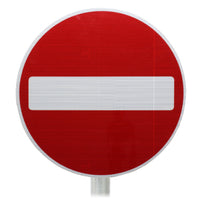
No Entry Sign - Post Mounted Diagram 616 R2/RA2
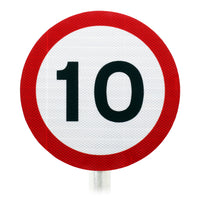
10mph Speed Limit Sign Post Mounted Diagram 670 R2/RA2

Pedestrian Crossing Ahead Post Mounted Sign - 544 R2/RA2 (Face Only)

Give Way Sign Post Mounted - Diagram 602 R2/RA2 (Face Only)
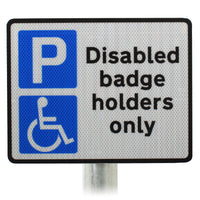
Disabled Badge Holders Only Sign Post Mounted Dia. 661A R2/RA2

One Way Traffic Dia. 652 - Post Mount Sign - Composite Inc. Channel / RA2

No Parking Post Mounted Car Park Sign 260x330mm

STOP Sign, Post Mounted Diagram 601.1 R2/RA2
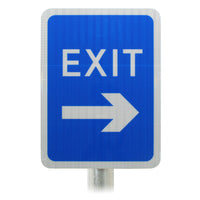
Blue Car Park Exit Sign (With Arrow) Post Mounted R2/RA2

15mph Speed Limit Sign, Post Mounted Diagram 670 R2/RA2

