+44 (0)1905 794875
 Wholesale Prices

Traffic Signs Regulations and General Directions (TSRGD) Explained
Whether you’re planning to install permanent, temporary, or custom road signs, it’s crucial to understand - and comply with - the legislation that covers them.
That legislation is the Traffic Signs Regulations and General Directions (TSRGD) 2016. But before you start studying it, let’s get some insight into what the document contains and why it's important.
What is the TSRGD?
The Traffic Signs Regulations and General Directions (TSRGD) is a piece of government legislation put together by the Department for Transport (DfT). This type of legislation is called a Statutory Instrument (SI 2016/362).
It’s a set of regulations and instructions prescribing the design of traffic signs and road markings, and the conditions of their use, on or near public highways in England, Scotland, and Wales.
Current (2016) version
The legislation is updated periodically, with the most recent changes coming into force in 2016. The current version replaced the 2002 edition with a more streamlined, user-friendly format.
One of the key aims of the 2016 edition was to reduce “sign clutter”, as the DfT felt that having too many road signs on the highway looked unsightly and could be distracting or confusing for drivers.
With this in mind, some of the previous rules were relaxed or amended. For example, the requirement to place repeater signs for speed limits was removed from the regulations, while new timeframes were introduced for removing signs such as “New Road Layout Ahead” or those indicating new housing developments.

What does TSRGD cover?
The TSRGD includes the legal requirements for all authorised traffic signs, as well as road markings, traffic signals, and pedestrian, cycle, and equestrian crossings.
It comprises the overarching Regulations and General Directions, followed by a series of schedules outlining the rules for different types of sign and road marking.
Part 1: The Traffic Signs Regulations 2016 outlines the prescribed appearance, size and shape, and authorised symbols for traffic signs and road markings on the national highways.
Part 2: The Traffic Signs General Directions 2016 specifies where, when, and how the traffic authorities may place, erect, or remove the signs and markings.
The schedules cover groups of signs and markings, including those for:
- Speed limits
- Hazard warnings
- Regulatory signs
- Informational and directional signs
- Parking control
- Pedestrian and cycle zones
- Temporary signs
There’s also a schedule that dictates the permitted letters and numerals for use on signs and road markings.
Working drawings
The DfT also provides “working drawings” or design templates for each traffic sign and road marking prescribed in the TSRGD. These include rules about colours, layout, and the height and spacing of any lettering.
The drawings are used by professionals manufacturing traffic signs. They are listed on the GOV.UK website, aligned with the schedules in TSRGD.

Why is the TSRGD important?
It’s essential that traffic signs and road markings are consistent across the country, so that road users in all regions can recognise them and understand their meanings. Thanks to the TSRGD, you’ll see the same designs wherever you travel in England, Wales, or Scotland.
Consistent rules for the positioning of signs and markings are also vital, as they ensure that road users can clearly see warnings, instructions, and directions. This improves awareness for drivers and pedestrians, creating a more efficient traffic flow and reducing the risk of accidents.
By adhering to one set of regulations, traffic authorities know that the signs and markings they install are legally enforceable. This wouldn't be the case if a sign used an unauthorised design or was wrongly positioned.
Where does the Traffic Signs Manual fit in?
The Traffic Signs Manual (TSM) is an additional publication by the DfT, and acts as a companion to the TSRGD. It provides practical guidance on how to apply the regulations and directions within the TSRGD, helping traffic authorities and sign designers to get it right.
The TSM is divided into chapters covering different types of signs and markings. For instance, Chapter 8 refers to the design and operation of temporary traffic signs and markings, such as for roadworks and diversions.
In short, the TSRGD sets the rules, and the TSM helps you to follow them correctly.

Who has to follow the TSRGD?
As we mentioned earlier, the TSRGD is a statutory instrument, which means it’s classed as “secondary legislation”. The primary legislation, which gives the TSRGD its powers, is the Road Traffic Regulation Act (RTRA) 1984.
The RTRA is an Act of Parliament that grants legal powers for traffic management. Under Section 64, it states that the design of a traffic sign must be specified by regulations made by the relevant national authority. Currently, those regulations are the TSRGD 2016.
The Act makes traffic authorities responsible for the management of their traffic networks. They can decide which traffic signs and road markings to use and where to place them.
Anyone who designs and implements traffic management schemes, or is involved in road traffic regulation, needs to adhere to the TSRGD. This includes local councils, highways contractors, and sign manufacturers.
As long as traffic signs and road markings are compliant under the TSRGD, they are legally enforceable. Motorists are legally required to comply with signs and markings prescribed under the legislation.
Can I install a sign that’s not in the TSRGD?
On occasion, local traffic authorities might want to display a non-standard sign that’s not prescribed by the TSRGD. For example, signage showing an unusual junction layout or warning of a specific type of wildlife. In this situation, the authority can apply to the DfT for permission to use a specially-designed sign.
The non-standard signs shown below were created with this special permission.

The takeaway
The TSRGD prescribes the shape, size, layout, and colour of traffic signs and road markings, and how they should be used. Anyone involved in traffic management needs to be familiar with this legislation.
If you’re sourcing road signs or markings, always buy them from a reputable supplier whose products comply with the TSRGD - otherwise, you could end up buying and installing illegal signs!
At Start Safety, all our signs and markings are compliant for use on the public highway. Buy them online, or contact our friendly sales team for extra advice.
- Author
Related articles





You might like:
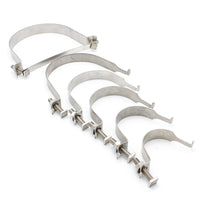
Anti-Rotational Sign Clips / Post Clips Multiple Size Options
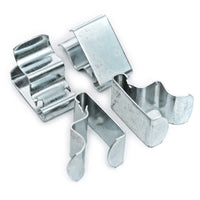
Frame Clips for Metal Temporary Road Signs (sold as singles)
76mm Posts Galvanised 3" Sign Posts in Various Lengths - S275 Grade Steel
Universal Sign Clips for Post / Pole Mount Signs

600 x 450mm Rectangular - Metal Temporary Road Sign Frame | Stanchion

Round Internal End Cap for Sign Posts - Post Cap - Black

1050 x 750mm Rectangular - Metal Temporary Road Sign Frame | Stanchion

5mph Speed Limit Sign Post Mounted Diagram 670 R2/RA2

SandBags - White / Black Polypropylene (Empty / Unfilled)
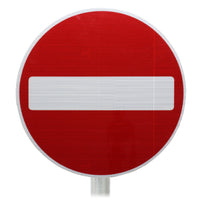
No Entry Sign - Post Mounted Diagram 616 R2/RA2
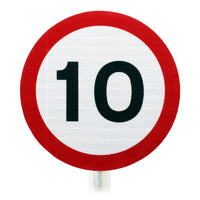
10mph Speed Limit Sign Post Mounted Diagram 670 R2/RA2