
 +44 (0)1905 794875
 Wholesale Prices


Chapter 8 Update 2026: What’s New?
The latest edition of Chapter 8 of the Traffic Signs Manual (2026) is now live, merging the previous three-part set into one document and updating some standards and requirements for temporary traffic management.
A 611-page document can seem daunting, especially if you’re not sure exactly what’s different from the previous version. Fear not - Start Safety is here to help! We’ve pulled out the key changes and revisions to help you navigate the new Chapter 8.
What is Chapter 8?
Chapter 8 is the short name for the eighth chapter of the Traffic Signs Manual (TSM), which is issued by the Department for Transport (DfT) to provide guidance on the correct use, positioning, and design of road signs and markings.
Chapter 8’s full title is "Traffic Safety Measures and Signs for Road Works and Temporary Situations", and it specifically covers the design, installation, maintenance, and removal of temporary traffic management (TTM).
The TSM as a whole is based on the actual legal requirements outlined in the Traffic Signs Regulations & General Directions (TSRGD).

Overview of key changes
We’ve created this article to give you the headlines from the Chapter 8 update - but it’s important to check the document for yourself. You can access a digital version via GOV.UK, or buy a hard copy from TSO.
Consolidation
The first major difference is that Chapter 8 is now a single document with 16 sections, instead of being split into three separate parts (Part 1: Design - 2009, Part 2: Operations - 2009, and Part 3: Update - 2020). The consolidated document should make it quicker and easier to find the information you need.
Firmer legal status
Unlike other Chapters of the TSM, this document now describes itself as a code of practice rather than merely providing design guidance. This is because it:
-
Defines or identifies legal requirements mandated in various highway, roads, and health and safety legislation
-
Identifies requirements relating to the enforceability of regulatory signs included as part of any TTM.
For instance, if Chapter 8 outlines a requirement to use certain road signs for compliance with primary legislation, you can’t use secondary legislation - such as Construction (Design and Management) (CDM) regulations or risk assessments - to justify not using the signs.
If you’re involved in designing or deploying TTM, you must be able to show that it meets the requirements identified in Chapter 8 - even if there’s no contractual requirement to do so.

Red Book compliance
The Red Book (official title "Safety at Street Works and Road Works: A Code of Practice") is a more concise version of the TSM, detailing the statutory requirements for signing, lighting, and guarding at street and road works.
The updated Chapter 8 makes it clear that just complying with the Red Book does not mean these legal duties have been met. That’s because the Red Book doesn’t cover every circumstance or legislative aspect.
Therefore, if there’s something in Chapter 8 that’s relevant to a safe method of working, you can’t dismiss it just because the Red Book doesn’t mention it.
Road worker abuse
A new section has been added to Chapter 8 to cover this particular risk. The code of practice now recommends that you record all cases of abuse, and states that abuse must be covered in risk assessments, especially for lone workers.
The ability to provide physical separation using barriers or other site equipment should also be part of the risk assessment, with verbal de-escalation only used as a last resort.
For large or complicated closure and diversion routes, you’ll need “significantly more expansive signing strategies” to meet the requirements of this document.
Condition of equipment
As before, the official ratings for equipment such as signage and cones are Acceptable, Marginal, or Unacceptable. “Unacceptable” items still have to be replaced immediately, but Chapter 8 now states that “marginal” kit should not go out to site. Road markings are no longer compliant once more than 30% is worn away.

Autonomous vehicles
The new document takes into account autonomous vehicles and those with assistive safety technology. It includes revised specifications and requirements for design and maintenance based on how in-vehicle sensors and control systems perform. Designers should identify ways to ensure TTM is AV-friendly.
Trialling methods or equipment
Chapter 8 now clarifies the rules for trialling new TTM methods or equipment on live roads. Any equipment used in the trials must be prescribed or authorised for its intended use, and working methods must comply with relevant legislation or the terms of approval from the relevant authority.
Product changes
Now let’s take a look at the updated standards and requirements for individual TTM products.
Traffic cones and cylinders
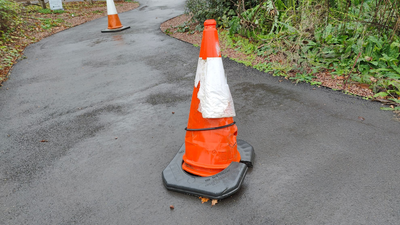
These must meet BS EN 13422:2019 and be CE or UKCA marked, with performance classes marked as defined in the National Annex. The minimum specification is Class S1/S2 shape, W3 weight, Category B, WT1 and R1B.
Cones to Classes R1, R1A and R2A under the 2019 standard are not lawful in Great Britain. R1B and R2B cones made to the older 2004 standard can still be used. Class R2 cones to BS EN 13422:2019 comply with the minimum requirements for Class R1B and are also OK to use.

Road hazard lamps
The whole of each light must now meet BS EN 12352, and the external surface colour must be Lemon (ref 355) or Golden Yellow (ref 356) from BS 381C:1996.
Sequential flashing taper lamps (device type WL7) are now required on trunk roads in Great Britain and relevant roads specified in Northern Ireland, only for lead-in and intermediate stepped tapers involving a lane drop.
For relaxation schemes, you can omit warning lamps as long as you use R2/R2B-rated cones and the permanent markings and road studs are in good condition (with no defects, as defined in CS 126 ‘Inspection and assessment of road markings and road studs’).
Hi-vis clothing
Chapter 8 now refers to the hi-vis clothing standard BS EN ISO 20471:2013+A1:2016 (rather than BS EN 471, which has been withdrawn since the 2009 edition of the document).
There’s now a requirement for Class 3 garments on high-speed roads, with full-length sleeves recommended. Class 2 or 3 is specified for other roads. You’ll need Class 1 hi-vis trousers for any activity where your hi-vis jacket or vest might be obscured - such as bending or carrying equipment.
The update says fluorescent yellow should be worn in live lanes or safety zones in preference to orange or orange-red (except near railways). Any weatherproof clothing must not restrict vision or hearing (for example, hoods).
Contractors should avoid implementing blanket requirements for PPE, because this may cause workers to be less able to identify and manage risks - and may mean the risk assessment isn’t detailed enough.

Temporary signs
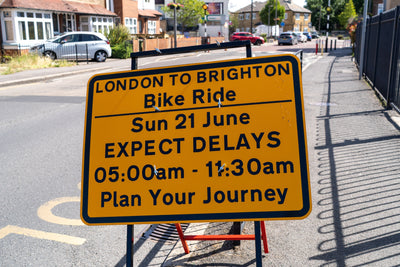
These must now have RA2/R2 sheeting as a minimum, with R3B-UK or R3C-UK if higher performance is required. However, if signs are externally illuminated, and if TSRGD doesn’t mandate that they must be constructed with retroreflective material, Chapter 8 recommends using material to “at least” Class RA1/R1 as detailed in BS EN 12899-1.
Other changes relating to temporary signage include:
-
Signs are required to be resistant to weathering and comply with BS 8442:2022, which has two classes: T1 (2 years of resistance) and T2 (3 years)
-
Fluorescent yellow backgrounds are allowed on most Schedule 13 Part 6 signs
-
Signs for pedestrians need to include distances as well as walking times
-
Wait Here signs may now be placed 3m in advance of portable traffic signals, instead of 2m.
Barriers
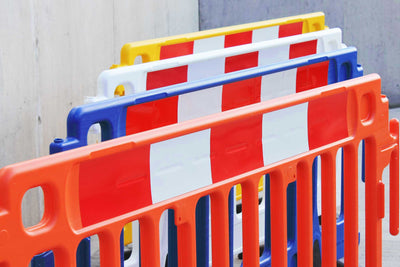
All pedestrian barriers now need a tapping rail at about 150 mm above ground level, and a robust handrail at a height of 1 to 1.2 m.
Chapter 8 traffic barriers (diagram 7105) must be 150 mm high for roads up to 40 mph and 300 mm high on roads of 50 mph and above. Timber baulks, oil drums, and poles are not allowed for delineation.
In busy areas, barriers next to excavations deeper than 300 mm should meet BS 7818. Temporary pedestrian routes should be at least 1.5 m wide, with 1 m as the absolute minimum.

Vehicle markings
Vehicles stopping on high-speed roads need chevrons that conform to R3B-UK as well as red reflective tape on rear-facing edges of open doors and lockers. They also require two roof-mounted 360-degree amber beacons, and there are limits on uncoordinated flashing above 4 hz due to the risk of photosensitive epilepsy.
Studs and delineators
The standards DMRB CC 130, CD 130, CD 131 (temporary studs), and CD 132 (flat delineators) have been updated. The Specification for Highways Works (SHW), part of the DMRB, has been revised to provide an up-to-date and clear set of requirements.
Chapter 8 recommends that you refer to the latest versions of standards (and any National Annexes) when confirming specific characteristics and classes of products to be used.
Temporary road stud products are no longer part of BS EN 1463-1:2021, so Chapter 8 directs users to CD 131 and the relevant National Annex provisions.
Have your say
Do you think there’s something missing from the new version of Chapter 8? You have the chance to suggest changes!
National Highways, which is responsible for maintaining and updating the TSM on behalf of the DfT, has launched a pilot scheme under which anyone in the TTM industry can propose changes to Chapter 8.
These may include fixing typos (Category A), suggesting changes for comprehension or clarity (Category B), or introducing a product or way of working that’s not currently included (Category C).
If you’d like to propose a change, fill out the National Highways form. Submissions for Category A and B close in March 2027, and for Category C in June 2027. After review, approved changes will be added to Chapter 8 and included in the next published version, around August 2028.

The takeaway
As well as merging three parts into a single document, the 2026 edition of Chapter 8 also contains some subtle but important changes in its guidance. It’s essential to familiarise yourself with the new document, especially where the updated requirements have a legal status.
When you buy from a trusted supplier like Start Safety, you can be confident that equipment such as barriers, lamps, temporary signs, and hi-vis clothing meet the required standards.
Find what you need in our online shop, or contact our friendly sales team if you need more advice on what to buy.
- Author


You might like:
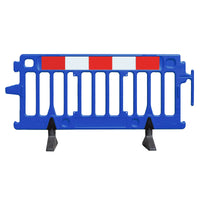
Avalon Barriers - Pedestrian Barrier - Blue

360D Traffic Cone Safety Lamp LED Flashing - AA Battery Powered

Apollo Cone 750mm Road Cone - Orange

10mph Sign QuickFit EnduraSign Dia. 670 | 750mm

3-Way Control Wait HERE Until Green Light Shows Sign Diagram 7011.1 | Quick Fit (face only) | 1050x750mm

Diversion Ahead Sign - Zintec Metal Sign Dia. 2702 Face | 1050x750mm
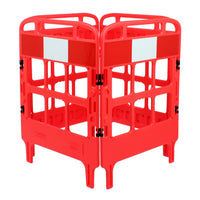
Portagate Barrier - Folding Manhole Barrier - JSP

Blaklader 4023 Hi-Vis Yellow/Navy Blue Jacket

Temporary Reflective Road Studs (Temporary & Permanent)

