+44 (0)1905 794875
 Wholesale Prices

What Do The Different Colours Mean For Barriers?
Red, orange, and blue barriers are a common sight around the UK. But did you know that other colours are available, too? What do they all mean?
In this article, we’ll look at some of the reasons for using different colours of barrier, and explain what those colours signify.
What are barriers used for?
Barriers are essential pieces of safety equipment for roadworks zones, construction sites, and public events. Typical use cases include:
-
Forming a perimeter around workers and equipment
-
Blocking access to restricted or dangerous areas
-
Controlling large crowds
-
Delineating traffic lanes.

What’s the reason for using different colours?
When you see coloured barriers around the UK, you might assume that the colours mean something specific. But this isn’t always the case - brands often use particular colours to identify their own barriers so that other companies don’t “accidentally” scoop up their assets after a project.
However, there are situations where coloured barriers do mean something.
Railway sites
The rail industry tends to use blue barriers, especially on platforms. This is because on rail sites, it’s important not to use anything that might be mistaken for a signal colour.
PPE areas
A particular colour of barrier can indicate that a site zone has a specific hazard - one that requires specific PPE to be worn. For instance, there might be a hard hat zone or a dust mask area.
Refuge areas
On some sites, you will find areas cordoned off with specific colours of barrier, indicating rest areas for workers.
Barriers denoting PPE or refuge areas are usually only found within major project sites. The majority of roadworks sites (for things like utilities works or road resurfacing) will just use whatever colour the primary contractor has as its brand identity.

What do the colours mean?
There are no hard and fast rules for using coloured barriers (although some rail sites expressly prohibit red-toned barriers). But for those sites that do choose to use them, this is the approximate code:
| Barrier colour | Typical meaning(s) |
|---|---|
| Green |
|
| Blue |
|
| Amber / Yellow |
|
| Red |
|
If you are going to use coloured barriers in this way (or if you want to use your own colour coding system) you will also need to set up clear signage at the entrance to the site and make sure all staff members receive onboarding training on the topic.
You’ll also need to check whether the site has any specific guidelines for coloured equipment - this is especially important for railway works.

Other considerations for using barriers
There are lots of barrier types to choose from, so it’s important to get the right ones for the job. For example, you could go for plastic or metal versions.
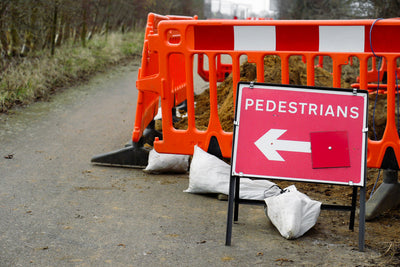
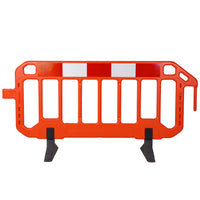
If you’re carrying out roadworks on the public highway, you'll need to use Chapter 8 compliant barriers - these come in a range of colours and also have space to include your company name and logo if you wish.
Manhole barriers are smaller as they’re designed to cordon off open holes or small-scale utility works, while expandable barriers (the clue’s in the name) can be adjusted according to your needs. Both come in various colours.
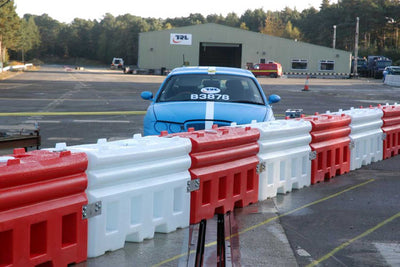
For a heavy-duty perimeter, you might use water-filled barriers - these are usually red and white, but are available in other colours too.

Closing thoughts
Sometimes, barrier colours don’t have any deep meaning - they’re chosen for identification purposes. But you can use a colour-coded barrier system on your site - just make sure everyone’s aware of how it works.
Ready to buy coloured barriers? You can find what you need at Start Safety, either by browsing our store or calling our friendly sales team.
- Author


You might like:
GS6 Telescopic Goalpost Height Restriction Cables Warning Kit
Melba Gate Barrier - Pedestrian Barrier - Chapter 8 Barrier - Orange
Red And White Safety Bunting - Pendant Caution Marker 26m JSP | HDM000-305-400
Safegate Barrier - Red or Yellow, 3 or 4 Gates
JSP Retractable Cone Bar Barrier (Multiple Colours) Cone Poles
Skipper Retractable Barrier
6mm Plastic Barrier Chain 25M - Multiple Colours 25M
Cone Chain Connector Holder
Firmus Professional Barrier - Chapter 8 Pedestrian Barrier - Standard Feet - Orange
Danger Overhead Cables Max Height Sign R2/RA2 ( fixings not included)