+44 (0)1905 794875
 Wholesale Prices

Pedestrian Road Safety Guide
Road safety for pedestrians isn’t just about those on foot - all road users need to understand the rules and road features that exist to prevent accidents. Our pedestrian road safety guide is here to help.
We’ll look at some of the key road furniture and regulations relating to pedestrians, and provide some tips on how pedestrians can keep themselves safe on the roads.
The importance of pedestrian road safety
Pedestrians are the most vulnerable group of road users, especially children, elderly people, and those with disabilities. Road safety regulations and guidelines are designed to protect not just pedestrians but also motorists, cyclists, and road workers.
All road users need to be aware of signs and road features relating to pedestrians, whether they’re warning drivers that pedestrians may be present or guiding walkers safely across roads and roadworks sites.
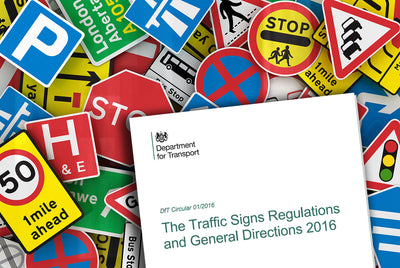
It’s also crucial that pedestrian road signs (and other safety equipment like barriers and ramps) are compliant with the Traffic Signs Regulations and General Directions (TSRGD) 2016. Non-compliant signage is confusing and unenforceable, while non-compliant barriers and ramps won’t keep people safe.
The Highway Code sets out 35 road safety rules for pedestrians (this includes the Green Cross Code). For example, looking both ways before crossing, and keeping to the right-hand side of roads with no pavements so that you’re facing oncoming traffic. There are also rules for when drivers must give way to pedestrians.

Permanent road signs
These signs (typically post-mounted) are prescribed by the TSRGD 2016, which governs how and where they are used. They are designed to inform and warn pedestrians and drivers about rules, rights, and potential hazards.
Pedestrian Crossing Ahead
This sign (diagram 544) is specifically for zebra and parallel crossings on a main road, and lets drivers know that pedestrians will have the right of way ahead. If needed, you can add supplementary plates to show how far away the crossing is, or to state that it’s new.
This sign cannot be used at puffin or toucan crossings, which will have the “Traffic Signals Ahead” sign instead (diagram 543). If pedestrians will be crossing a high-speed road where no formal crossing exists, you can use the “Other Danger Ahead” sign (diagram 562), together with the “Pedestrians Crossing” supplementary plate (and, optionally, a distance plate).
For guidance on where the zebra crossing sign should be installed, see the Traffic Signs Manual Chapter 4, section 8.1, page 47.
Pedestrians In Road Ahead
If pedestrians are frequently in the road at a certain point, this sign (diagram 544.1) should be used to warn drivers. For example, you will see it on roads without a proper footway in place.
It can be used with the following supplementary plates: "No Footway for X Yards" (diagram 547.3), “X Yards" (diagram 572), or a directional arrow to diagram 573.
Frail or Disabled Pedestrians
This sign (diagram 544.2) informs drivers that they’re likely to encounter pedestrians who need extra time to cross the road. It should be displayed at sites where a large number of these people are likely to cross, but there’s no zebra or signalled crossing in place.
You’ll typically see these signs near care homes, assisted living housing, or residential areas. They are often paired with supplementary plates saying "Disabled People" (diagram 547.4), "X Yards" (diagram 572), or a directional arrow (diagram 573).

Children Crossing
A familiar sight near schools, playgrounds, and parks, this sign (diagram 545) warns drivers to exercise extra caution because children are likely to be on or near the road.
There are several supplementary plates that may be used in conjunction with this sign, including “School”, “Playground”, “Patrol”, “Disabled Children” (and variants specifically for blind or deaf children), and "No Footway for X Yards".
Flashing amber lights (diagram 4004) may be used to emphasise this sign where the 85th percentile speed exceeds 35 mph, or on a busy road. Lights are only permitted when the sign is paired with one of the supp plates listed above and the crossing point is in use.
Although it’s not a permanent sign, we should also mention the classic Stop: Children hand-held lollipop sign (diagram 605.3), as this is used in conjunction with the other child-related signage.
Pedestrians Prohibited
This sign (diagram 625.1) has been known to confuse road users, as it means that pedestrians are not allowed in a particular area - such as an urban area with no footpaths.
You might think it would have a red line through it, like the “No Right Turn” sign (we do have a “No Pedestrians” floor marking sign like this).
But the “Pedestrians Prohibited” sign is similar to the regulatory signs that prohibit motorised vehicles and pedal cycles, both of which show the symbols in a red-ringed circle with no strike-through.
Pedestrian Zone Starts / Ends
These signs (diagrams 618.4A and 618.3B) indicate the start and end points of a pedestrianised area, helping drivers and pedestrians know where they are permitted to enter and where standard road procedures and rules apply.

Cycles & Pedestrians Sign
Conversely, this sign (diagram 956) means that pedestrians are allowed - along with cyclists. It’s prescribed for mixed-use, unsegregated cycle lanes where cyclists and pedestrians have equal right of way. It also means that no other vehicles may use the route, and should be located where the shared route begins.
Cycles, Horses & Pedestrians
On a similar theme, this sign (diagram 956.1) is displayed where ridden horses are permitted to use an unsegregated cycle and pedestrian route. It prevents access to any other vehicles, and should be placed where the route begins.
You’ll want to use either 600mm or 750mm diameter sign faces as the logos are smaller than on most post-mounted signs.
There is also a version (diagram 957) of the sign with a white line between the pedestrian and cyclist symbols, to indicate a segregated route.
Cycles, Horse-Drawn Vehicles & Pedestrians
If horse‑drawn vehicles are permitted on the route alongside cyclists and pedestrians, this sign (diagram 956.2) is displayed. Again, it prohibits all other vehicles. This one is a rare sight on our roads - if you spot one in the wild, let us know!

Road markings
As an alternative to post-mounted signs, you can affix signage for pedestrians to the road or pavement surface. Thermoplastic markings are ideal, as they’re highly durable and easy to apply with a gas torch.
There are many preformed thermoplastic signs with the same designs as the post-mounted versions, including Children Crossing, Pedestrian Crossing, Pedestrians In Road, Frail/Disabled Pedestrians, and Cycle/Pedestrian Route.
Other options include preformed symbols like the “walking man”, zebra crossing panels, and coloured thermoplastic sheets to highlight pedestrian walkways.
Safety for disabled pedestrians
There are many road features designed to assist pedestrians with disabilities. For example, ramps instead of steps for wheelchair and scooter users, and handrails to help people navigate steps and sloping footways.
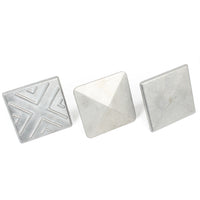
For those with visual impairments, safety features include dropped kerbs at pedestrian crossings, road studs to delineate the limits of a crossing, and tactile paving with raised surfaces that can be felt underfoot.

Blister paving (raised dots) denotes a safe crossing area, while corduroy paving (long raised bars) warns of steps, level changes, or hazards such as railway platforms. It is also used to show where a footway joins a route shared with cyclists or vehicles.
At some crossings, there’s a beeping sound or a voice signal to tell blind or partially sighted people when it’s safe to cross. There may also be a rotating or vibrating cone on the control box, which deafblind pedestrians can feel.
As well as tactile paving, contrasting colours on footway and road surfaces can help partially-sighted people to find crossing points or pedestrianised areas - this is useful for drivers, too.
Uneven or damaged surfaces present a particular hazard to disabled pedestrians and these should be repaired promptly.
Although most of these features are the responsibility of local authorities, businesses can also help to improve safety for disabled pedestrians by keeping footways clear of obstructions (such as rubbish or delivery boxes).
Temporary signage
In areas where roadworks, utilities work, or construction work are taking place, it may be necessary to set up temporary signage and safety equipment to keep pedestrians safe.
Temporary signs for pedestrians point out footway closures, diversions, or obstacles. Some of these signs correspond to an official diagram, while others don’t - but there are still rules governing their design.
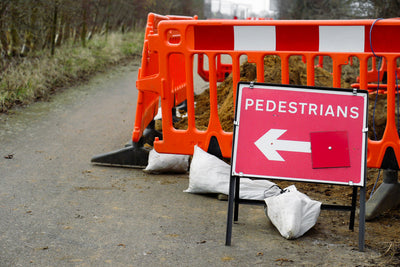
Pedestrians (with directional arrow)
This sign (diagram 7018) is used to guide pedestrians where their normal route is diverted and the alignment of the new route is not obvious. The arrow may point to either the left or the right - some signs come with reversible arrows.
Pedestrians Use Other Footway
This sign is also to diagram 7018, and indicates that the usual footway is temporarily out of use.
Pedestrians Look Both Ways / Right / Left
This sign (diagram 7017) warns pedestrians that the traffic flow has been re-routed around a diversion or temporary one-way system. The “Look Right/Left” version may be double-faced with “Left” on one side and “Right” on the other, and provided at each edge of the carriageway.

Pedestrian Crossing
This sign (diagram 7011.2) gives the message “When Red Light Shows Wait Here”, indicating not only where the temporary crossing point is located but also that pedestrians don’t have an automatic right of way.
Crossing Not In Use
If you need to inform pedestrians that the normal crossing is not currently operational, you can use this sign (diagram 7016).
Other temporary signs
What if you need a temporary road sign with a different message from those listed above? In this case, you can turn to Schedule 13 Part 9 of the TSRGD, which provides guidelines for “other” temporary signs.
These signs don’t have to match specified diagrams, and you can use whatever message suits the circumstances - but there are still restrictions on the design so that the signs have the same general appearance as the diagram-specific signs.

Messages may include:
-
Caution Trip Hazard - used where there are cables or hoses across the walkway, or uneven surfaces
-
Pedestrian Crossing Point - a slight variation on diagram 7011.2
-
Cyclists Dismount And Use Footway - this one turns cyclists into pedestrians as they must walk their bikes along the footway.
As well as ready-made signs with commonly-used messages, Start Safety offers bespoke signs with custom wording (all compliant with Chapter 8).
IMPORTANT: Where gas works are taking place, or if there’s a leak of gas or other flammable chemicals, it’s vital to display No Smoking signs!
Temporary road features
All the equipment we mention in this section must be compliant with Chapter 8 of the Traffic Signs Manual.
Temporary pedestrian routes
Around roadworks sites, it may be necessary to set up temporary routes for pedestrians. This can involve a diversion, or a narrowing of the regular footway.
Wherever possible, temporary pedestrian routes should be at least 1.5 m wide. The TSRGD stipulates a minimum of 1.2 m wide (with an absolute minimum of 1 m in exceptional circumstances).
If it’s not possible to maintain sufficient width on existing footways, alternative measures should be put in place. For example, a temporary footway in the carriageway, a diversion onto a verge or across the road, or signage and personnel to escort pedestrians through the works.

Ramps
In some circumstances, a pedestrian route may be diverted into the road. You’ll need to set up kerb ramps so that wheelchair and mobility scooter users (and people with prams and pushchairs) can move easily and safely between the footway and carriageway.
The TSRGD states that ramps must conform to BS EN 124. They should be slip-resistant (to BS 7976) with only a gentle slope, and fixed in position while still allowing rainwater to run along the gutter.
Footway ramps require a working load of 250 kg at the centre point, with an ultimate failure load of no less than 500 kg. They should be at least 1 m wide (ideally 1.2 m) with edging to stop wheels slipping off the side.
When possible, the layout should include a platform at kerb level to allow wheelchair and scooter users to turn through 90° before descending the ramp.
If it’s necessary to run cables or hoses across a pedestrian route, cable ramps help to prevent trips.
Barriers
It’s also a requirement that pedestrians are protected from roadworks and vehicular traffic. The New Roads and Street Works Act (NRSWA) 1991 makes the signing, lighting, and guarding of barriers a statutory duty.
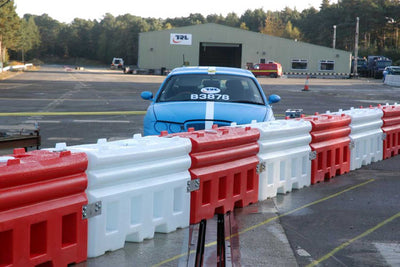
The TSRGD says you can’t use traffic cones as a barrier system - you must set up continuous barriers that clearly delineate the works and warn pedestrians of their presence. Barriers must surround the site if the works are unattended.
Join the barriers into a continuous line, ideally using tamper-resistant fixings to stop pedestrians squeezing through or barriers being displaced. The barriers should also be rated to withstand Class C wind (8.7 m/s), according to BS 8442:2006. This may require ballast or cross-bracing.
There are specific Chapter 8 barrier features for guiding pedestrians, including blind or partially sighted users. These include:
-
A fixed handrail (between 1 m and 1.2 m above ground level)
-
A visibility panel at least 150 mm deep - this can be integral to the handrail or separate (if separate, the upper edge must be at least 0.9 m above ground level)
-
A tapping rail for cane users (at least 150 mm deep, with its lower edge at ground level or a maximum of 200mm above ground)
Obstructions and excavations on the footway also require continuous barriers or fences around them, plus warning lights at night. This includes open holes or piles of rubble. Builders need to obtain consent before depositing materials or excavating on the highway (Highways Act 1980 s.171(1)).

Lighting
We mentioned warning lights for barriers around obstructions, but it’s also mandatory to add these to any pedestrian barriers if the road speed limit is 40 mph or above (for lower-speed roads, carry out a risk assessment).
Chapter 8 sets rules for mounting height: warning lights must be mounted so that the centre of each lens is at least 1.5 m above the road surface (for roads of 40 mph or under) or at least 1.2 m high (roads above 40 mph).
On unlit roads, you must use steady lights (not flashing). If the road has working street lighting and the speed limit is 40 mph or under, flashing lights are permitted.
The same rules apply for lighting on scaffolding and hoarding (more on those later).
Trench covers and footway boards
Various solutions exist for safely covering trenches and other excavations on a pedestrian route. Covers, boards, and road plates all require a slip-resistant surface (to BS 7976), with no vertical steps greater than 6mm in the direction of travel.
They should be marked with the safe working load, the month and year of manufacture, and the manufacturer’s contact details. The materials should be resistant to petrol, diesel, road salt, and UV exposure, and must not distort over time.
Footway boards
A trench cover or footway board must extend the full width of the temporary footway with enough overlap on either side of the excavation. It also has to be rigidly fixed in place, with chamfered edges and a slip-resistant surface.
Footway boards must have a working load of 400 kg at the centre point, with an ultimate failure load of no less than 800 kg. The board must be marked "Not for use in the carriageway" or "Not for road use". The regulations also apply if the board is used over a cycle track or verge.
Footway boards may be suitable for occasional light vehicle access, such as for residential properties. This is based on the weight of a typical family car (1600 kg or under), and subject to a site-specific risk assessment. If a board is used for this purpose, it should cover the whole width of any vehicle crossover.

Driveway boards
For heavier or more frequent access by residential vehicles, you should use driveway boards. These are more robust than footway boards, with a working load of 875 kg and an ultimate failure load of no less than 1750 kg. They must not be used in running carriageway lanes.
Temporary covers
Temporary covers are designed to cover unattended open excavations within 2 m of a temporary or permanent footway. They are not intended to allow access over the excavation, but to stop people from falling into the hole if they accidentally breach the protective barriers.
The covers need to resist wind displacement (using ballast or fixings if necessary), and to be marked as “Not designed for trafficking - fall arrest only”.
Road plates
Road plates are used for bridging excavations on the carriageway, but they still have a role to play in pedestrian safety as they help to prevent falls and trips when people are crossing the road. If the plates have raised edges, you must use ramps to avoid causing more of a hazard for pedestrians and vehicles.
You can find more guidance on temporary road features on the Highway Authorities and Utilities Committee (HAUC( UK)) website.

Scaffolding and hoarding alongside pedestrian routes
The Highways Act 1980 covers both scaffolding (section 169) and hoarding (s.172). It’s also worth looking at the Construction (Design and Management) Regulations 2015 (Reg 13/27) and HSE guidance HSG151.
You must obtain a licence from your local authority before erecting scaffolding or hoarding that obstructs the highway. Licence conditions vary by council, but typically include:
-
Placing warning lamps at regular intervals and lighting the structure from half an hour after sunset to half an hour before sunrise
-
Painting the lower structure white up to approx 1.6m for extra visibility
Scaffolding
Specific licence conditions for scaffolding may include:
-
Attaching solid pedestrian barriers to the scaffolding at pavement level to help guide visually impaired pedestrians around it
-
Adding a temporary kerb if any part of the scaffolding below 4.9 m comes within 0.5 m of the existing kerb.

The Work at Height Regulations 2005 also protects pedestrians by reducing the risk of objects (or workers!) falling from above. It must include a top guardrail at least 950mm above any edge from which people are liable to fall, intermediate rail(s) with unprotected gaps not exceeding 470mm, and toe boards to prevent falls and any objects falling off the edge of the platform.
More guidance comes from the National Access and Scaffolding Confederation, under document NASC SG34:17. It states that all standards (uprights) adjacent to public access must be fitted with hi-vis hazard tape or preferably foam padding up to a height of 2 m (unless they are protected by hoarding).
Also, scaffolding shouldn’t have any sharp ends or unprotected nuts or bolts within 2 m of ground level. Use plastic caps on exposed tube ends and protective caps or wrapping for any fittings or threads that could cause injury or damage. It’s a good idea to use bright colours for visibility.
Hoarding
The Highways Act 1980 (s.172) states that you should set up a close-boarded hoarding before starting any building work fronting a street. You’ll need a separate licence if the hoarding itself obstructs the highway.
Again, licence conditions vary, but you should maintain a pedestrian route through or around the hoarding rather than forcing people into the road and secure the site against unauthorised access. There’s no fixed statutory height for hoardings, but 2.4 m is common industry practice.

Skips
Skips are usually placed on the highway, but it may be necessary to place a skip on or partially on a footway. You should avoid blocking the entire pavement if possible and remove the skip as soon as practicable.
Make sure the skip is visible to pedestrians (whether on footways or as they cross the road) by lighting it during the hours of darkness and adding reflective or fluorescent markings.
Site entrances
If a construction site borders a footway, you must take all practical steps to prevent pedestrians being struck by vehicles entering or leaving, and keep the pavement clear during deliveries. You’ll also need to prevent pedestrians from wandering into the site by mistake.
Hi-vis clothing
As a pedestrian, it’s a good idea to make yourself more visible to drivers, especially if you routinely walk along unlit roads or country lanes - or even when you’re walking through a lit area in darkness, dusk, or bad weather. You can do this by wearing bright clothing, including hi-vis garments.

A hi-vis vest can be worn over your other clothing, or you could invest in a hi-vis jacket, rucksack, or hat. Wearing a head torch or clip-on lights, or just carrying a torch, can also be helpful as long as you’re careful not to dazzle drivers.
The takeaway
While pedestrians have a responsibility to take care on the roads, pedestrian road safety includes the provision of safe footways and crossing points, with signage to ensure that those on foot have the information they need and that drivers are aware of vulnerable pedestrians in the road.
It’s worth being aware of the regulations for permanent and temporary signs, as well as barriers, ramps, and other features. High-quality, compliant pedestrian road safety equipment is essential for keeping everyone safe.
Find what you need in our online shop, or call our friendly sales team for more advice.
Related articles

You might like:

Pedestrians Prohibited Post Mounted Sign - Dia 625.1 R2/RA2 (Face Only)
Metallic Road Studs For Pedestrian Crossings
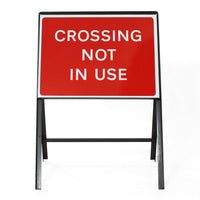
Crossing Not In Use Sign - Zintec Metal Sign Dia. 7016 Face | 600x450mm
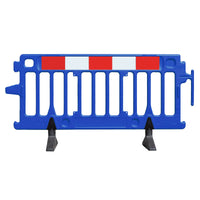
Avalon Barriers - Pedestrian Barrier - Blue
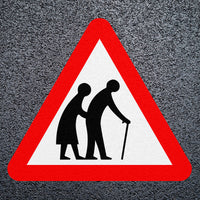
Frail or Disabled Pedestrians Ahead Preformed Thermoplastic Road Marking
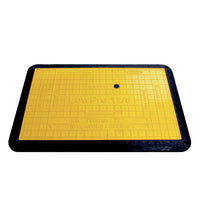
Oxford LowPro 12/8 Anti Slip Footway Board (1200mmx800mm)

LED Scaffolding Light Battery Powered - Red