
 +44 (0)1905 794875
 Wholesale Prices

Car Park Safety Guide
Car parks naturally bring vehicles and pedestrians together - which is why you need a solid safety plan to mitigate the risks and ensure everyone stays safe.
In this car park safety guide, we’ll explain the various ways to manage vehicle speed, traffic flow, and visibility in a busy car park.
Why do car parks need safety features?
Many car park users aren’t thinking about safety first and foremost. They often have other things on their minds, such as grabbing a bargain at the shops, clocking into work on time, or simply finding a space.
Planning a car park requires consideration of all the potential risks, and implementation of various features to help users navigate the space sensibly and safely.

Car park signage
Car park signs point out everything from entrances and exits to pedestrian walkways and restricted areas. Good signage reduces hesitation, confusion, and poor driving decisions - and it’s one of the lower-cost things you can do to improve safety.
Clear signage can create specific routes and one-way flows, making traffic more predictable. It can also show pedestrians where they should cross, and inform drivers where they should give way.
Sign placement matters as much as the signs themselves - they need to be at the right height and in the optimum location so that they’re visible before the driver needs to act. The signs must also be reflective for easy visibility on dark mornings, winter evenings, and in poor weather.
Car park signage is often permanent, mounted either on posts or on walls and fences. However, temporary signs can also be used to cordon off certain areas or warn of a one-off hazard such as ice or flooding.

Common signs to consider:
-
Entrance / Exit
-
Disabled Parking
-
Visitor Parking
-
Loading Bay
-
Fire Doors (No Parking)
-
CCTV In Operation / Private Land
Signage checklist
-
Are all signs visible, clean, and positioned correctly?
-
Are warnings placed well before the hazard?
-
Are disabled, parent/child, visitor, and loading bays clearly identified?
Road markings
Car park markings help drivers in particular to understand the space without needing to stop and think. They help to prevent a chaotic “free-for-all” that could lead to accidents. For instance, speed limit markings are useful at the entrance.
You can use either paint or thermoplastics to create permanent markings. Liquid paints are often used to colour large areas - such as painting disabled bays blue or EV charging bays green - or to make pedestrian zones more obvious.
Thermoplastic markings bond to tarmac or concrete when you melt them onto the surface with a gas torch. They’re available as rolls of tape for marking out lines, or as preformed symbols to denote speed limits or disabled parking spaces.
If you want to sketch out where permanent markings will go, or create temporary markings, you can use temporary aerosol paints or crayons.
Paint and thermoplastics are durable and long-lasting, but you will need to refresh them periodically. Faded markings cause confusion and poor parking behaviour, and worn markings can become slippery in wet weather.

Key markings
-
Bay lines
-
Parent and child bays
-
Loading bays
-
No parking areas
-
Hatched zones
-
Give Way / Stop markings
Speed reduction
Speed control is an important aspect of car park safety. A logical layout and visual cues (signs and markings) are part of the equation, but it can make sense to add physical traffic calming such as speed bumps.
Even in low-speed environments, vehicles can cause serious injuries - especially where pedestrians are present. Reduced speeds give drivers more time to react to obstructions or pedestrians - and vehicles will do less damage in the event of an accident.
However, speed limit signs alone are rarely enough. For example, drivers entering the car park from faster roads may have a skewed perception of how fast they’re going, and fail to slow down sufficiently even if they’ve noted the speed limit sign.
In short, signs tell people what to do, but speed bumps make them do it.

Where speed bumps work best
-
Long straight runs
-
Outside entrances
-
Near pedestrian crossings
-
Around schools, depots, and warehouses
Speed cushions
In some environments, speed cushions can work better than full-width speed bumps. These are longer, smoother ramps that reduce vehicle speeds in a more controlled way. They’re wide enough to slow down cars but narrow enough to let large vehicles pass over them - which is ideal for car parks where both delivery lorries and regular cars are present.
Pedestrian management
Pedestrians are the most vulnerable users in a car park, and the layout and safety features have a big part to play in keeping them separate from vehicles as much as possible.
The safest car parks make pedestrian routes obvious, typically by marking out walkways with bollards or barriers and creating zebra-style crossings with signage advising pedestrians to look both ways.
You can also enhance safety by setting up designated delivery and loading areas and keeping delivery routes separate from visitor parking (this will also assist with smooth traffic flow).
It’s also good practice to create safe routes from parking bays to the main building entrance or reception, as well as dedicated staff entrance routes. There should be a clear separation around loading bays, plus extra room around disabled bays and parent/child spaces.

Special risk areas
Delivery areas and warehouse yards can be dangerous for pedestrians, as can school drop-off areas. Pay special attention to blind corners and reversing zones - you can use warning signs to alert both pedestrians and drivers, and convex mirrors to widen the field of vision.
Line marking paint and anti-slip marking products are handy for designating pedestrian areas, as well as thermoplastic symbols. And don’t forget about keeping grit on hand in the winter to prevent accidents in icy conditions.
Vehicle control or arrest
Another aspect of car park safety is having parking aids in place to protect buildings and pedestrians in case drivers misjudge the size of the parking bay or lose control of their vehicle.
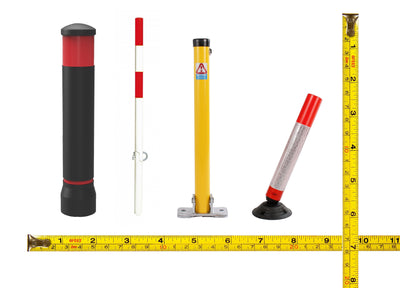
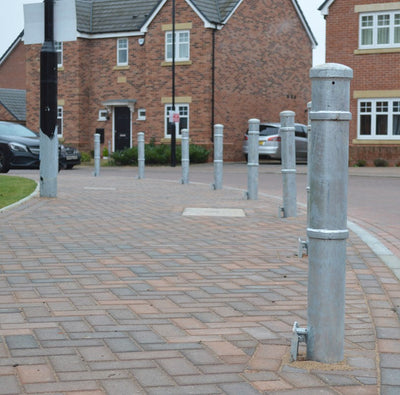
You can use wheel stops, barriers, or bollards to prevent vehicles from overshooting the parking bays and hitting vulnerable corners, doors, payment machines, lighting columns, and EV chargers. Even at low speeds, repeated impacts can cause damage and require repairs.
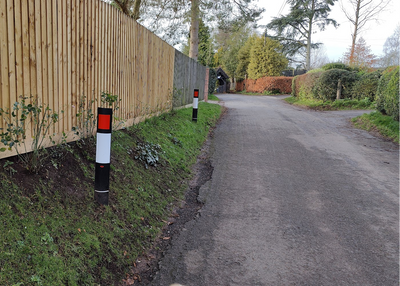
Wheel stops are especially useful for loading areas where HGVs are coming and going. Bollards can also be used to mark the ends of parking bays - and if these are flexible, they can withstand the occasional light impact.
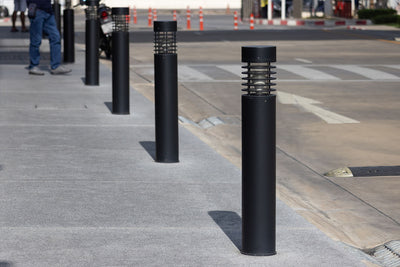
Cast-in bollards (embedded into concrete or tarmac) are stronger than surface-mounted variants, although they take more effort to install. You could consider removable or retractable bollards that protect the premises when the car park is closed, but allow access during normal hours.
Anti-ram bollards with a steel core are designed to stop intentional ram-raids.

Where bollards should be considered
-
Building entrances
-
Shopfronts
-
Roller shutters
-
Pedestrian walkways
-
Outside plant rooms
-
EV charging points
-
Trolley bays
-
Bin stores
Car park maintenance checks
Carry out regular checks to make sure that all car park safety features are clearly visible and in good working order. For instance, ensure that signage isn’t damaged or dirty, and that surface markings haven’t faded or worn.
Check that speed bumps and wheel stops are secure, and look out for any bent or missing bollards. Keep grit supplies topped up in winter in case of a sudden cold snap, and respond quickly to any oil or liquid spills to avoid slips and falls.
The takeaway
Car parks should be safe for both drivers and pedestrians - and you can reduce the risk of accidents and confusion by implementing appropriate signage, markings, speed bumps, and other infrastructure.
Start Safety has everything you need to improve car park safety, whether it’s for an office, a warehouse, a supermarket, or a school. Find the supplies you need in our store or contact our friendly sales team for more advice.
- Author
You might like:
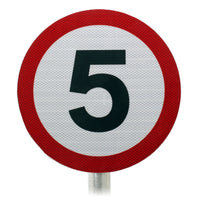
5mph Speed Limit Sign Post Mounted Diagram 670 R2/RA2
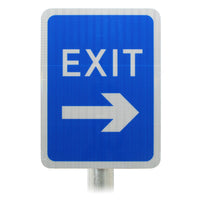
Blue Car Park Exit Sign (With Arrow) Post Mounted R2/RA2
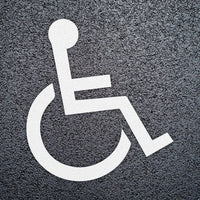
Disabled Road Sign For Parking Bays Thermoplastic

Heavy Duty Line Marking Paint - Chlorinated Rubber Alternative 6kg & 25kg
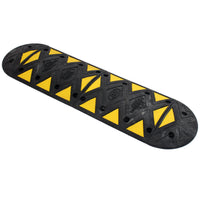
10mph Ridgeback Speed Bump Kits - 50mm
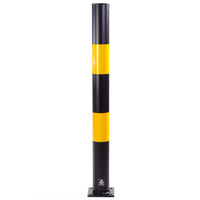
Autopa Fixed Black & Yellow Reflective Bollard 1000mm (No Fixings)
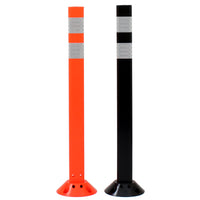
ST LaneMarker Flexible Lane Marker & Delineator
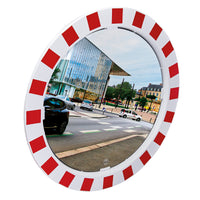
Vialux Traffic Mirror with Red and White Frame

