+44 (0)1905 794875
 Wholesale Prices

What Size Is A Bollard, And Why Does It Matter?
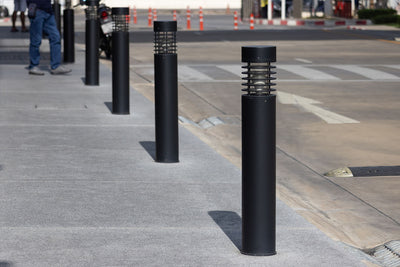
If you’re considering bollards for your home or business, you’ll probably be wondering what size to buy. So, what size is a bollard, on average?
There’s actually no standard size for bollards - you’ll find them in various diameters and heights. In this article, we’ll explain how these factors relate to the bollard’s purpose, and which size is best for which situation.
Why does size matter?
Size is a factor in the bollard’s effectiveness for the particular purpose. It also affects the number of bollards you need to buy, and whether or not they will fit in the intended location.
For example, if you want a folding bollard at the end of your driveway, you’ll need to take the height into account to ensure there’s room for it to lie flat when in its folded position. Taller or wider bollards may also be heavier, which is a consideration for lifting removable or retractable ones.

Bollard diameter
Bollards can range in diameter from a slim 50mm model right up to monsters of 300mm or more.
What difference does the diameter make?
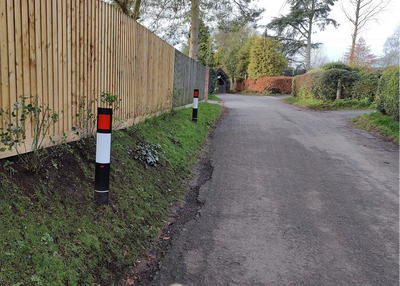
Bollards with the smallest diameters are most commonly used as a deterrent to prevent unauthorised parking on verges, but they won’t be robust enough to prevent vehicle theft.
At the other end of the scale, the widest bollards are suitable for stopping ram-raid attacks by large vehicles. Basically, the larger the diameter, the more effective the bollard will be as a defence.
If you’re installing a row of bollards, choosing larger diameters means you may not need to buy so many. Wider bollards have a bigger footprint - so, for example, 4 of them could potentially cover the same space as 6 slimmer models.
TIP: Read our guide to find out how far apart you should place bollards.
One aspect that often gets overlooked when discussing bollard diameter is the wall thickness, which also affects performance. For example, if a 300mm wide bollard only has a very thin wall - say 1mm thick - it won’t be as robust as a slimmer bollard with a 5mm wall.

Bollard height
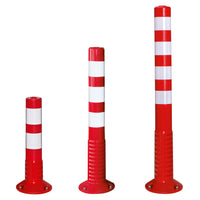
There’s also a wide spectrum when it comes to bollard height. They can be as low as 500mm (typically for loading bay bollards), and as tall as 1200mm.
What difference does the height make?
Bollard height makes a difference to visibility. Shorter bollards can be harder to spot, and drivers can accidentally reverse into them as they’re not visible through the rear windscreen of the car.
Taller bollards are easier to see for both drivers and pedestrians, which also makes them less of a trip hazard. This is a particular consideration if you’re installing bollards in public spaces.
However, tall bollards require deeper foundations as they have greater leverage over their fixings - which means the installation will be slightly more complex and time-consuming.
If a bollard is exceptionally tall (or wide), you might need planning permission even to install it on your own land. Check with the relevant authority if you think your bollard might fall into this category.

The takeaway
Bollards come in a wide range of heights and diameters, all with their advantages and disadvantages depending on the use case. As a rule of thumb, if you’re using them for security, then bigger = better. If you want bollards for aesthetic reasons, you can use slimmer ones.
Ready to buy? Browse our vast collection of bollards and markers, or give our friendly sales team a call.
- Author
- Tags

You might like:
Wychwood Flexible Verge Marker Post - Reflective - JSP
Reflective Verge Road Marker Post - Churchill Bollard
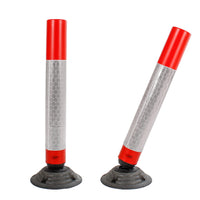
JSP Springback 75cm Traffic Delineator Post With Sleeve
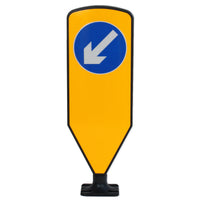
Duraflex Self Righting Traffic Bollard | Multiple Options
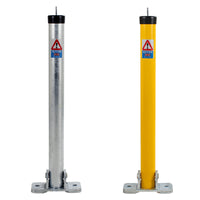
Autopa Galvanised Padlock Parking Post Folding / Hinged 730mm x 60mm
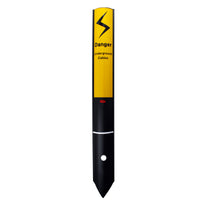
Danger Underground Cables' Verge Marker Post | HEV040-125-301
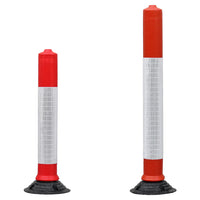
JSP Glopost Delineator Marker Post - 75cm or 100cm
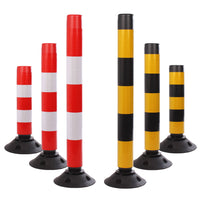
Traffic Line Off-Highway Posts | 460mm, 760mm & 1000mm
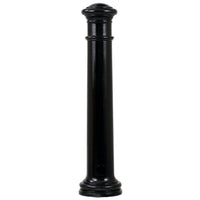
Manchester Heritage Fau-Cast Iron Bollards UltraThane 6000
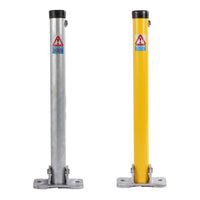
Autopa Galvanised Integral Lock Parking Post Folding / Hinged 730mm x 60mm
Procity Electric Car Charge Point Protector - Tripod Design (No Fixings)