+44 (0)1905 794875
 Wholesale Prices

Do Private Roads Need To Be Properly Signed?
Proper signage is an essential feature of public highways, providing directions, warnings, and restrictions to all road users. But do private roads need to be properly signed?
In this article, we’ll give you a short answer and a long answer to the question, and look at some of the reasons for using signs on a private road.
What is a private road?
A private road is one that’s owned by a private individual, a business, or a group of property owners who live along the road (for instance, in a gated housing estate). This is also known as an “unadopted” road.
Such roads are not maintained by the local council or highway authority, so the landowner or residents are responsible for maintenance, repairs, and liability - which includes signage.
You can find out if a road is private or public by searching on FindMyStreet, requesting a Highways Search from your local authority’s Highways Department, or checking the title deeds to your property at HM Land Registry.

Do private roads need to be properly signed?
The short answer
If you own the road, it’s your decision. On private land, you can choose to install no signs at all.
The long answer
You don’t have to, but you should. It’s definitely worth installing signage, even if it’s simply to tell people that it’s a private road.
The road’s status may not be completely obvious to members of the public - for example, if it’s a long driveway to a farm, or a fork leading off a public road to a private residence. With no signs to alert people, they won’t be aware that there’s no right of access.
But there are several other reasons for using proper signage on and around a private road.
What signage should you use on private roads?
The most likely signs you’ll want to install are parking restriction signs, telling people they can’t park on your private land - otherwise, they may just assume it’s a public space.
You might also include speed limit signs or warnings of potential hazards like hidden bends, fords, or animals in the vicinity. Signs can also warn of soft verges or speed bumps.
This signage is important because it helps you to avoid liability for vehicle damage or injuries. For example, if there are no warnings of speed bumps, and a driver damages their car by hitting one, they could potentially sue you (even if they were travelling at an unsafe speed).
Even on a residential private drive, you might need to install warning signs. For instance, posties and delivery drivers have implied access to the property because you want them to deliver your goods. But again, if you don’t warn them of things like steep gradients or farm vehicles, you could be liable for any incidents.

What does the law say?
There’s no law that says you have to install signs on a private road - it’s your land, after all! However, the Occupiers Liability Act 1984 outlines the responsibilities of owners or occupiers of private land (which would include private roads).
The Act states that occupiers have a “common duty of care to trespassers as well as visitors [. . .] when the occupier has actual or constructive knowledge that a danger exists and that a trespasser is or may be near it.”
Occupiers must take “such steps as are reasonable [. . .] to give warning of the danger concerned or to discourage persons from incurring the risk".
By installing signs to warn trespassers of potential hazards, you are fulfilling your duty as an occupier - and you’re far less likely to face legal action from anyone who has an accident on your property. Signage is useful for your legitimate visitors as well!
Note: The Act does not apply to anyone using a public right of way (such as an official footpath or byway) that crosses your land, as common law rules would apply in this situation.
Always seek legal advice if you’re unsure of your rights or responsibilities.

Bad signs can be worse than no signs
It’s implied in the Occupiers Liability Act that warning signs must be clear enough to ensure that any risk is obvious to a trespasser. Clarity is just as important for informational signage, even if it’s simply “Private Road”.
It makes sense to use highway-standard signage, especially for company-owned private roads. That way, if someone does have an accident, they won’t be able to blame poor-quality signs.
The other benefit of using standard road signs is that road users are already familiar with their meanings - such as triangular warning signs or regulatory signs like “No Entry”.
If you do install signs, make sure you keep them clean and well-maintained so that people can read them easily. This includes cutting back any vegetation that may obscure your signage.

Closing thoughts
Although you don’t have to place signs on a private road, a lack of signage can cause you various problems - from unauthorised parking to legal action.
If you do want to install signage, it’s best to choose high-quality road-grade signs as they’re long-lasting and easily recognisable to road users. Buy them from our store, or get in touch with our friendly sales team for more information.
- Author
- Tags
Related articles

You might like:
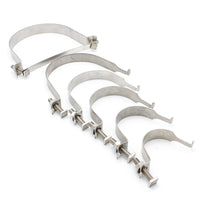
Anti-Rotational Sign Clips / Post Clips Multiple Size Options
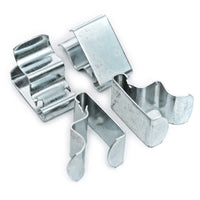
Frame Clips for Metal Temporary Road Signs (sold as singles)
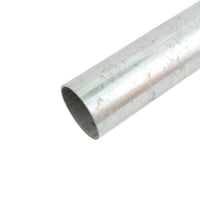
76mm Posts Galvanised 3" Sign Posts in Various Lengths - S275 Grade Steel
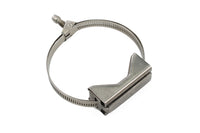
Universal Sign Clips for Post / Pole Mount Signs

600 x 450mm Rectangular - Metal Temporary Road Sign Frame | Stanchion

Round Internal End Cap for Sign Posts - Post Cap - Black

1050 x 750mm Rectangular - Metal Temporary Road Sign Frame | Stanchion
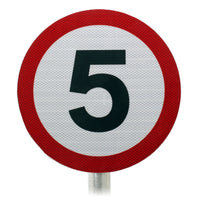
5mph Speed Limit Sign Post Mounted Diagram 670 R2/RA2

SandBags - White / Black Polypropylene (Empty / Unfilled)
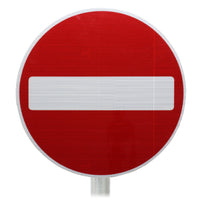
No Entry Sign - Post Mounted Diagram 616 R2/RA2
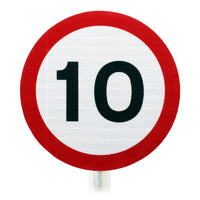
10mph Speed Limit Sign Post Mounted Diagram 670 R2/RA2