+44 (0)1905 794875
 Wholesale Prices

How To Install Grass Grids
Whether you’re planning a grass driveway or creating overflow parking in a field, a grass grid gives you a stable, durable surface with healthy grass. But what exactly are grass grids, and how do they work?
In this article, we’ll explain how to install grass grids - and explore all the benefits they bring. (If you already know what a grass grid is, feel free to skip ahead!)
What is a grass grid?
A grass grid is a type of cellular paving system made from interlocking plastic tiles. Also known as permeable pavers, these systems can be filled with either grass or gravel. They are designed to support the surface and enable sustainable drainage.
Grass grids are available in various grades to support a range of loads. You can choose a system that’s suitable for foot traffic, light vehicles, heavy vehicles, or even animals.

What are grass grids used for?
Grass grids have many applications. You might use them for a private driveway, a permanent car park or overflow area, an access road, a golf course, or a public park. They are also ideal for stables and animal compounds, or providing a stable base for a garden building.
Benefits of grass grids
Why would you want to install a grass grid? Let’s take a look at the advantages:
-
The grid spreads the load and prevents soil compaction. This means vehicle tyres don’t scrub at the surface and tear the grass out, or churn it up into mud during wet weather.
-
Grass grids (and gravel grids) improve drainage, because rainwater can soak straight through into the soil instead of running off into the drains, as it would with a non-porous surface.
-
Grass gives an attractive, natural look compared to hard surfaces - you can barely see the grid once the grass is established.
-
The grids are easy to lay, usually supplied in pre-constructed sheets for quick installation of larger areas.
-
You can use them to turn unused grassed areas, such as a front lawn or a field, into overflow parking.
-
In most cases, you won’t need planning permission to install a grass grid system.
FYI: Gravel grids have the same benefits as grass grids. If you’re considering a gravel surface, check out our guide to installing a gravel driveway.

How to install a grass grid
Now, the section you came here for: how to lay grass grids. Follow our step-by-step guide for long-lasting results.
Be prepared
Start by calculating the amount of materials you’ll need, so that you don’t run out halfway through the project or face unexpected costs. Measure the area you want to convert, and double-check your measurements.
Apart from the grid pavers themselves, you will need:
-
Infill material (aggregate, sand, and topsoil)
-
Grass seeds
-
A permeable membrane/geotextile (optional)
-
Tools for digging, levelling, and compacting
-
Temporary line-marking paint
When you’re ready to begin, use the line-marking spray to mark out the area where you intend to put the grass grid.
Build the foundation
A stable, free-draining foundation is essential to help the grid support the required load. To create this, you need to excavate the whole area where the grid will be installed.
Dig down down to a total depth of around 200mm for light vehicle use, or 300mm for heavier vehicles.* Once you’ve reached a solid layer of undisturbed soil, remove any loose topsoil, weeds, or stones.
It’s worth noting that you may need to dig down a bit further in soils with a high clay or peat content, as they don’t drain well. This might be as deep as 305mm in clay-rich soil.*
* All measurements shown in this article are intended as a guide for typical installations, but the exact figures will depend on the grid you use. Please refer to the manufacturer’s specific instructions.
Create the drainage layers
Now create your sub-base layer, starting with hardcore or MOT Type 1 aggregate and adding a finer aggregate on top. How deep should this layer be? Build it up until it reaches around 20-30mm, plus the depth of your chosen grid height, from the surface.* Then compact it using a wacker plate or hand tamper.
You may choose to install a geotextile membrane at this stage. This is a permeable fabric sheet that prevents subsoil from mixing into the layers above, but still allows water to pass through.
Next, add a levelling layer of sand. Make sure you spread it out evenly and compact it for a stable surface.
Install the grass grid
Starting from one corner or a flat edge, lay your grids section by section. Don’t start laying them from two different starting points, as it’ll be harder to interlock the tiles later on.
Work outwards in a grid, interlocking the tiles as you go. If you need to cut the tiles to fit, use a circular saw, a jigsaw, or a hand saw.
It’s best to leave a gap around the edge of the installation to allow for expansion and contraction, especially on larger installations which are more likely to experience thermal expansion.
If you’re installing the grid on a significant slope, or where vehicles could potentially “drag” the grid in a particular direction, use pins to hold the grid in place.
Add soil and grass
Now fill the grid with topsoil, making sure you leave it shy of the surrounding surface. This prevents the soil from becoming compacted, which would stop the grass from growing. It also allows space for the seeds and soil to cover them.
Spread your grass seeds evenly over the soil, then cover them with a thin layer of soil for protection. Our friends at Boston Seeds recommend their economy perennial ryegrass, which can handle wear and tear from vehicles and recovers quickly.
Water the area, and keep the soil consistently moist until the grass is established - especially during dry weather. It should take around six weeks for the grass to establish itself. At this point you can drive over it, and mow it as normal.
N.B. Don’t leave vehicles (or other large objects) in the same place on the grass for long periods of time, as this will block the sunlight and kill the grass in that area.

Alternative methods
What if you need to strengthen a grassed area in a hurry - for example, ahead of an event? Can you lay a driveway grid straight onto grass?
You can lay EcoGrid’s strongest grids on top of existing grass to form a temporary roadway across a field. This will take the weight of vehicles, but it’s not ideal for pedestrians as heeled shoes will catch in the grid.
Another option is grass mesh, which you can also lay on top of grass for a more hardwearing surface. Secure it with pins, and roll it up for storage afterwards - or leave it there permanently and the grass will grow though it.
However, for a more long-lasting installation, it’s definitely best to make the effort and use grass grids with a proper foundation. We would also recommend a foundation if you're planning to roll pre-grown turf into a grass grid.
Final thoughts
Grass grids are an eco-friendly way to keep a grassed area in good condition, providing robust support under various loads.
Now that you know how to install grass grids, why not call our friendly sales team and let them help you choose the right product for your needs?
- Author


You might like:
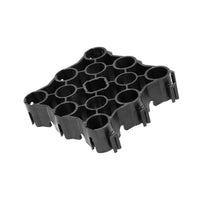
EcoGrid E80 Ultra-Heavy Duty Ground Reinforcement Grid System - 330mm x 330mm x 80mm (8mm thick)
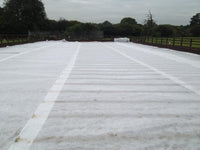
100gsm GeoTextile Fleece Non-Woven White Drainage Membrane
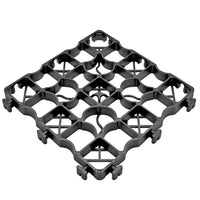
EcoGrid E30 Pedestrian Ground Reinforcement Grid System - 330mm x 330mm x 30mm (4.4mm thickness)
Carters ManMade 10lb Square Rammer
Carters Shocksafe Insulated 10lb Square Rammer Punner BS8020

Carters Manmade No.2 Taper Mouth Shovel