+44 (0)1905 794875
 Wholesale Prices

Removing Grass From A Gravel Driveway
Even the best-laid gravel driveway can be ruined by weeds and grass popping up here and there. If left to it, it’s not long before a single blade turns into a tuft, and then a patch of grass. This issue is only amplified if a gravel area is adjacent to an existing lawn, where the grass often sends out runners and seeds that quickly spread into the spaces between the gravel.
So, how do you deal with the grass effectively, ideally without spending hours of backbreaking work, and how can you prevent the spread of grass in the first place?

Dealing With Existing Grass In Your Gravel Driveway
There are six key methods that can be used for halting the spread of existing grass; some are more labour-intensive than others, while others have impacts on the environment that you will undoubtedly want to take into consideration.
Manual Intervention
Without any outlay on equipment or chemicals, you can simply pluck out the odd strand here and there, and even pull up larger clumps by hand. The downside to this is that it is very manual, it involves a lot of bending, and you can be sure you will keep spotting more and more grass as you go. The upside is that it is completely free, with the only real cost being the time it takes to get it done.
If you are going to pull up strands or clumps of grass manually, it’s important to do so gently. Doing this will give you the best chance of getting the roots as well, reducing the likelihood of the grass spreading further.
It is often best to do this on days when the ground is relatively wet, meaning any dirt around the grass roots will be easier to dislodge while keeping the roots together.

Boiling Water
Another low-cost way to deal with grass in your gravel driveway is to pour boiling water on it. The heat will instantly cook the grass, and if enough boiling water is used, it will heat the roots, killing them too.
The downside of this is that it does not scale well. Also, carrying pots or kettles of boiling water on a wet surface is a very easy way to slip and get scalded. So this method should be carried out with caution, and with appropriate grippy footwear (definitely no sandals).
Once done, you will still need to lift out any larger clumps, as they will otherwise compost and become a food source for other weeds and grass to take root, so there is still a very manual element here, too.

Fire!
Should you have access to a blow lamp or a propane torch, you can use heat to kill the grass. This works great on individual strands and small tufts, and only requires heating the grass until it turns to ash. There are many propane burners you can use standing upright, too, so there is little need to bend.
The downside to this method is that it requires investment in a propane or butane torch; it also cannot be carried out on gravel reinforced with any plastic grids, as it could ignite or melt them. A further hazard is the risk of fire spreading to surrounding areas, especially during prolonged dry periods.
Weed Killer
Household Items That Actually Work
Putting salt on the grass will kill it over a few days. It does not need to be any special kind of salt; just ordinary table salt will do. The downside is that the salt remains in the ground for a long time, so don't do this if you want to grow anything there in the future.
A common way to kill grass in gravel driveways is to mix a bit of dish soap, vinegar and salt. Using this method, the soap removes any waxes from the grass's leaves, while the salt and vinegar get to work making the ground inhospitable. The good thing about this method is that there are no harmful chemicals, and you can use less salt than when using salt alone. You can even use a spray bottle to apply the solution.
Commercial Products
If you are looking to clear a large area of grass and really need to keep it from growing back, there is a range of commercially available products. These, though, can have unintended impacts on surrounding grass and planted areas and can have a prolonged effect on soil health.
If you do choose to go down this route, look for a product that denatures when it comes into contact with soil; this way, it should break down quickly without causing lasting damage.
If using commercial weed killers, be sure to wear appropriate RPE and eye protection.
Prevent Grass From Getting Established In The First Place
There are three products that can help reduce the spread of grass through a gravel driveway.
-
Lawn edging - If your gravel area is adjacent to a lawn, then having a proper formal boundary is essential. A proper border will create a physical barrier between the gravel and the grass, preventing runners from spreading across the border. It will also help you spot when grass has crossed the boundary. See our article on how to border a gravel driveway for more information and details about the options for gravel borders.
-
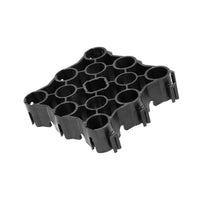
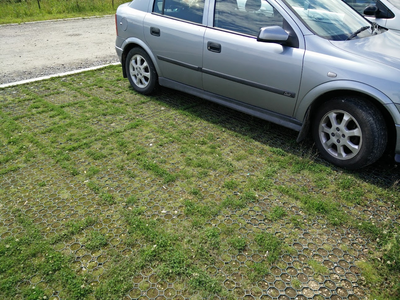
Gravel Grids - The cellular nature of gravel grids makes it harder for grass and other plants to spread through a gravel area. Seeds blown by the wind can cross between cells, and the odd runner root can also make it through here and there, but it will significantly slow any takeover.
-
Weed Membrane - A membrane under your gravel will help cut down on the amount of foot traffic and resources any grass has access to, as it will effectively be sitting on nutrient-poor gravel without access to any minerals.
In an ideal setting, you would use all three of the above methods together to reduce the likelihood of grass getting into and becoming established in your driveway.
Need Help Planning Your Gravel Driveway Or Path?
If you are planning to install a gravel drive or pathway and want to keep it grass-free for as long as possible, give us a call or use our contact form. Our experienced team will be happy to provide guidance, ensuring your project is a success. We have a range of products to choose from, with something for almost every budget, all with fast delivery from large stock levels.
- Author

You might like:
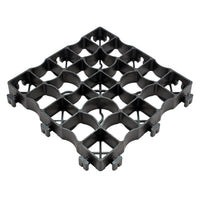
EcoGrid E40 Medium Duty Ground Reinforcement Grid System - 330mm x 330mm x 40mm (5mm thick)
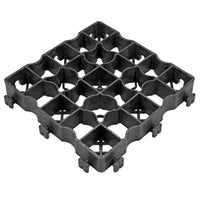
EcoGrid E50 Heavy Duty Ground Reinforcement Grid System - 330mm x 330mm x 50mm (7mmm Wall Thickness)
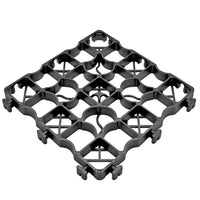
EcoGrid E30 Pedestrian Ground Reinforcement Grid System - 330mm x 330mm x 30mm (4.4mm thickness)
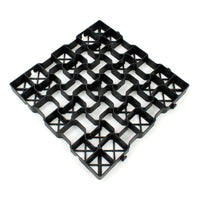
GeoGrid Standard HoneyComb Plastic Pavers Gravel Grids - 495mm x 495mm x 40mm

100gsm GeoTextile Fleece Non-Woven White Drainage Membrane
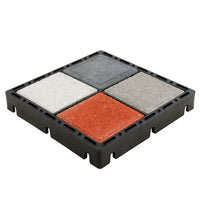
EcoGrid Bloxx Paving System | Concrete Inserts
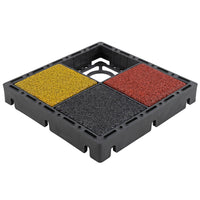
EcoGrid Bloxx Paving System | Rubber Inserts
EcoGrid E40 Curve & Expansion Connector
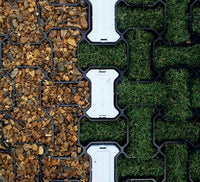
GeoGrid White Delineation Marker
EcoGrid E50 Curve & Expansion Connector
EcoGrid E40 Angled Uplift Hinged Joiner