+44 (0)1905 794875
 Wholesale Prices

Heads Up: An Introduction To Hard Hats
A common sight in workplaces from construction sites to railways, the hard hat is an essential piece of safety equipment. If there’s a risk of falling, or of being hit by objects like tools, equipment, or debris, you should be wearing a hard hat.
In this article, we’ll unpack some of the features and terminology around hard hats, explore the different colours, and answer some FAQs.
Hard hat vs safety helmet: what’s the difference?
You’ll sometimes see these two names used interchangeably - but is a hard hat the same as a helmet? Yes, they’re the same thing: both refer to a piece of protective headgear. Both terms are used in the workplace, but for sporting applications such as cycling or climbing, “helmet” is the more common terminology.

Who uses hard hats?
Hard hats are found in a wide variety of industries and environments - here are some workers who typically wear them:
-
Construction workers
-
Forestry workers
-
Anyone else working at height (roofers, scaffolders, window cleaners)
-
Quarry workers
-
Railway workers
It’s also important to have hard hats available for occasional site visitors to wear - organisations usually have a colour code in place so that workers can spot visitors and take extra care when they're present.

What colour of safety hard hat should I wear?
The colour of the hard hat you wear will depend on the environment or industry you work in and on your individual job role. Some industries (such as rail and construction) have strict guidelines for colours, while others will have no specific rules.
The table below should help you identify the most appropriate hard hat colour for your needs.
| Colour | Construction (BuildUK Standards) | Rail | Factory, marine, & other |
|---|---|---|---|
| Blue | Visitors | Allowed | Site dependent |
| White | Site manager / competent operative | Allowed | Site dependent |
| Yellow | Not allowed | Not allowed | Site dependent |
| Green | Green sticker only indicates first aider. Green helmets not allowed | Not allowed | First aider (site dependent) |
| Red | Red sticker only indicates fire marshal. Red helmets not allowed. | Not allowed | Fire marshal (site dependent) |
| Black | Supervisor | Not allowed | Site dependent |
| Orange | Slinger / signaller | Not allowed | Site dependent |
| Grey | Not allowed | Not allowed | Site dependent |
| Pink | Not allowed | Not allowed | Site dependent |
Key hard hat features and terminology explained
Hard hats have been around since 1919, with the first design inspired by helmets worn in World War I. They’ve evolved a lot over the years, going from shellacked canvas to Bakelite to modern lightweight plastics. The design has also changed, adding features for comfort and convenience as well as safety.
There’s a lot to consider when buying a hard hat, so we’ve rounded up some of the terms and features you need to know about.
Helmet style
Vented vs non-vented
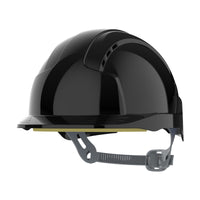
Vents on the top of the helmet help to keep your head cool during strenuous work and warm weather, making it more comfortable to wear. However, they may not be permitted in electrical environments.
Hard hats without vents are suitable for cooler conditions or short periods of use, and are an excellent budget option.
Helmet shape
“Micro peak” hard hats have shorter peaks than regular helmets - this is ideal for riggers and those who work with cranes as it makes it easier to look upwards. A full brim helmet has a ledge all around the circumference, allowing for a better runoff of fluids and offering shade from the sun.

Adjustable fit
Ratchets
A slip ratchet adjuster is a cost-efficient way of adjusting helmets to fit securely to your head. Premium wheel ratchet adjusters are easier to use and offer greater granularity when adjusting the helmet, allowing you to fine-tune the fit.
Harnesses
Higher-end helmets feature a soft fabric harness that provides improved comfort, with vertical adjustment clips to ensure a snug fit on the user's head.
Safety features
Chin straps
For those working at height or in areas where falls are a concern, an adjustable chin strap prevents the helmet from falling off if you should trip or fall. These are often a requirement on work sites.
Reflective panels
Some helmets come with pre-applied reflective material for added visibility on sites that operate after dark or for use by emergency services at night. Compatible reflective stickers are also available. It’s important to use a reflector colour that’s permitted on your work site.

Impact-resistant liner
Many hard hats for working at height feature an internal liner that improves their impact resistance.
Electrical insulation
If you’re working around high voltage equipment, you’ll need a hard hat that conforms to EN 50365.
Accessories
Integrated eyewear & face shields
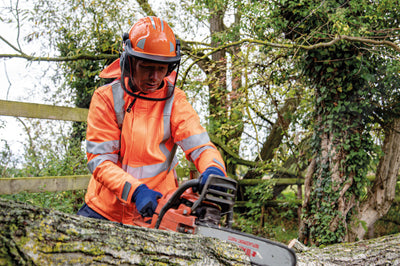
Helmets with integrated eye and face protection, such as a visor, means one less thing to keep track of on site. These are often worn by forestry workers.
Ear defender mounts
It’s not practical or safe to wear headband-style ear defenders under a hard hat, but helmets with special mounting points allow you to attach compatible ear defenders directly to your helmet. Similarly, hard hats designed for the mining industry feature lamp fitment brackets for standard mining lamps.

Sweatbands
Removable sweatbands offer extra comfort on hot days, and you can change them when they get dirty.
ID badge holder
This feature allows you to mount your ID securely in a prominent position where others can clearly see it.
The takeaway
If you’re working in an environment where you could fall or be hit by falling objects, you need a hard hat. Some industries and sites have specific rules for the colour of hard hats, and there are plenty of design features to help you get a great fit as well as keeping you safe.
Start Safety has a massive range of hard hats suitable for all industries and roles. Visit our online store, or ask our friendly sales team for advice.
FAQs
Do hard hats have to conform to safety standards?
There are several EN standards that apply to safety helmets. The main UK and European one is EN 397, which was recently updated to EN 397:2025. If you have an older helmet certified for EN 397:2012, you can still use it until the CE/UKCA certificate expires.
Depending on your role, you may need a hard hat that’s certified to additional standards, such as EN 50365 for insulating against electrical shocks or EN 14052 for high-performance industrial safety helmets.
How long do hard hats last?
All compliant helmets should be stamped with their manufacturing date. All manufacturer's recommendations will differ. For example, JSP recommends a maximum storage and usage life of 10 years for their helmets, as long as they are not subjected to any damage.
How often should hard hats be inspected?
Before every use, you need to look carefully for any cracks and signs of stress or other damage. The harness is just as important as the shell; if this is damaged, you should order a replacement harness.
How often should I replace my hard hat?
If your hard hat has any visible damage, such as a crack, tear in the harness, or a deep scuff, you should immediately replace it. You should also replace the helmet if it ever experiences an impact, as it may have caused damage you cannot see.
How much does a hard hat weigh?
The weight of a hard hat differs between models. Lighter helmets are often more comfortable to wear for longer periods.
What are hard hats made of?
Manufacturers make hard hats from an array of materials. These are mostly plastics, including ABS and HDPE. Which materials they use will depend on the model of the helmet and its intended application.
Can you put stickers on your hard hat?
Unless the manufacturer of the helmet supplies the sticker, then no. Some sticker adhesives may contain solvents that can weaken the shell, meaning it no longer conforms to safety standards.
How do you adjust your hard hat?
Each helmet on the market will have nuances about how it should be adjusted. All our product pages feature links or embedded guides, allowing you to easily find out how to fit your helmet for comfort and protection properly.
What are bump caps?
Bump caps protect your head from bumps and scrapes caused by your movements, such as those experienced when getting in and out of vans and forklifts or working in areas with low-level obstructions. To protect yourself from falling or swinging objects, you will need to use a safety helmet.
Can you wear a beanie under a hard hat?
Don’t be tempted to wear beanies, other hats, or the hood of your jacket under a hard hat - this will affect the way it fits your head and make it more likely to fall off. Extra material will also block the intentional gap between the hat and your head, which is there to lessen the impact of a fall (or something falling on you). You can buy a compatible thermal liner to use instead.
- Author
Related articles

You might like:
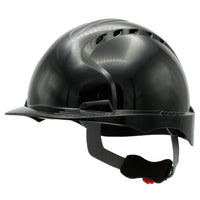
JSP EVO3 Safety Helmet Mid Peak Wheel Ratchet Vented | Black | AJF170-001-100
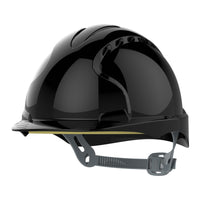
JSP EVO2 Safety Helmet Mid Peak Slip Ratchet Vented | Black | AJE160-000-100
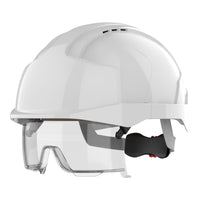
JSP EVO VISTAlens Wheel Ratchet Safety Helmet Vented | White/White | AMB170-004-F00

JSP EVO3 With Sonis Compact Ear Defenders Hard Hat Kit | Black
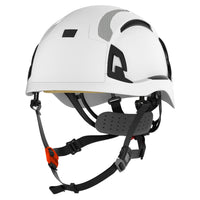
JSP EVO Alta Dualswitch Wheel Ratchet Safety Helmet Vented | White | ARD170-400-100
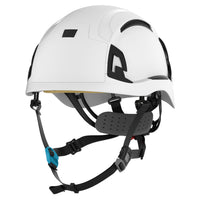
JSP EVO Alta Skyworker Wheel Ratchet Safety Helmet Vented | White | ARC170-000-100
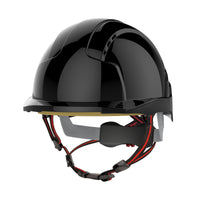
JSP EVOLite Skyworker Micro Peak Wheel Ratchet Safety Helmet Vented | Black | AJS260-001-100
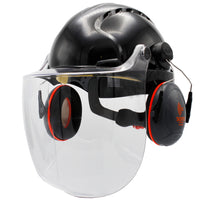
JSP EVO3 Machinery Helmet With Ear Defenders & C4-Max Visor | Black
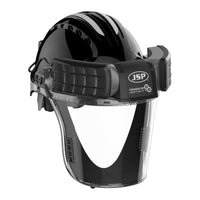
JSP PowerCap Infinity Complete Unit | Black
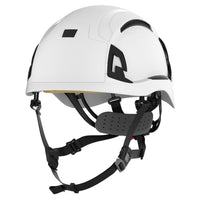
JSP EVO Alta Baseworker Wheel Ratchet Safety Helmet Vented | White | ARB170-000-100
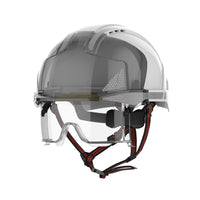
JSP EVO VISTAlens Dualswitch Vented Reflective Safety Helmet - CR2 | White/Smoke | AMF270-405-F00