+44 (0)1905 794875
 Wholesale Prices

Everything You Will Ever Need to Know About Cable Ramps
If you need to power machinery on a building site or audio equipment at a festival, you may have to run the cables across a road or a footway. Cable ramps are the ideal solution, preventing trip hazards and damage to the cables.
In this article, we’ll answer your key questions about cable protectors, explore the different types, and explain how to install them.
The importance of cable ramps
Cable ramps are vital for safety, as they remove the trip hazard presented by a cable lying across a pedestrian route. The brightly-coloured versions are easy to see - and since they’re almost always made from non-conductive materials, they also reduce the risk of electrocution.
Ramps also help to avoid damage to cables or hoses by protecting them from heavy vehicles or foot traffic. A protective cover for electric cables allows you to maintain continuous power or a hardwired connection to your equipment, with no need to unplug when vehicles or people pass by.

The most commonly-asked questions about cable ramps
Now we’ll tackle some of the questions we’re often asked about cable protectors.
What are cable ramps made from?
Cable ramps are typically made from tough rubber or plastic, including materials like polypropylene, polyurethane, and PVC. This makes them durable enough to withstand heavy use (and the weather, if used outdoors).
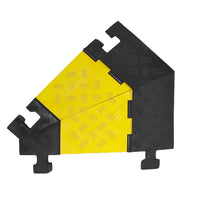
Most cable protection guard systems are modular, so you can attach multiple sections together to create a ramp of the required width. They’re designed to be portable and reusable when you move to another location.
What are the different types of cable ramps and protectors?
The drop-over type, as the name suggests, simply drops over the top of a cable that’s laid on the ground. It acts as a bridge, so that no load from above is passed down to the cable. This protection is fast and easy to install.
The drop-in version works in the opposite way, as the cable is dropped into the interior channel and covered by a hinged lid. This means the cable has all-round protection.

Some ramps are specifically designed to accommodate hoses, such as high-pressure lines at a car wash. A protector of this type is often referred to as a hose bridge or hose ramp. However, most products sold as cable ramps can accommodate hoses as long as the channel size is correct.
You will also find that cable ramps differ in height and in the amount of weight they can bear, from pedestrian footfall to HGVs. Some models can be bolted to the ground for a semi-permanent installation.
Can cable ramps protect more than one cable?
Yes - many ramps have multiple channels to accommodate multiple cables. They range from single-channel ramps to larger models with five channels, or even bigger ones depending on your needs.
Various channel diameters are available, so you can choose according to the size of the cables you’re using. Always check the maximum permitted weight (usually displayed as the “per axle” weight) before using a cable protector.
Which industries benefit from cable ramps?
Many industries use cable ramps - so what is a cable protector used for in each setting?
-
Events management: Cable ramps are often used for concerts, festivals, and Christmas markets, as well as live television broadcasts and outdoor film sets. They protect audio/video cables for microphones and visual projections, and power cables for lighting.

-
Construction and industrial sites: Cables and hoses on building sites need protection from heavy plant machinery and HGVs, as well as from harsh environments. Ramps also reduce trip hazards inside warehouses and distribution hubs.
-
Highway maintenance: With cable protectors in place, there’s no need to close the road to traffic or dig trenches for cables. They’re quick to deploy for emergency roadworks.
Cable protectors are useful in most settings, from running EV charging cables across a garage to protecting computer cables in an office.
Are cable ramps a legal requirement in the UK?
While there’s no specific mandate for cable ramps, there is a legal requirement to take all reasonable steps to reduce the risk of accidents.
For example, the Health and Safety At Work Act 1974 states that employers must ensure the health and safety of all employees and anyone who may be affected by their work. This includes taking steps to control slip and trip risks.
The Workplace (Health, Safety and Welfare) Regulations 1992 mandate that floors and traffic routes are kept free from obstructions, while the Management of Health and Safety at Work Regulations 1999 require employers to assess risks and, where necessary, take action to address them.

Under the Equality Act 2010, you must not disadvantage people with disabilities - which includes blocking access or causing an obstruction. The Health & Safety Executive (HSE) specifically recommends using ramps where cables are running overground.
Note: Want to charge your EV on the street? Check with your local council before running an EV cable across the public pavement. They may insist you use a cable ramp to avoid a trip hazard, or they may not let you do it at all.
How do you install cable ramps?
With most cable ramps, there’s no need to attach them to the ground - their own weight holds them in place as traffic passes over them. If you’re using multiple sections, the interlocking lugs ensure each stays fastened to the next.
Drop-over ramps:
-
Position the cable on the ground and ensure it’s straight
-
Drop the ramp over the top, ensuring that the cable is in the channel and not pinched
-
Repeat with other ramp sections and attach them with the lugs.
Drop-in ramps:
-
Place the ramp sections on the ground and join them together using the lugs
-
Open the lid(s)
-
Align the cables with the internal channels
-
Close the lid(s).

Bolt-down ramps:
Some cable ramps have pre-drilled holes so that you can fix them to the ground using anchor bolts for long-term installation.
-
Use chalk or crayon to mark the drilling spots on the ground, using the pre-drilled holes as a template.
-
Move the ramp to one side. Use a hammer drill with a masonry bit to drill holes into the ground, to the depth specified by the anchor bolt manufacturer.
-
Clear out any dust using a hole blower.
-
Place the cable ramp back over the drilled holes. Place your anchor bolts into the ramp’s mounting holes and tap into the ground using a hammer
-
Use a socket wrench or impact driver to tighten the bolts, but don’t overtighten as this can damage the ramp.
What are the signs cable ramps need replacing?
If you spot any cracks in the rubber or plastic, or if the material warps so that the ramp won’t sit flat on the ground, it’s time to replace your ramps. Look out for broken or cracked lids on drop-in models, and any other signs of damage. It’s important to clean your ramps after each use and to store them carefully away from direct sunlight or extreme temperatures.

Are cable protectors safe?
As long as you use them correctly, cable ramps enhance safety by preventing trips, falls, and electrocution. They typically have anti-slip surfaces and are highly-visible - there’s even a glow-in-the-dark version.
Top tip: Although cable protectors look rather like speed bumps, we recommend that if you want to reduce vehicle speed on your site, you use actual speed bumps and display warning signage. Speed bumps do often include cable channels.
Keep everyone safe with cable ramps
Now that you have the answers to some common questions, you should be able to find and buy the right cable ramp to suit your needs and make sure your colleagues and the public stay safe.
Ready to buy? Explore our collection of cable ramps supplied by leading brands including Checkers Safety, or contact our friendly sales team with any further questions.
- Author
Related articles




You might like:
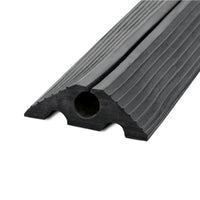
Traffic-Line Single Hose / Cable Ramp Roll Out - 10m
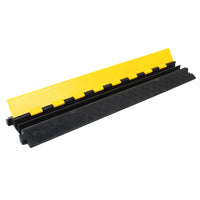
Traffic-Line 2 Channel Cable Ramp
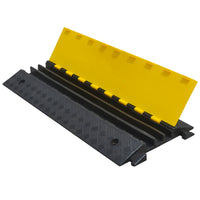
3 Channel Traffic-Line Cable Protector
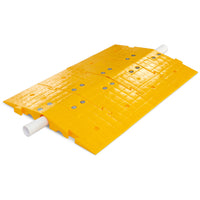
Oxford Plastics Bypass Hose Ramp 44T Capacity
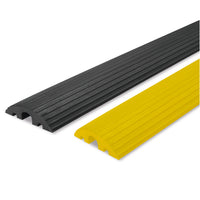
Traffic-Line Mini Drop Over Cable Ramp
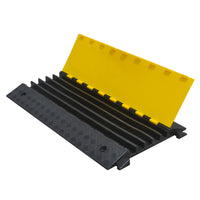
Traffic-Line 5 Channel Cable Ramp
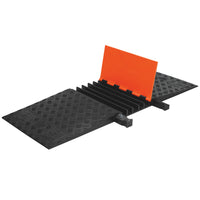
5 Channel Guard Dog Cable Protector GD5X125-ADA Cable Ramp
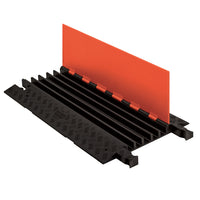
5 Channel Guard Dog Cable Protector GD5X125 Cable Ramp
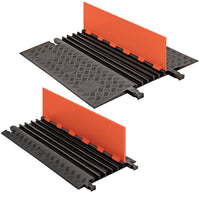
5 Channel "Low Profile" Guard Dog Cable Protector GD5X75
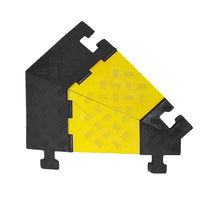
3 Channel Traffic-Line Cable Protector Angled Section Right
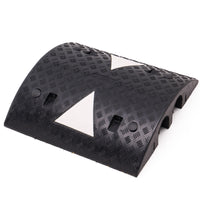
Traffic-Line XL 2 Channel Cable & Hose Ramp