
 +44 (0)1905 794875
 Wholesale Prices

How To Choose The Right Size Hi-Vis Jacket
When you’re buying a hi-vis jacket, getting the size right is just as important as knowing what colour hi-vis to wear and what classification you need.
In this article, we’ll explain why size matters and how to work out what size hi-vis jacket is best for you.
Why picking the right size hi-vis is important
A well-fitting hi-vis jacket is essential for safety, comfort, and compliance.
The jacket should be roomy enough for easy movement, as a tight-fitting garment will hamper you when reaching, bending, or twisting. But if it’s too baggy, it may get caught on equipment or machinery, causing serious injury. A loose jacket will also have gaps that let in the rain and wind, especially around the waist and cuffs.
Baggy material may hang in folds, which makes the hi-vis elements less visible. The EN 20471 standard for hi-vis garments mandates certain percentages of reflective and fluorescent material, so if those elements are obscured, your jacket may not be compliant.
Hi-vis workwear counts as PPE, so it falls under the Personal Protective Equipment at Work Regulations 1992. With this in mind, HSE guidance states that hi-vis clothing should be comfortable, fit the wearer properly, and cause minimal restriction in movement.
Whether it’s too big or too small, poor-fitting clothing causes discomfort, which leads to lower productivity. For jackets, which need to fit over your other work clothes, it’s even more important that they feel comfortable.

A word about smaller sizes
Smaller-sized jackets may have a lower rating under EN 20471. They have a smaller surface area than hi-vis workwear in large sizes, so there’s not as much space for reflective and fluorescent material. For example, a medium or large jacket may be Class 3, but a small size might only be Class 2.
So, what if you wear a small size but your job requires Class 3 workwear? It is possible to boost your overall rating by wearing an additional hi-vis item from a higher class (in this case, hi-vis trousers).
However, it’s not always as simple as 1+2 = 3. It depends on the size of the area of the fluorescent and reflective material. Always check the labels or manufacturer’s documentation as the items must be jointly certified for compliance.
What you need to measure when finding the right size hi-vis jacket
Chest size: Measure the fit around your chest, making sure the jacket is neither too loose nor too tight. Check how it fits when fastened and unfastened.
Waist size: You’ll need to know your waist size too. Some hi-vis jackets have adjustable waistbands, but that’s more about warmth than adjusting the general size or fit.

Sleeve length: If the sleeves are too long for you, they’ll get in the way - and if they’re too short, they may let in the cold and rain.
Jacket length: If you frequently work in wet and/or cold conditions, you’ll want a longer waterproof jacket or even a full-length raincoat. Some regular-length jackets have extended backs for extra coverage. Ideally, you want a waterproof jacket to extend over your trousers.
Top tip: Look at the size and depth of the pockets, and think about what you’ll need to store in them. Are they big enough? When they’re full, does this make the jacket pull or feel too tight?
The best way to measure for a hi-vis jacket
Even if you’ll be wearing jumpers or thick shirts under your hi-vis jacket, it’s still best to measure over light clothing - you can always go up a size to accommodate layers.
First, take the circumference measurements. Use a flexible tape measure and make sure the tape is tight around your body, but without it cutting in. Wrap it around your:
-
Waist (at the natural waistline)
-
Chest/bust (at the fullest part)
-
Hips (at the widest part)

Once you’ve noted down those measurements, run the tape measure along your:
-
Arms (from the top of shoulder to wrist)
-
Shoulders (from the tip of one shoulder, across your back to the tip of your other shoulder)
-
Body length (from the base of your neck to the point where you want the hem of the jacket to be).
Next, match the numbers against the size chart for the jacket you want to buy. These measurements are usually displayed in feet and inches, but some manufacturers may use metric.
Note: The positioning of the tape measure may vary between brands, so always check to see if they provide specific measuring instructions.
The size chart for measuring hi-vis jackets
Don’t just assume that your usual size will fit! Sizing can vary across different brands, so always look at the specific hi-vis jacket size guide. For example, the Pulsar EVOLUTION collection is designed to accommodate layers and therefore offers a generous fit.
Here's a generic example of how a hi-vis size chart might look:

And you can find the size guides for our popular brands here:
What to check when trying your suitable size hi-vis jacket on
Apart from the general fit of your jacket, you’ll need to consider the following:
Ease of movement
Check that your normal movements are not restricted by the jacket. Can you flex your arms fully, reach up, and bend over comfortably? Does the jacket bunch up or ride up as you move?
Try it on with the other clothes you’ll be wearing for work - is there room for a thick jumper or extra layers underneath if needed?
Sleeve length
Make sure that the sleeves are not too long or too short.

Fastenings
Can you easily fasten and unfasten the jacket? Two-way zips let you open the jacket from below to access tools or for extra movement.
Hood coverage
If the jacket has a hood, check that it covers your head fully without restricting your vision. Many hoods have an adjustable fit or are detachable.
Jacket weight
The weight should suit your needs. You might choose a lighter model such as softshell, or one with detachable layers for flexibility. Remember that anything you carry in the pockets will add weight.
Breathability
It’s important that your jacket is breathable, even in cold conditions. Many hi-vis jackets include breathable or moisture-wicking fabric and/or ventilated sections to allow sweat and moisture to escape.

Breathability is measured as Water Vapour Resistance (Ret) under the EN 343 standard. Both ratings are displayed after the standard (e.g. EN 343 4:4), with the second number representing breathability. A rating of EN 343 4:1 would mean the highest waterproofing but lowest breathability.
Top tip: When you’re trying it on, check the labels to make sure that the jacket has the protective properties you need, such as waterproofing, insulation (EN 342), or protection from fire and arc flash. Not sure what colour hi-vis to wear for your role? Read our handy guide!
Finding the perfect hi-vis jacket for you
Wearing the right size hi-vis jacket enhances your ability to do your job properly, as well as keeping you comfortable, safe, and compliant on site.
Follow our guidance to take your measurements, check them against the manufacturer’s sizing chart, and consider factors like sleeve length, fastenings, and breathability when you try on the jacket.
Ready to buy hi-vis jackets? We have an extensive collection in various styles and colours, all compliant with industry standards. Give our friendly sales team a call for extra advice!
- Author
You might like:
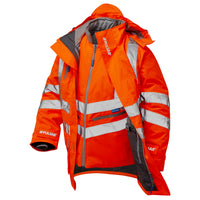
Pulsar Protect Hi Vis Orange 7-in-1 Storm Coat & Body Warmer PR497
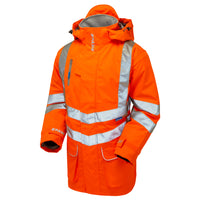
Pulsar Protect Rail Spec Hi Vis Orange Mesh Lined Storm Coat PR499
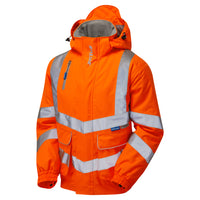
Pulsar Protect Hi Vis Orange Waterproof Padded Bomber Jacket PR496
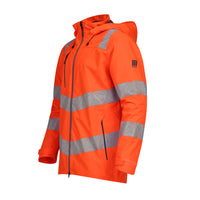
PULSAR React Hi-vis Orange Shell Jacket RCT801
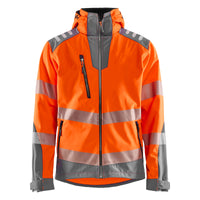
Blaklader 4491 Hi-Vis Orange/Mid Grey Softshell Jacket
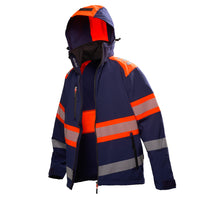
Blaklader 4494 Navy Blue/Hi-Vis Orange Softshell Jacket
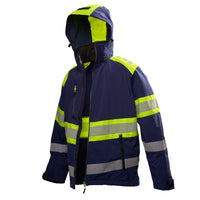
Blaklader 4494 Navy Blue/Hi-Vis Yellow Softshell Jacket
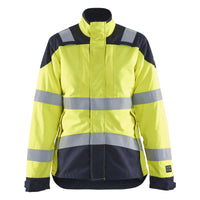
Blaklader 4969 Hi-Vis Yellow/Navy Blue Arc Flash & Fire Retardant Women's Multinorm Inherent Jacket

Mascot Accelerate Safe 19335-231-14010 Winter Jacket - Hi-Vis Orange/Dark Navy

Mascot Accelerate Safe 19002-143-14010 Softshell Jacket - Hi-Vis Orange/Dark Navy

Mascot Accelerate Safe 19103-315-1744 Fleece Jacket With Zipper - Hi-Vis Yellow/Dark Petroleum


