+44 (0)1905 794875
 Wholesale Prices

Height of Sign Posts: Why It Matters & How To Get It Right
How high does a road sign need to be? Does the height of sign posts actually matter? It really does - and in our experience, people often get it wrong!
In this article, we’ll explore common mistakes and relevant regulations, and explain how to calculate the right post height for your road signs.
Why do people get it wrong?
When installing permanent road signs, people almost always buy a sign post that’s too short. This can happen for two reasons: either they don't take into consideration how much of the pole will need to be embedded into the ground, or they forget about the height of the sign face itself.
Even if they remember both of these things, they often don't realise that you also need to leave enough clearance for pedestrians and cyclists to pass by without whacking their heads on the signs.

What does the law say?
The Traffic Signs Regulations and General Directions 2016 (TSRGD) legislation indirectly covers the height of sign posts, in its guidance on the mounting height of road signs. It states that:
"Signs should be mounted such that the lower edge of the sign is generally between 900 mm and 1500 mm above the highest point of the adjacent carriageway. [. . .] Speed limit signs and other safety-critical signs will not normally be mounted lower than 1500 mm above the carriageway."
There are also regulations for the amount of clearance above footways and cycle tracks. The minimum permitted heights are given in Chapter 1 (page 22) of the DfT’s Traffic Signs Manual (TSM), and we will come to those in the next section.
How to find the right post height
Now we’ll look at how to calculate the appropriate height for your road sign, which depends on various factors.
IMPORTANT NOTE: This guidance only applies for sign faces less than or equal to 750mm tall. If the sign face is any taller than this, you’ll need to do wind-loading calculations for the foundations (Start Safety can do this for you upon request).

Here’s the formula to use:
Minimum pole length = (Sign height + Clearance to floor + 600mm foundation + 150mm top covering)
Let’s drill down into what each of those components means.
Sign height
This simply means the height of the sign face you’re using.
600mm foundation
This is the depth of concrete needed for installing the sign. If you don’t bury the post deep enough, it could get pulled out or blown over.
150mm top covering
This is the depth of the mud, grass, or tarmac you’ll use for surface dressing.
Clearance to floor
This is the fun one! The figure differs depending on where you’re installing the sign. For each of the following, you’ll need to allow:
-
Verge: 1200mm from ground level to the bottom of the sign face
-
Footpath: 2100mm from ground level to the bottom of the sign face (allowing head clearance for people walking)
-
Cycle path: 2300mm from ground level to the bottom of the sign face (people on bikes are generally higher than those on foot).
-
Equestrian route: 2700 mm from ground level to the bottom of the sign face.

You could simplify the equation to:
Min pole height =
(Verge) 1200 + 750 + height of sign
(Footpath) 2100 + 750 + height of sign
(Cycle path) 2300 + 750+ height of sign
Other considerations
Apart from the height of the sign post, there are a number of other factors you need to think about.
Post diameter
If you’re installing the sign near a road, you’ll have to consider the diameter of the post and its significance for road safety.
Many modern sign posts are designed to be “passive” or “passively safe”. These will yield or collapse if hit by a vehicle, reducing the force of the collision and minimising the risk of injury and vehicle damage.
In the UK, 76mm (3 inches) is the most common diameter for sign posts. These posts are considered passive, as they are lightweight enough to snap easily. However, a larger diameter can stop a vehicle dead, so it’s important that these are only used when it is safe to do so.
The Traffic Signs Manual says this: “Wherever possible, traffic signs should be positioned behind existing barriers. Where this is not possible, designers should consider the use of passively safe supports as an alternative. Passively safe supports should conform to a performance class of BS EN 12767:2007.”
There’s a special category of passive posts called “frangible” posts, designed to shatter if hit by a vehicle. We will have these on our shelves soon.

Distance between twin posts
Large road signs, such as directional signs, may require two sign posts to support them and prevent them from rotating. If you’re installing these on a footway, you’ll need to make sure there’s room for people to pass between the posts. The TSM mandates that you leave: “preferably 1500mm, with an absolute minimum of 1000 mm, of unobstructed width” between the two uprights.
Sign face position
You should position the sign face at the top of the post, so that the post does not project above the top edge. (Obviously this does not apply if you’re mounting the sign to an existing support such as a lamp post).
Supplementary plates
If you're using a supplementary plate as well as the main sign face (for example, a plate stating “200 yards” below a “Give Way” sign), the combination of sign and plate may be regarded as one sign. This is an important consideration when you’re measuring sign height and clearance for your calculations.

The takeaway
The height of sign posts matters - it’s a really important part of adhering to the many regulations surrounding road signs in the UK. By using the calculation we’ve provided, you can make sure you’ve factored in often-overlooked elements like clearance and foundation depth.
Ready to buy sign posts? Start Safety sells a wide selection, from circular hollow section (CHS) to wide-based posts - plus fixings and sign faces. Give our friendly sales team a call if you have any further questions.
- Author


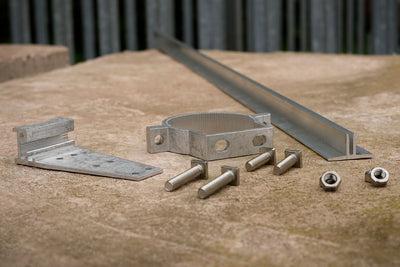
You might like:
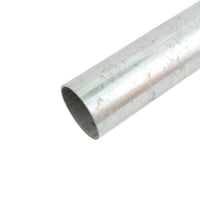
76mm Posts Galvanised 3" Sign Posts in Various Lengths - S275 Grade Steel

Round Internal End Cap for Sign Posts - Post Cap - Black

Round External End Cap for Sign Posts - Post Cap - Grey
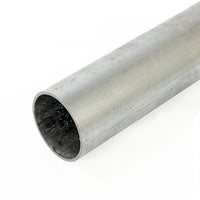
89mm Posts Galvanised 3.5" Sign Posts | 4 Metre - S275 Grade Steel
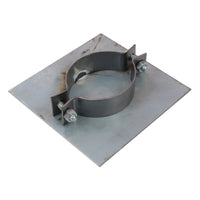
Base Plates For 114mm Sign Posts
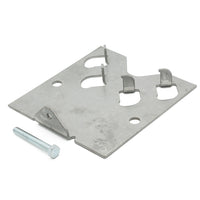
Universal Sign Post Base Plate
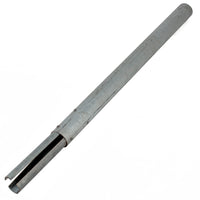
Sign Post Extension | 76mm / 3" x 1 Metre Post Extender
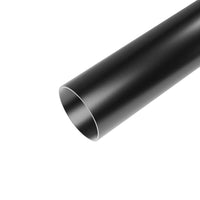
76mm Posts Galvanised + Powder Coated 3" Sign Post - S275 Grade Steel - Black RAL 9005

Round Internal End Cap for Sign Posts - Post Cap - Grey

76mm Posts Galvanised + Powder Coated 3" Sign Post - S275 Grade Steel - Grey RAL 7037
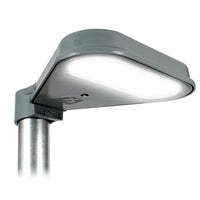
Delta Type A Road Sign Light For 76mm Posts - Single Sided