+44 (0)1905 794875
 Wholesale Prices

What Size Are Traffic Cones? Choose the Right Size and Stay Compliant
Choosing the right size of traffic cone for the job is crucial. Too big, and it might be unwieldy - especially in off-highway applications. Too small, and it could leave you open to legal issues in the event of an incident. With this in mind, we've put together a guide on how to choose appropriately-sized cones for off-road and on-road usage.
Just how big is that cone?
We have all driven past cones on the motorway, but when you see them up close, they can often be bigger than expected.
All of the cones we sell have their height noted in the product description; however, it is often deceptive just how big a 1-metre unit can be. For this reason, we've created a scale guide to help you visualise the size of traffic cones.

What are the legal traffic cone size requirements for on-road use?
There are strict rules on which sizes of traffic cone can be used within certain speed limits and carriageway layouts. This guide aims to explain the ins and outs of cone legislation, as detailed in the 1995 Safety at Street Works and Road Works policy.
Primarily, traffic cone sizes are determined by the speed limit of the road on which it is to be used, as well as the number of carriageways on the road.
These regulations are as follows:
| Cone size | Where / when it applies | Reference |
|---|---|---|
| 450 mm | For single carriageway (≤ 30 mph); single carriageway (31–41 mph); dual carriageway (≤ 40 mph) | Table A1.3, Part 1 / Part 2 (Wikisource) |
| 750 mm | For single carriageway with 50 mph or more; dual carriageway 50 mph or more | Table A1.3, Part 1 / Part 2 (Wikisource) |
| 1000 mm (1 m) | For motorways / dual carriageways at the national speed limit (hard shoulders) | Note 5, Table A1.3 (Wikisource) |
The above information and details of traffic cone sizes for use on motorways can be found in the "Chapter 8 Guidelines" on our regulations page. It is your responsibility to check the latest regulations to ensure compliance.
What cone size should I use off-road?
If you are organising an event, managing parking areas, or delineating lanes in a distribution depot, then there are no strict rules. However, we can lean on the rules set out in the Chapter 8 Guidelines to inform our choice:
- For car and van traffic in car parks where vehicle speeds are expected to be up to 10-20mph, then 500-750mm cones would be recommended. With vehicles moving at slower speeds and potentially manoeuvring around the cones, using taller cones can ensure people see them rather than looking over the top of them.
- For lorry, HGV and plant equipment traffic, we recommend 750-1000mm cones to increase visibility as much as possible.
Need help finding the right cone?
Our sales team are here to help and you can easily get in touch with them by phone or through our contact page. They will be able to assist you with any traffic cone questions, ensuring you get the best value for money and ultimately the right cone for the job.
- Author
- Tags

You might like:
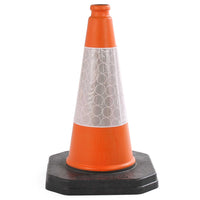
Melba 46 One Piece Traffic Cone 460mm
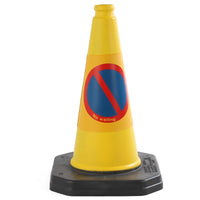
Melba 46 One Piece Round No Waiting Cone

Apollo Cone 750mm Road Cone - Orange

Melba Starlite Two-Part Orange Traffic Cone - 750mm
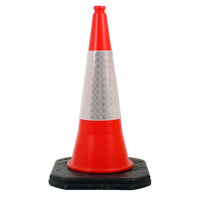
MasterCone Road Legal 750mm Traffic Cone from Melba Swintex

Orange Dominator Traffic Cones 750mm JSP Road Cone
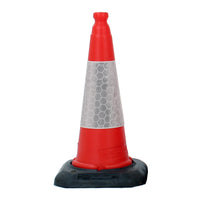
Orange Dominator Traffic Cones 500mm JSP Road Cone
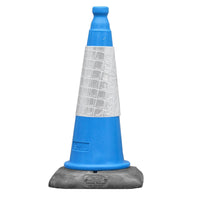
Blue Dominator Traffic Cones 500mm JSP Road Cone
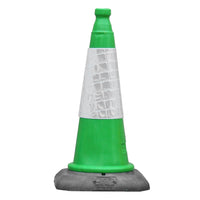
Green Dominator Traffic Cones 500mm JSP Road Cone
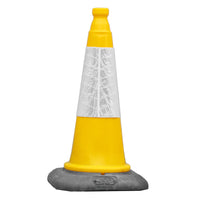
Yellow Dominator Traffic Cones 500mm JSP Road Cone
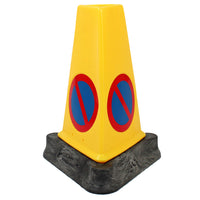
JSP No Waiting Cone MK5 - Triangular | JBN081-140-200