
 +44 (0)1905 794875
 Wholesale Prices

All You Need to Know About Safety Boots and Which Ones to Buy
Safety boots are designed to protect your feet at work. But are safety boots a legal requirement? And how do you know which type to choose?
In this article, we’ll answer those questions and more, and provide some tips and recommendations to help you to find the best safety boots for your role.
Why you need to wear safety boots
Safety work boots provide essential protection against injuries to your feet and ankles, especially on industrial work sites where you need more coverage than a safety shoe would give.
As well as features like waterproofing and impact resistance, safety boots are built for comfort during long shifts. And by wearing the right boots for your industry and role, you can make sure you’re legally compliant as well as safe.

The difference between safety boots and safety shoes
Although some safety features are found in both types of footwear, safety boots and safety shoes are not the same thing - and it’s important to understand the difference. What are safety boots and how do they differ from safety shoes?
Do safety boots and safety shoes have different designs?
Yes - the main difference is in their height. A safety shoe has a lower cut, like a regular shoe or trainer, while a safety boot extends above the ankle. Some boots, such as wellies, are higher than others.
Safety boots provide ankle support as well as extra protection from impacts to the ankle. They tend to have thicker soles, which can make them heavier to wear. Safety shoes are typically more lightweight, although many boots are now made from advanced materials to make them lighter and more breathable.
Can you wear safety boots and safety shoes in every industry?
Not every role or industry requires safety footwear. If you’re in a low-risk environment such as an office, you should be able to wear your regular shoes to work.
For roles where you’re on your feet all day, such as healthcare, hospitality, or retail, you might require occupational footwear. These shoes and boots are designed for comfort, with built-in cushioning and support alongside features like energy absorption and slip resistance, but they don’t need to have protective toe caps.
Safety shoes and boots with toe protection are necessary if you’re working with hazards like heavy equipment, chemicals, or molten metal. Some footwear is made for specific industries, such as chainsaw boots.
Always check with your employer (or find out for yourself if you’re self-employed) to make sure you’re wearing the right type of footwear for your role.

Do safety boots last longer than safety shoes?
Not necessarily. For all safety footwear, longevity depends on factors like the overall quality, how often you wear it, the conditions you use it in, and how well you take care of your shoes or boots.
Safety boots can be more durable due to their thicker and stronger materials, although they are typically subjected to more wear and tear.
Do safety boots expire? Well, the EN standards don’t require safety boots to have an official expiry date. But if your boots become worn or damaged, you should replace them.
Are safety boots or safety shoes better in harsh weather?
Safety boots naturally provide more coverage than safety shoes, so you have extra protection against the rain and cold. Those certified as “CI” will provide insulation against very cold temperatures (or very hot temperatures if marked “HI”).
Are safety boots waterproof? That depends on the model - you’ll need to check the certification for the level of resistance to water.
The marking “WR” means “no water penetration inside the boots is to be detected.” This is the one to look for if your feet are routinely submerged in water. A marking of “WPA” indicates that the boots can allow for “some water penetration and absorption” but should keep you dry as long as you’re not standing in puddles all day.

Do safety boots have a rating system?
Yes. The EN ISO 20345:2022 standard covers safety footwear, including boots, and there are various classifications within it. Safety boots are rated with numbers and letters, and the table below shows what these ratings mean.
EN ISO 20345:2022 – Safety Footwear Classification

Note: S1, S2, S3, S6 and S7 footwear is referred to as class I and is made from leather and other materials (not all-rubber or all-polymeric). S4 and S5 footwear is referred to as class II and is made from all-rubber or all-polymeric materials (e.g. waterproof wellies). SB footwear can be either class I or class II.
All safety boots that conform to EN ISO 20345 have protective toe caps made from metal or composite materials. These are tested to withstand 200 joules of impact and 15 kilonewtons of compression, as well as for corrosion resistance and reaction to chemicals and heat.
Slip resistance is also a basic requirement, and there are tests to ensure the safety boot meets requirements for basic resistance, non-toxicity, material properties, height, ergonomics and general comfort.
The standard also outlines some optional tests, which may be conducted on safety footwear designed for specific environments or hazards. Boots that pass these tests will be marked as follows:
A - Anti-static
AN - Ankle protection
C - Partly conductive
CI - Cold insulation of the sole complex
CR - Cut-resistant upper
E - Energy absorption of the seat region
FO - Fuel and oil-resistance
HI - Heat insulation of the sole complex
HRO - Heat-resistant outsole
LG - Ladder grip
M - Metatarsal protection
P - Perforation resistance (metal insert)
PL - Perforation resistance (non-metal inserts, 4.5 mm nail)
PS - Perforation resistance (non-metal inserts, 3 mm nail)
SC - Abrasion resistance of optional overcaps
SR - Slip resistance on ceramic tile floors with glycerol (denotes enhanced grip)
WR - Water resistance
WPA - Water penetration and absorption
Occupational boots
We mentioned occupational footwear earlier and the differences between this and safety footwear. Occupational boots must conform to a different standard, EN 20347.
EN ISO 20347:2022 – Occupational Footwear Classification

Note: O1, O2, O3, O6 and O7 footwear is referred to as class I and is made from leather and other materials (not all-rubber or all-polymeric). O4 and O5 footwear is referred to as class II and is manufactured from all-rubber or all-polymeric materials (e.g. non-safety wellingtons).
Note: Safety wellingtons are classed as S4/S5 if they have toe protection, or as O4/O5 if not.
Other relevant standards
Here are some other standards covering footwear:
-
EN ISO 20346: protective footwear used for general purpose, but not classed as “safety” or "occupational".
-
EN ISO 17249: resistance to chainsaw cutting
-
EN ISO 20349: protection against thermal risk and molten metal splash in foundries and welding
-
EN 50321: electrically-insulating footwear for live working
-
IEC/EN 61340: ESD or anti-static footwear
-
EN13832: chemical-resistant footwear
-
EN 15090: protection for firefighters
-
EN 13634: protection for motorcycle riders
What should I consider when buying safety boots?
There are plenty of safety boots to choose from, and you’ll need to factor in comfort, quality, durability, and compliance.
Quality and durability
Look at the overall quality of the boots and their likely durability, given the type of industry and role you work in. For example, in industries like mining and construction, safety boots are subjected to a lot of wear and tear, so you’ll want a heavy-duty model.

Protective features
Choose your safety boots according to the protection you need in your role - do you need anti-static, heat insulation, perforation resistance, or water resistance? Safety boots will have toe protection by default, but there’s a choice of composite, aluminium, or steel toe caps (we recommend you check out our comparison article before buying!)
Comfort
It’s vital that your safety boots are comfortable, otherwise they’ll hamper your ability to do your job. Make sure your feet are measured correctly and don't assume that you’ll need the same size as your normal shoe size.
Wearing the right socks helps with comfort, but you need to make sure your safety boots still fit correctly - for instance, if you want to wear thick thermal socks, you might consider a slightly larger size of boot.
Insoles also affect the fit, so buy these from the same brand as your boots to ensure compliance and comfort. When you’re buying boots, always try them on with the socks and insoles you’re going to wear.
Trusted supplier
Always buy your safety boots from an established supplier who’s known for providing genuine PPE and is a member of the British Safety Industry Federation (BSIF). Don’t be tempted to buy from a random source, even if they appear to be selling well-known brands - these might be knock-off versions!

How to look after your safety boots
Taking care of your safety boots helps to prolong their lifespan and ability to protect your feet. Here are our top tips for maintaining hard-working safety boots.
-
Cleaning: Before cleaning your safety boots, check the label or instructions from the manufacturer. In general, you should avoid aggressive cleaning products, washing machines, and tumble driers.
-
Drying: Always leave your boots to dry naturally - never use a direct heat source such as a hairdryer, a radiator, or direct sunlight.
-
Treatment: If appropriate, treat your boots with high-quality wax or cream designed for the material.
-
Storage: Store safety boots in a cool, dry, airy place, out of direct sunlight.
-
Replacement: How often should safety boots be replaced? There’s no set timeframe, although 6-12 months is about right for boots in constant use in harsh environments. Check daily for any problems, such as cracks, loose soles, or discomfort - if you spot signs of damage or excessive wear, replace the boots.
The best recommended safety boots for each industry
As we’ve mentioned, it’s important that your footwear suits your industry. You’ll need to check to find out exactly what’s required in your role, but we’ve pulled together some recommended safety boots for main industry sectors.
Construction
Dealer safety boots are a favourite with construction workers - they’re super-tough, and the slip-on design makes them easy to pull on and off. We’d also recommend insulated boots, such as the Blaklader Storm.

Mining/quarrying
In this industry, your boots will see a lot of abrasion, so you’ll need a hardwearing leather outer. The Klever boot from U-Power combines this with a deep tread pattern, which is ideal for uneven terrain.
Forestry/arboriculture
Chainsaw boots by Stein are ideal, made from layers of high-tensile fibres designed to jam the blade before it cuts through to your foot.
Oil and gas
Originally designed for working on oil rigs, rigger boots have a pull-on design and go roughly a third of the way up the leg. Another great option is the Sixton Avalon Polar, which is water-resistant, insulated, and anti-slip.
Warehousing/distribution
When you’re on your feet all day, choose boots with plenty of cushioning - such as the Solid Gear Reckon. If you’re working in cold storage or outdoors in the yard, cold-insulated boots are a must.
Agriculture
For working in wet and muddy conditions, go for our Blaklader safety wellies. These offer the standard features of a wellington (high-sided and waterproof) alongside toe caps and protective soles.
Manufacturing
Look for boots with protection against specific risks - for instance, the U-Power Real gives higher puncture resistance for environments where fine sharps (such as metal swarf or thin screws and nails) are likely to be on the floor.
Steel/foundry work
Protect your feet from intense heat and splashes of molten metal with HRO-certified safety boots like the Mascot Elbrus or Sixton Tonale Scout.
Secure sites
On sites with metal detectors or other sensitive equipment (airports, prisons, military bases), you’ll need metal-free safety boots that won't cause interference. The Solid Gear Nautilus is a good shout.
Static-sensitive sites
ESD (ElectroStatic Discharge or ElectroStatic Dissipative) boots (such as the Mascot Bimberi Peak) are required for workplaces where a static spark could cause chaos, such as factories producing electronic or diagnostic equipment.
Find the perfect safety boots to meet your industry needs
To protect your feet from various workplace hazards, you’ll need safety boots that fit well, feel comfortable, and include all the safety features required for your job.
Looking for the ideal safety boots to keep you safe at work? Browse our diverse collection from industry-leading brands, in a wide variety of sizes and styles. If you have any further questions, contact our friendly sales team!
- Author
Related articles


You might like:
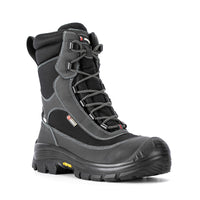
Sixton Avalon Polar 88056-05L S3 HRO HI WR SRC Safety Boot
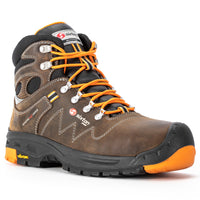
Sixton Tonale Scout 30329-02L S3 HRO HI SRC Safety Boot
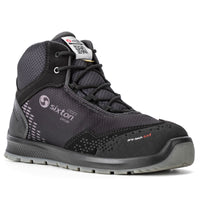
Sixton Auckland High Skipper 94405-00L S3 SRC Safety Boot
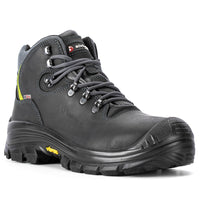
Sixton Stelvio Polar 88087-17L S3 HRO HI WR SRC HDRY Safety Boot
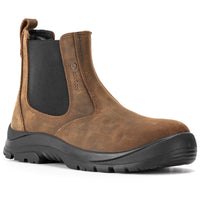
Sixton Dealer Boot Touring 10349-01L S3 SRC Safety Boot
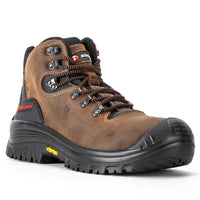
Sixton Stelvio Atlantida Brown 80087-01L S3 HRO HI SRC Safety Boot
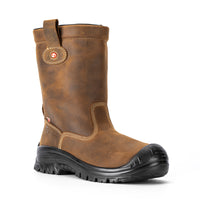
Sixton Montana Endurance 81156-23L S3 WR CI SRC Safety Boot
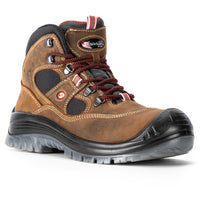
Sixton Labrador Endurance 81152-00L S3 SRC Safety Boot
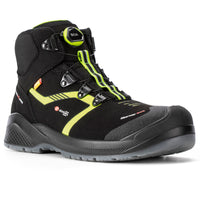
Sixton Resolute Scatto Suede Green BOA 43459-01L S3 SRC Safety Boot
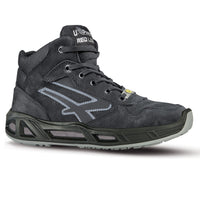
U-Power Lift Carpet S3 SRC CI Safety Boot RC10013
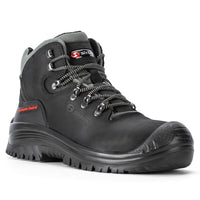
Sixton Corvara Endurance 81087-06L S3 SRC Safety Boot

