+44 (0)1905 794875
 Wholesale Prices


White vs Brown Rock Salt: What’s The Difference?
Rock salt or grit is essential for keeping roads and walkways clear of ice or snow during winter, improving safety for pedestrians and drivers. But what is gritting salt made of - and is it best to use white or brown?
In this article, we’ll explain what rock salt is, how the brown and white versions differ, and what to consider when buying.
What is rock salt?
The term “rock salt” describes salt that’s mined directly from deep underground ancient sea beds. It is crushed without refining, so it still contains natural insoluble impurities such as sand, grit, and clay. This gives it a brown appearance.
White de-icing salt is actually marine solar salt, which is produced by evaporating seawater in salt pans. This naturally filters out any heavier sediments, giving the salt higher purity and a white appearance.
So, the brown version is rock salt, while the white type is more accurately called de-icing salt - but the names are often used interchangeably. In fact, we list “white rock salt” for ease of identification. Brown salt is also called “grit” or “grit salt”.
For both types, the most common form is halite or sodium chloride (NaCl). However, calcium chloride, magnesium chloride, and potassium chloride are all sold as rock salt.

Brown salt vs white salt: what’s the difference?
Both types of salt work by lowering the freezing point of water in order to melt the ice and snow. But there are quite a few differences between white and brown - so let’s compare their performance.
Melting speed and grip
Because white salt has higher purity, it dissolves faster than brown rock salt - which means it starts melting the ice faster. However, it becomes less effective if the temperature falls well below freezing, as its melting action slows down.
The grit content of brown salt gives immediate traction for pedestrians and vehicles, even before the salt content has started working. It stays on the surface after the salt has dissolved, and keeps working when temperatures drop.
Winner: tie
Visibility
Brown salt shows up better against snow and ice, so it’s easy to see which areas have been treated and which still need to be done. This improves safety and helps you to record the gritting process for health and safety purposes (which is helpful if anyone does slip and fall). White salt is more unobtrusive.
Winner: brown
Residue
White salt has a cleaner finish and doesn’t leave much residue, whereas the grit from the brown version looks messy as the ice melts - and it gets tracked into buildings and vehicle interiors as people walk through it, staining carpets and leading to extra cleaning.
This is why white salt is more often used on forecourts and entrances to shops or hospitality venues. There’s also less risk of it blocking drains or staining light-coloured paving, both of which can happen with brown rock salt.
Winner: white

Clumping
Brown salt tends to hold moisture, which means it’s prone to clumping or setting - especially if you store it in damp conditions. The gritty element can also clog push spreaders and hopper spreaders.
White salt has a finer texture, so it’s less likely to cause these problems (which is why it’s required for the grit spreaders we sell at Start Safety). Both types of salt may be treated with an anti-caking agent to prevent clumping.
The grading of the salt (measured in millimetres) is also important, so always check what grade or type your spreader is designed for.
Winner: white
Cost-effectiveness
Per tonne, brown rock salt is usually the cheapest option - particularly if you’re de-icing a large area. But the trade-off is that you may need a higher spread rate, because the brown type contains more grit than pure salt.
The price gap between brown and white salt, therefore, may be smaller than you think. You also have to take into account the cost of cleaning up the residue from brown salt, including unblocking drains.
Instead of thinking about it in terms of cost per bag, it makes more sense to consider the cost per treated area.
Winner: tie
Availability
In the UK, the majority of our brown rock salt comes from mines in Cheshire, Belfast, and Cleveland. This means the supply is reliable, even if there’s a spike in demand. There’s no import cost either.
White salt is harvested from salt pans in warmer climates such as the Mediterranean, so there’s a cost attached to bringing it to the UK and there may be delays or gaps in availability.
Winner: brown

Using both types
You can have the best of both worlds by using each type of de-icing salt in the most appropriate environment. For example, use brown salt on car parks, industrial sites, and public highways, and white salt for driveways, entrances, and customer-facing areas.
Other considerations
Here are a few extra things to think about before using de-icing salt. These apply to both white and brown salt.
Consider potential harm
Salt can cause damage to:
-
Metal objects and infrastructure (vehicles, railings, and cycle racks)
-
New concrete, some natural stone, and poorly-sealed block paving
-
Grass and other plant life (meltwater can carry salt into lawns, flower beds, and watercourses).
Salt and grit can also irritate dogs’ paws, which is a factor for pavements, parks and residential sites.
Think ahead
Salt de-icing is more effective if you pre-treat the ground before any ice or snow arrives, rather than spreading the salt afterwards. You can also get ahead by ordering your salt and grit early instead of waiting for a cold snap when stocks may run low. It won’t go off as long as you store it properly.
Store salt correctly
To make sure your salt remains in good condition, store it in sealed bags or covered grit bins. This is particularly important if you’re buying it early, and with brown salt which has more of a tendency to clump.

Should I buy white or brown rock salt?
Your decision will be based on coverage and grip you need, your budget, and your concerns about grit residue. Here’s a recap of when to use each type:
When to choose brown salt:
- You’re treating a large area such as a car park or industrial site
- You need instant traction on the ice or snow
- You’re OK with visible residue
- You prioritise cost-effective coverage
When to go for white salt:
- You're treating smaller areas such as paths and entrances
- You need to melt the ice quickly
- You don’t want grit residue in customer-facing areas
- You don’t mind paying a little extra.
Ready to buy rock salt? Get stocked up for the winter at Start Safety - or speak to our friendly sales team if you have extra questions.
And don’t forget to buy grit bins, grit spreaders, hand scoops, and snow shovels!
- Author
Related articles





You might like:

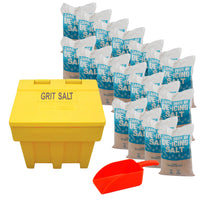
Large Grit Bin Rock Salt Hand Scoop
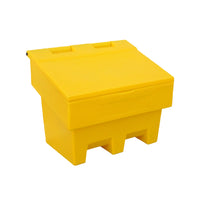
100L Grit Bin In Yellow, Small, Stacking With Fork Slots
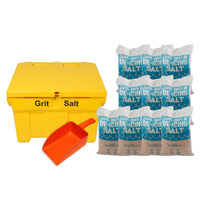
200 Litre Grit Bin Kit, Inc. Grit & Tough Scoop
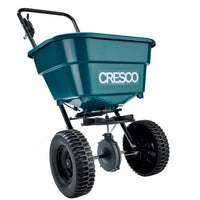
Cresco 8SW Push Along Salt & Seed Spreader 36kg Capacity
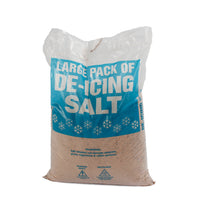
Brown Rock Salt / Road Grit - 25kg Bag
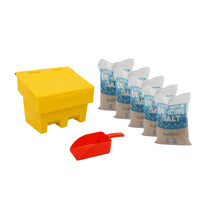
100 Litre Grit Bin Kit Inc. Grit & Tough Scoop
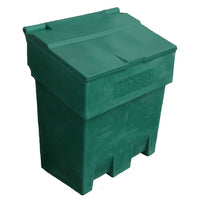
Green Grit Bin - 200 Litres
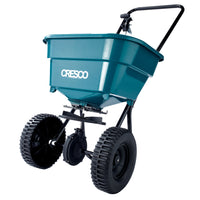
Cresco 10SW Push Along Salt & Seed Spreader 36kg Capacity
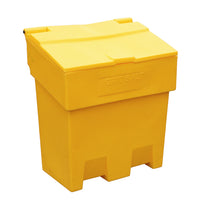
200L Grit Bin Medium Grit Bin - Yellow
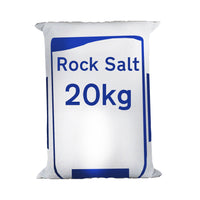
White Rock Salt / Road Grit - 20kg Bag
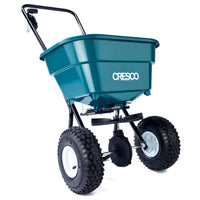
Cresco 20SW Push Along Salt & Seed Spreader 36kg Capacity