+44 (0)1905 794875
 Wholesale Prices

QuickFit Sign System Guide
If you’ve come across QuickFit signage in your search for temporary road signs, you probably have a few questions. What exactly areQuickFit signs? How do they work? And what’s the difference between the various types?
Even those who are familiar with QuickFit may not be aware of some of the newer systems and their benefits - so in this article we’ll explain everything you need to know.
What is the QuickFit sign system?
QuickFit is a modular sign system for temporary road signs, in which interchangeable sign faces are mounted on a universal frame. The sign faces have standard pre-drilled holes for attaching them to the relevant QuickFit frame with metal toggles.

Benefits of QuickFit signage
Universal system
The key benefit is that hundreds of different sign faces will fit on the same frames. This includes all the common shapes and sizes - circular, triangular, and rectangular signs as well as supplementary plates.
This concept reduces the number of frames you need to carry to a roadworks site, because you can just take the number of frames you need and swap the faces depending on the application.
QuickFit signs are also cost-effective - when one component wears out, you can just replace it without having to retire the whole sign.
Easy to deploy, transport, and store
Carrying fewer frames reduces vehicle weight, and the frames are foldable or stackable to save space on the van or in storage. This means you can carry more tools or other equipment. The sign faces have no exposed fixings so they’re less likely to damage each other in transit.
QuickFit signs are quick and easy to set up, with tool-free assembly. The toggles, also known as “drop-lock pins” or “antiluce fasteners”, work in a similar way to peg-and-hoop toggles on clothing - simply slot each toggle through the hole in the sign face and drop the moveable element down to lock it in place.

Durable and high-quality
Whether you go for metal or plastic, QuickFit signs are designed to be durable and reliable. The metal frames we sell are either painted, galvanised, or have a resin-based coating to withstand the elements, while the plastic frames won’t rust.
The frames also come as standard with lower bars for anchoring sandbags, lowering the centre of gravity so they remain stable in windy conditions. (Some models have a ballast unit instead.)
Chapter 8 compliant
Another advantage is that the QuickFit system conforms to the regulations in Chapter 8 of the Traffic Signs Manual, which covers temporary roadworks. This means the signs are legal to use on the public highway. Always consult the guidelines before deploying any temporary road signs.
Are there any downsides?
While the tool-free deployment of QuickFit signs is a benefit for legitimate users, it does mean the signs can be vulnerable to tampering or vandalism as no tools are required for disassembly.
A guide to QuickFit sign faces
QuickFit sign faces consist of a backing material called the “substrate” (made from plastic or metal) and a reflective vinyl sheet with the sign face design printed on it. Here’s what you need to know:
Hole centres
When you’re choosing QuickFit sign faces, you’ll see references to “hole centres”. This refers to the spacing of the pre-drilled holes for attaching the face to the frame.
300mm hole centres means there’s a gap of 300mm between each hole, both horizontally and vertically. Other hole centre options include 400mm and 750mm.

Most sign faces have at least 4 fixings at the centres Some will also have a lower set of 2 fixings, which may be at a different vertical centre. The latter are only for very large “high speed” signage (on dual carriageways and motorways) where the lower holes can be used to attach supplementary plates.
Signage for on-street use tends to have either 300mm or 450mm centres. You always need to check that your chosen frame and sign faces have the same hole centre measurements.
Supplementary plates
A “drop supp” has two holes in a deep border at the top, so you can attach it from the two lower toggles that are already securing the sign face. The drop supp then hangs below the main sign.
This configuration is mainly for the EnduraSign system, where there are only 4 toggles rather than the 6 seen on larger systems. QuickFit metal frames have toggles on a lower bar where you can attach a supp plate.

Backing materials
Most QuickFit sign faces have a 3mm backing substrate made of plastic. 5mm GRP (glass-reinforced plastic) is used for larger signs as it is stiffer and less likely to bend, while Zintec steel sheeting is commonly used for motorway signage.
Some sign faces have a hinged steel substrate that allows them to fold, so they can display different messages at different times or be completely blank when folded down and not in use.
Composite backing is less common in QuickFit signs, but is still used here and there. This is the same material that’s used for permanent signs (without the rails).
NOTE: Beware of inferior signage with 2mm or 2.5mm backing - it’s not as robust as the 3mm, and can start to bend in the wind.
Reflectivity
The sign’s face is made from a specialised reflective vinyl that ensures the message is visible in low light. There are various grades or classes of reflectivity specified for UK road signs, with RA1 being the lowest.
Because QuickFit signs are intended for temporary use, they need to conform to RA1 or engineering-grade reflectivity. If you need larger signs for high-speed roads, you’ll need RA2 or higher (see our Road Sign Materials Guide for more details).
A guide to QuickFit frames
QuickFit sign frames are designed to accommodate various shapes and sizes of sign face. They are made from either plastic or metal (plastic faces will fit metal frames) and we’ll take you through their pros and cons in this section.
EnduraSign frame
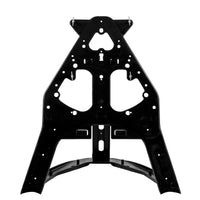
EnduraSigns have a robust plastic frame with 4 toggles at 300mm centres, accommodating a huge number of standard QuickFit sign faces.

Pros of the EnduraSign frame:
-
Deploys in seconds with a kick-out leg
-
Low-profile plastic construction:
-
Non-conductive
-
No scrap value
-
No sharp edges
-
Won’t rust
-
Lightweight
-
Folding, stackable design (only 50mm tall when laid flat)
-
Durable - will flex rather than snap
-
100% recyclable
-
Can be branded in almost any RAL colour (that goes for most of our plastic frames, if you order in bulk).
Cons of the EnduraSign frame:
-
With only 4 toggles, this frame requires bespoke supplementary plates (known as "drop sups").
Enduraframe 1500
The Enduraframe 1500 is a “mini” QuickFit frame made from fibreglass-reinforced plastic, making it lightweight but very durable.

Pros of the Enduraframe:
-
Taller design suitable for higher speed roads (such as fast A-roads)
-
Can be stacked for transport
-
Durable and steady, with locking legs
-
Low-profile plastic construction:
-
Non-conductive
-
No scrap value
-
No sharp edges
-
Won’t rust
-
Lightweight
-
8 locking toggles, so can accommodate normal supp plates
Cons of the Enduraframe:
-
More expensive than other QuickFit frames
-
Taller format may be harder to store in closed vehicles
-
Not recyclable.
Q-Frame
Made from ultra-strong blow-moulded plastic, our Q-Frame is supplied with 300mm hole centres, and is also available to order with 450mm centres.

Pros of the Q-Frame:
-
Taller design suitable for higher speed work (fast A roads)
-
Compact - easy to stack for transport
-
Low-profile plastic construction:
-
Non-conductive
-
No scrap value
-
No sharp edges
-
Won’t rust
-
Lightweight
-
Can accommodate normal sups
-
Recyclable
Cons of the Q-Frame:
-
The taller format may be harder to store in closed vans.
QuickFit Mini (and other steel frames)
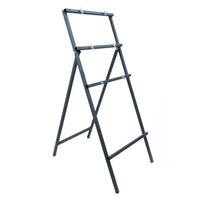
The QuickFit Mini is designed for signs up to 750mm with mounting hole centres of 300mm. It’s called the Mini because there are two larger steel versions to choose from, even though it’s actually larger than some other systems!

Pros of the QuickFit Mini:
-
Cheap for its size (compared to other systems)
-
Durable steel box section
-
Can accommodate normal supp plates
-
Has drainage holes and U-shaped cross members to relieve weight
-
Can be powder-coated in your choice of colour
Cons of the QuickFit Mini:
-
Potential for corrosion, also conductive
-
Robustness makes it heavier than other frames
-
Difficult to stack
-
Can have sharp edges
-
Susceptible to theft for metal value.
Other options:
The QuickFit Midi accommodates 900mm sign faces, while the largest in the range, the QuickFit Standard, can accommodate even larger sign faces with clip centres at 750mm. The wider width of the frame allows it to properly support larger sign faces in strong winds.
Vertical QuickFit frames
Also known as the highway sign, vertical QuickFit signs are a new concept designed for urban environments.

Pros of the vertical sign:
-
Small footprint makes it less of a trip hazard
-
Tamper-proof compared to other vertical systems
-
No sharp edges
-
Can be double-ballasted with stacked bases
-
Supports normal supplementary plates
Cons of the vertical sign:
-
Can be time-consuming to assemble (and disassemble, which is good for vandals but not for legitimate users)
-
Harder to transport when disassembled.
Alternatives to QuickFit signs
If you decide that the QuickFit system isn’t quite what you want, there are a few other options for temporary road signs.
Zintec signs
Zintec (zinc steel) signs comprise metal substrate faces and angle iron “stanchion” frames, attached with clips or rivets. They have a low price point (although this has started to change due to the cost of metal) and are widely used, so they’re readily available in various formats and sizes.
The clips are a bit fiddly, so once the face is in the sign, it can be hard work to take it apart again. The frames are heavy, with sharp edges and corners that can scratch vehicles and hands or snag on clothing.
Like other metal signs, these are conductive and could be targeted by thieves for scrap value. They also tend to bend if struck by a vehicle - they’ll be a write-off even at low speeds.

Roll-up signs
Collapsible roll-up signs have zinc-plated frames to which you can add PVC sign faces (sold separately or as part of a kit). They’re easy to transport and deploy, and take up less space than non-collapsible signs - although some models are quite long even when folded, so check that they’ll fit on your van!
These signs can also be quite heavy if you're transporting them en masse. There’s a wide range of faces and designs to choose from, but they can be expensive compared to other sign systems.
Cone signs
A cone is a cost-effective way of supporting a temporary road sign. These sign faces have brackets with straps or loops on the back, which you can easily drop over any 750mm or 1-metre traffic cone.
Being compatible with the cones you’re carrying anyway, they cut down on space and vehicle weight. Again, a wide range of designs is available. However, they can be difficult to store and stack, and cone brackets can scratch adjacent signs.
Cones cannot support larger sign face sizes, so these signs are only suitable for low-speed street works.
Key considerations
Getting the right size frame for the face is important. The key factors are the toggle centres and the frame's overall height. The correct frame width will ensure that the sign face is adequately supported and resists deformation in windy conditions.
The system can be divided into two primary classes: “urban” and “high speed”. For urban areas where vehicles are travelling under 40mph, sign faces of 750mm are suitable - these are supplied in engineering-grade or Class 1 reflectivity. The appropriate frame for the 600mm and 750mm faces is the QuickFit Mini.
For high-speed applications such as dual carriageways and motorways, you'll need larger sign faces (either 900mm or 1200mm) and at least Class 2 reflectivity, plus larger frames. We sell these on special order.

The takeaway
The QuickFit sign system gives you flexibility, fast deployment, and ease of transport and storage. With a wide variety of frames and sign faces to choose from, it’s important to get the right setup for the application.
Head over to our product pages to find more information about each type of sign, or call our friendly sales team for advice.
FAQs
Are QuickFit signs easy to look after?
QuickFit frames are durable and don’t require much maintenance. You can clean general dirt and grime away with soap and water (making sure to dry metal frames thoroughly to prevent rust). If a steel frame becomes stiff, you can spray it with WD40.
If the sign face, the frame, or the toggles should fail or go missing, you can easily replace the component in question. All the parts can be recycled at the end of their life.
See our road signs maintenance guide for more information.
Are QuickFit signs cheaper than traditional framed signs?
In terms of the upfront cost, QuickFit is not necessarily cheaper. However, in the long-term you will make savings by using this sign system. As we’ve mentioned, the interchangeable sign faces mean you can use fewer frames, and you’ll reduce vehicle weight which is good for fuel economy. Plus, you can easily replace individual components when needed without retiring the whole sign.
- Author

You might like:
Quick Fit Mini Sign Frame | Dumpy Frames
QuickFit EnduraSign Frame - Plastic Quick Fit Road Sign Frame
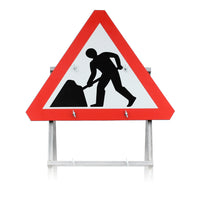
Men at Work Quick Fit Sign Face Dia. 7001 | 750mm
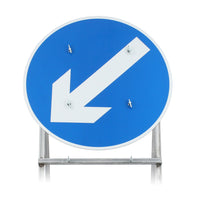
Keep Left / Keep Right Reversible Quick Fit Sign Dia. 610 | 750mm
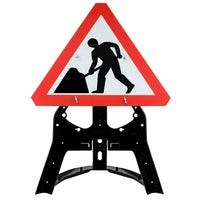
Men At Work Sign QuickFit EnduraSign Dia. 7001 | 750mm
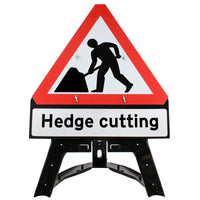
Men At Work Inc. 'Hedge cutting' Sup. Plate Sign QuickFit EnduraSign Dia. 7001
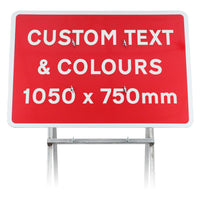
Custom Quick Fit Sign 1050x750mm - 300mm & 750mm Hole Centres - Face Only
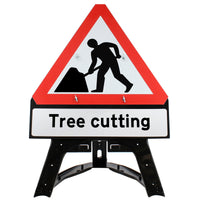
Men At Work Inc. 'Tree cutting' Sup. Plate Sign QuickFit EnduraSign Dia. 7001
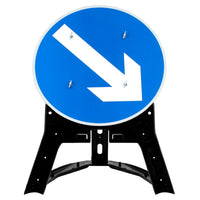
Keep Right Sign QuickFit EnduraSign Dia. 610 | 750mm
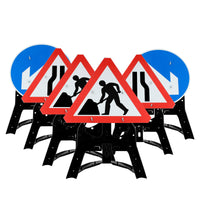
QuickFit EnduraSign Road Works Sign Package | 750mm
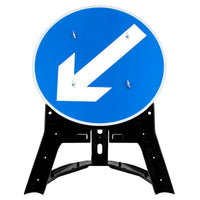
Keep Left Sign QuickFit EnduraSign Dia. 610 | 750mm