+44 (0)1905 794875
 Wholesale Prices

Understanding The Load Capacity Of Ground Protection Mats
Whether you’re setting up a construction site or hosting an outdoor event, ground protection mats will protect surfaces from damage. But how much weight can they carry, and what does load capacity mean?
In this post, we’ll help you to understand load capacity and calculate your requirements, and explore how different types of mat perform under load.
Skip ahead using the links if you like!
What do ground protection mats do?
Factors that affect load capacity
Manufacturer load ratings: what do they really mean?
Signs of overloading or mat failure
Calculating or estimating required load capacity
Best practices for maximising load performance
Choosing the right mat for the right load
What do ground protection mats do?
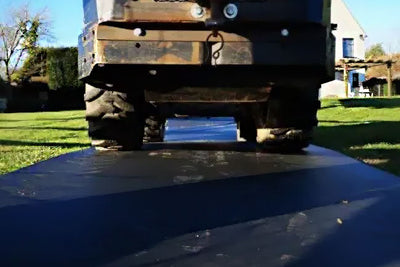
Ground protection mats are designed to create temporary roads, pathways, or work platforms on various surfaces. This protects the ground from damage and prevents vehicles, equipment, or pedestrians from sinking into the soil.
Without mats, the full weight of anything heavy would be concentrated in a few contact points on the ground. But by increasing the surface area beneath tyres, outriggers, or just human feet, mats spread the weight evenly and reduce ground pressure.
Ground mats also protect the surface from repeat passes over the same area - even foot traffic will quickly wear through grass or soft soil and turn it into mud.

Load capacity: the basics
What does load capacity mean in the context of ground protection mats? It’s referring to the maximum load the mat can support without failing. This is typically measured in tonnes, and the figure may refer either to the mat’s overall capacity, or the capacity at a point load.
Here’s the thing about load capacity: it’s not a one-size-fits-all number. It’s a variable calculation, because you need to factor in variables like the environment, the duration of the load, and the properties of the ground protection mat.
It’s worth understanding some of the terms used in measuring load capacity:
Static load vs dynamic load
Static load applies to equipment that stays in one place over time, whereas dynamic load applies to moving vehicles or equipment. Static loads cause stress on a surface, while dynamic loads also add inertia, vibrations, and fatigue. Therefore, dynamic capacity is typically less than static capacity.
Point loads vs distributed loads
A point load is a force that’s exerted on a single point. Distributed load means that the force is applied evenly over an area. Point loads are more demanding, and require more support from structures or surfaces, than distributed loads. If you think about it in terms of footwear, a high-heeled shoe puts more pressure on a single spot than a flat shoe worn by a person of the same weight.
Axle load vs gross vehicle weight (GVW)
Axle load is the portion of a vehicle’s total weight transmitted to the road surface through the wheels on one axle. GVW is the total weight of a vehicle, including everything it’s carrying. Why is this relevant to ground protection mats? Because even a very heavy vehicle may have multiple wheels that spread the weight out.
Load distribution and ground pressure
Ground bearing pressure (GBP) is the force per unit exerted by equipment or vehicles. It’s typically measured in kN/m2 or PSI, and calculated as:
Pressure = total load / contact area
If you increase the size of the contact area on the ground in relation to the weight, this will decrease the ground pressure. That’s why ground protection mats or pads help to distribute the load.

Why load capacity matters
When choosing ground protection matting, it’s essential to know how much load capacity you need. For example, a mat that’s only designed to take foot traffic may split or fail to distribute the load of a vehicle such as a crane or even a car.
Underestimating the required load capacity can lead to serious consequences. If your mat fails, you’ll damage the ground and potentially your equipment. That’s on top of the safety risks if vehicles were to sink or tip over.
Typical applications where load capacity is critical include:
-
Construction sites with temporary access roads or crane pads
-
Outdoor events and festivals
-
Utility and infrastructure work
-
Emergency access and disaster response
Factors that affect load capacity
As you will discover in this section, various factors have an impact on the load capacity of your mats.
Mat material
The material your ground matting is made from will have an effect on its load capacity. Depending on the other factors at play, stiff materials will suit some tasks while others require more flexibility.
Most of these mats are made from plastic, which gives you the necessary durability but is flexible enough not to crack under high pressure. HDPE (high-density polyethylene) and low-density polyethylene (LDPE) are popular choices, often made from recycled materials.
Composite plastic mats are highly durable for heavy-duty applications, while other options for ground protection mats include natural rubber, steel, and timber.
Mat thickness and design
You’ll also need to consider the question of thickness vs rigidity. Thicker mats can distribute load effectively as they form more of a barrier between the equipment and the ground below.
However, as we mentioned earlier, you don’t necessarily want a completely rigid mat, as this may not have enough flexibility or “give” and may split under a heavy load, especially on uneven ground.
Another factor that can affect load capacity is the width of the mats, or the combined width when several are joined together. If the pathway you’ve created is too narrow, the load from vehicles won’t be distributed properly.
The wheels will run close to the mat edges and push the mat into the ground - or go off the edges completely and damage the surface. This is comparable to the way that country lanes get churned up and muddy at the edges.
The connectors between the mats should be secure, to ensure the connected mats act as a unified structure. Strong connectors also help mats to resist forces from moving loads and vehicles.
Textured surfaces provide extra traction to increase slip resistance. But if there’s a coarse tread pattern on the underside, heavy vehicles will press the indentations in the ground. One-sided mats work best if you’re concerned about indentations - but remember that a mat with a smooth underside may start to slide.

Ground conditions
The type of ground, and its condition, are critical factors in determining load capacity. For paved surfaces, a lower capacity rating may do the job as heavy loads can’t sink into the soil. However, for delicate or soft paved areas, a thicker mat will spread the load and prevent the pavers from cracking if a vehicle with a high point load uses the area.
But soft surfaces like soft soil, clay, and grass require more stability, as do unstable surfaces like sand and gravel. This is even more important when the ground is wet, as moisture and saturation can cause the ground to move like a fluid.
You’ll also need to factor in the bearing capacity of the subgrade. Ultimately, the ground below needs to be able to take the weight, especially if the mat is not a rigid type that’s designed to span voids. Ideally, any voids need to be filled and levelled to prevent vehicle wheels from pressing down into them and breaking the mat.
Vehicles and equipment
The vehicles and equipment you’re using will affect load capacity requirements. For example, heavy machinery with a high point load (such as cranes, MEWPs, and outriggers) will need matting or pads that can handle these forces.
Fatigue loading (stress placed on the mat by alternating, variable, or repetitive loads) can pump water up from below and soften the top surface, even if the loads themselves aren’t super-heavy. If the matting will see this type of activity, it’s best to use a high-load-capacity mat from the start.
Tracked vehicles are good at spreading the load, but remember that their tracks can cause damage to matting unless it’s specifically graded for this purpose. Even slow-moving vehicles can tear mats apart with turning, braking, and dynamic forces. There are mats designed to take these forces, so contact us for advice if you’re in doubt.
Manufacturer load ratings: what do they really mean?
Ground protection mats typically undergo compression testing by the manufacturer, who awards each model a “maximum load capacity” rating. For example, they might advertise that a particular mat can take a weight of up to 100 tonnes.
These tests take place under controlled conditions, using certain assumptions. For example, it is often assumed that you’ll be deploying the mat in optimal conditions, such as on solid, dry ground.
This is where the limitations of published load ratings come in. Let’s say a mat is rated for up to 80 tonnes. This means you can expect it to bear that weight on a firm surface - but on soft or saturated ground, the capacity can be significantly lower.
In most cases, load ratings also refer to distributed load rather than point load. A mat should take the advertised weight if it’s evenly distributed, but not if you’re using equipment that concentrates its force through one or two contact points.
Ratings may also include the efficiency of the mat’s connectors, which again depends on other factors.
If you’re unsure whether a mat’s load rating will cover you for your specific application, it’s vital that you seek guidance from the manufacturer - or from Start Safety!

Common load capacity mistakes
It’s all too easy to underestimate load capacity or to install protective matting incorrectly. Here are some common errors:
-
Relying only on gross vehicle weight: Vehicles that are relatively light but have very small wheels - such as forklifts - have a high point load. That’s why mats can fail even when the GVW seems to be within the limits.
-
Ignoring axle spacing and tyre pressure: Both factors are important. Larger axle spacings and lower tyre pressure help to distribute a vehicle's weight over a larger area of the mat, whereas short axle spacings and over-inflated tyres have the opposite effect.
-
Using pedestrian-rated mats for heavy plant traffic: This is almost a guarantee of failure. Ground mats designed for foot traffic just won’t have enough load capacity to bear cars, let alone heavier vehicles.
-
Assuming that harder mats mean higher capacity: This is a common misconception. Depending on the load distribution and the ground conditions, a hard mat may actually have quite a low capacity. For example, on undulating ground or the brow of a hill, hard mats will do their best to stay flat, which means they can break. Flexible matting is often more suitable in this scenario.
Signs of overloading or mat failure
If you see any of these signs, it shows that there’s an error in your calculations or you’ve chosen the wrong mat for the job.
-
Visible flexing or cracking: Usually, this indicates that the mat is trying to bridge a void in the surface beneath, rather than just distributing the load.
-
Mat movement or sinking: The load is too heavy for the ground conditions, or the mats are not connected securely. Consider using a heavier-duty mat with a higher load capacity, and re-grade the surface below before redeployment.
-
Rutting beneath mats: The ground is too soft for the grade of mat you’re using. Fix this in the same way as above.
-
Increased trip or slip hazards: The mats are not connected securely or the surface is too smooth. If the mats have expanded in the sun and started to peak, stop using them - loosen the connections and then re-tighten them once the mats have settled.

Calculating or estimating required load capacity
Follow these steps to determine your load requirements:
1. Take note of the weight of your equipment or vehicles, not forgetting the axle loads.
2. Assess the load type. Will vehicles or people be going back and forth across the mats, or will the equipment be stationary? Do the vehicles have wheels or tracks?
3. Assess the ground type and condition, and consider how conditions may change over the time period of the project or event.
4. Estimate traffic frequency and type. Will the ground protection mats see daily use on a construction site, or do you only need them for a weekend event?
In certain scenarios, it’s best to have a professional (such as a structural or geotechnical engineer) carry out ground-bearing calculations for you. This applies if the load is particularly heavy or concentrated, or when ground conditions are variable. If you’re in any doubt, ask for help.
Best practices for maximising load performance
Follow these steps to get the best load capacity from your ground protection mats.
Proper ground preparation
Start by clearing away any debris such as stones or branches, and curing the grass short. You can also level the surface with topsoil or sand, and compact the area to prevent uneven settling and help the mats to sit flush on the ground.
It’s also a good idea to use a geotextile membrane underneath the mats, which enables drainage but won’t allow larger quantities of water to come up to the surface.
Correct mat layout and orientation
Each manufacturer will provide recommendations for how to space the mats correctly. Always follow these closely to avoid any problems, and ask them (or us) for advice if you need it.
In certain weather conditions, you’ll need to factor in the expansion and contraction of plastic materials. Many connectors allow the mats to move in a controlled manner as temperatures change.
On slopes or especially uneven surfaces, you can also use U-pins or anchors to secure the mats in place.
For more information, read our guide to installing ground protection mats.
Interlocking and securing mats
Make sure your mats are connected together securely, whether you’re using couplers or the interlocking type of matting. This will help to maximise the load capacity.
Regular inspections during use
No matter how long you’re using the mats for, or what load you’re subjecting them to, it’s worth checking them regularly. You’ll then be able to spot any problems like cracking, sinking, or peaking.

Load capacity vs longevity
Using the right ground mat for the load isn’t only a matter of maximising load capacity and improving safety. Overloading these mats actually shortens their lifespan by subjecting them to unnecessary stress.
An overloaded mat may fail immediately, or it may wear down over time and eventually break. This carries a cost implication, as you’ll have to replace mats that can no longer function.
Using the right mat for the load will help to ensure longevity, but is it worth investing in more expensive options? If correctly used, high-end matting should offer long-term durability, but the trade-off is the higher upfront cost.
Read our article on cheap vs expensive mats.
Choosing the right mat for the right load
Ground protection mats are available in various load capacity ratings, and it’s crucial to use the right one for your needs. Your mat choice must align with the real-world conditions in which you plan to use it, from the terrain to the weight and type of load.
Use calculations and estimates to determine the amount of ground pressure from your vehicles or equipment. That way, you can avoid overloading and improve safety and performance, as well as increasing the lifespan of the mats.
Still unsure about load capacity? It’s best to consult your supplier or a trained engineer for guidance. Our friendly sales team can also help you to choose ground protection mats - give us a call!
- Author
Related articles


You might like:
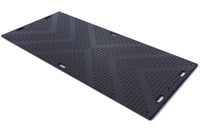
EuroMat Ground Mat (80t) - 2400x1200mm
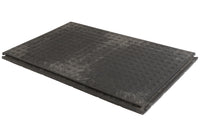
Blue Diamond GroundTuff Ground Protection Mat (20t) - 1200 x 800 x 22mm
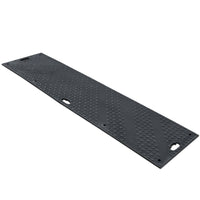
HalfTrak Euromat Ground Protection Mat Track Mat (80t) - 2400x600x12mm
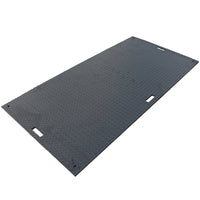
EconoMat Plus Medium Duty 30t Mat
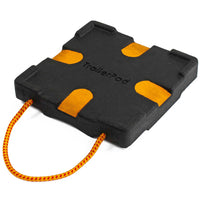
TrailerPad - HGV Trailer Leg Pad - Rope Included
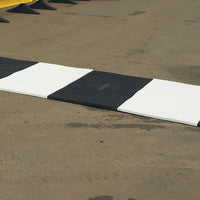
ClearPath Mat - Temporary Pedestrian Crossing
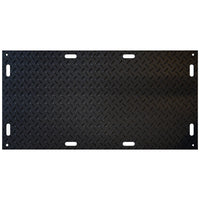
Blue Diamond GroundTuff PRO Ground Protection Mat (60t) - 2400 x 1200 x 17.5mm
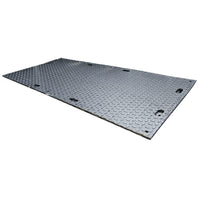
MambaMAT Ground Protection Mat (86t) - 2410 x 1200 x 12mm - Black
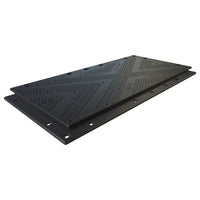
TuffTrak TTXO Overlapping Heavy-duty Ground Mat (200t) - 4090x2030x38mm
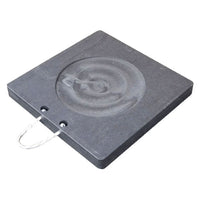
TuffTrak Square Outrigger Pads with Handle
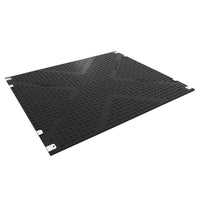
TuffTrak Standard HD1 Heavy-duty Ground Mat (200t) - 3000x2500x38mm - Black