+44 (0)1905 794875
 Wholesale Prices

How Far Apart Should Bollards Be Spaced?
In some circumstances, a single bollard is enough to protect property or deter unauthorised access. But what about situations where you want to install two or more bollards? How far apart should bollards be spaced?
In this article, we’ll look into the different applications for multiple bollards and explain why the right spacing is crucial to their success.
What are you using the bollards for?
Having the right spacing between your posts will help them to do their job, but this is dependent on the use case.

Preventing vehicle access
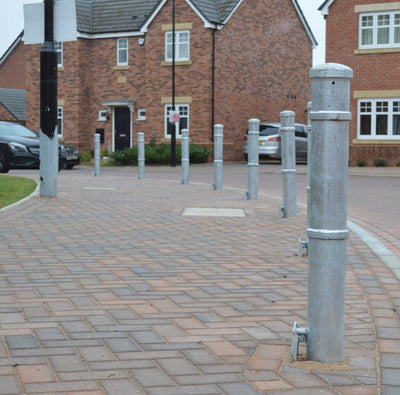
If you’re installing bollards to keep vehicles out of a restricted area - for example, street bollards to deter unauthorised parking or enforce pedestrian zones - then in most cases you'll need to place them with less than a vehicle’s width in between.
Since most cars are between 1.7m and 2m wide, placing your bollards approximately 1.2m to 1.5m apart (measured from the centre of each bollard) will be enough to block every type of vehicle - right down to a Smart car and other "micro cars".
If you also want to dissuade mopeds from entering the area, you’ll need to position the bollards a lot closer together.
Preventing ram raids
If you’re specifically aiming to prevent ram raids on a shop or vehicle-borne attacks on a public area, there is strength in numbers.
Using multiple security bollards - and placing them close together - spreads the impact from a hit, causing more damage and resistance to any vehicle attempting to ram its way through.
According to the Department for Transport (DfT), 1.2m is the maximum gap you should have between bollards used as a Vehicle Security Barrier (VSB).
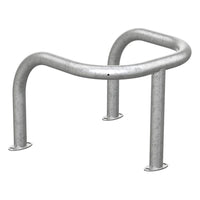
The “strength in numbers” theory is also why hoop bollards are often used to protect street furniture fixtures (such as lamp posts and EV chargers) against damage, following the principle that two legs are better than one.

Considerations for bollard spacing
Security and protection aren’t the only considerations for bollard spacing. You also need to allow room for pedestrians to move freely between them - and to leave the area quickly if necessary.
Pedestrian and wheelchair access
Take care to ensure that the bollarded area remains accessible to pedestrians and wheelchair users. The DfT advises leaving a minimum gap of 1.5m if possible, which would allow a wheelchair user and a non-wheelchair user to fit through the gap side by side.
You could still position the bollards strategically to minimise the access areas that could be used by mopeds and scooters etc. For example, staggering the bollards can allow wheelchair access while still restricting mopeds. However, in this case hoop bollards or railings may work better.
On a footway, you can help vision-impaired people by positioning bollards consistently, and as near to the building line as possible.
It’s also good practice to consider the height and visibility of your bollards, particularly in low light conditions or during rush hour peaks where they can be obscured by crowds of people. Reflective and illuminated posts are ideal.
You can find more detailed information here.

Evacuation management
If you’re placing anti-ram bollards as a security measure around buildings or busy areas such as shopping centres, you’ll need to make sure they won’t get in the way of a rapid evacuation in an emergency.
Bollards placed too close together will slow down the evacuation and could even cause a crush, especially if they are located around an exit point.
Think carefully about the positioning of your bollards. Place them away from any natural pinch points on the site, such as narrow passageways. You also want to avoid forcing pedestrians to walk close to road edges.
For sites with a very high flow of pedestrians or a complex layout, it’s best to seek a specialist site assessment before starting any installation.
Read more information here.
Closing thoughts
It’s essential that your bollards provide the necessary protection without getting in the way of pedestrian movement. Take the time to consider the spacing carefully, as the requirements may differ depending on the use case.
When you’re ready to make a purchase, browse our wide selection of bollards online - and if you need any further advice, just give our friendly sales team a call.
- Author

You might like:
Wychwood Flexible Verge Marker Post - Reflective - JSP
Reflective Verge Road Marker Post - Churchill Bollard
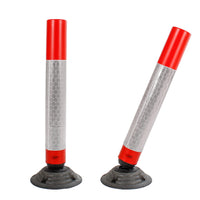
JSP Springback 75cm Traffic Delineator Post With Sleeve
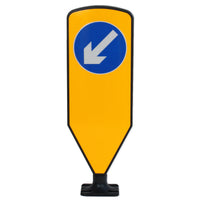
Duraflex Self Righting Traffic Bollard | Multiple Options
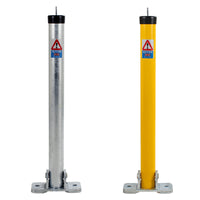
Autopa Galvanised Padlock Parking Post Folding / Hinged 730mm x 60mm
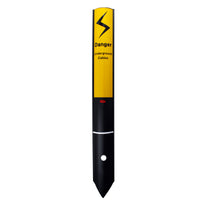
Danger Underground Cables' Verge Marker Post | HEV040-125-301
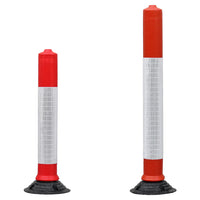
JSP Glopost Delineator Marker Post - 75cm or 100cm
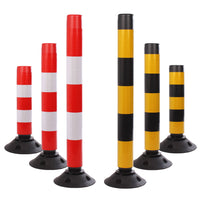
Traffic Line Off-Highway Posts | 460mm, 760mm & 1000mm
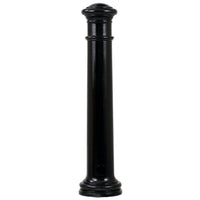
Manchester Heritage Fau-Cast Iron Bollards UltraThane 6000
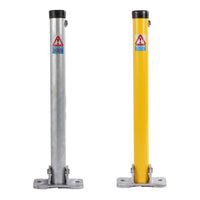
Autopa Galvanised Integral Lock Parking Post Folding / Hinged 730mm x 60mm
Procity Electric Car Charge Point Protector - Tripod Design (No Fixings)